Chautauqua committee backs design work for Jamestown Community College–Jamestown YMCA wellness center
November 13, 2025 | Chautauqua County, New York
This article was created by AI summarizing key points discussed. AI makes mistakes, so for full details and context, please refer to the video of the full meeting. Please report any errors so we can fix them. Report an error »
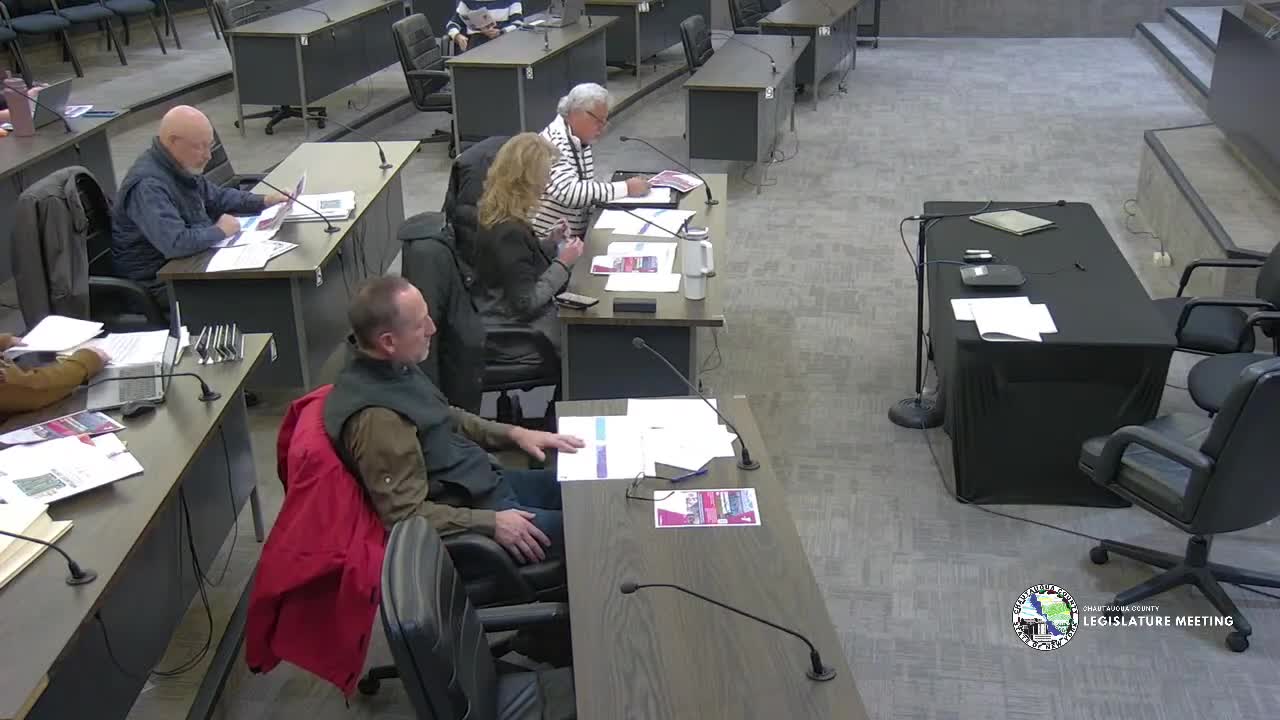
Daniel DeMarque, president of Jamestown Community College, told the committee the project would add "roughly 70,000 square feet of new space," with about half dedicated to a new YMCA and the other half shared space attached to the college’s existing physical education complex. DeMarque said design costs remain "roughly a million and a half," and that SUNY has agreed to cover 50% of the college’s design cost after the institution advanced a prior resolution.
George Fanabianco, president of the Jamestown YMCA board of directors, urged the committee to approve the design step as a signaling action to funders. He noted local commitments of roughly $4 million from foundations and said the city of Jamestown had provided what he described as TARP funding to support the architectural work. "If we get the architectural work done and if we can start the construction in the summer for the athletic facilities, it's gonna show the rest of the funders," Fanabianco said. He also said the YMCA serves "96,000 meals to our community members," using that figure to underscore local need and program scale.
Speakers described the partners’ plan to pursue a phased approach: begin with athletic fields to buy time for the larger building work and to avoid adding unknown costs while the broader shared-space design is finalized. Committee members pressed for clarity on how the phases would be funded and how the county’s "intent" language in the second resolution would translate into future appropriations. One committee member asked whether starting with fields would leave the parties with a useful, standalone deliverable if other funding streams slowed; presenters said the phased approach was intended to produce tangible progress even if later phases were delayed.
Project leaders also discussed financing strategies including New Markets Tax Credits, which they described as a competitive federal mechanism that can attract private investment; Fanabianco and DeMarque referenced past experience with tax-credit awards and said the partners will apply for credits for the full project. Presenters gave an estimated cost range for the athletic fields at about $4.5 million to $5 million, and cited the overall project figure discussed in the meeting at roughly $41 million.
The committee passed two resolutions by voice vote: (1) to establish capital accounts or otherwise authorize the county’s portion of JCC’s design spending and (2) to request SUNY include construction of phase 1 (the proposed JCC wellness complex) in SUNY’s 2026–27 capital request. The transcript records members saying "Aye," but no roll-call of named votes appears in the meeting record provided.
Next steps noted at the meeting: county staff and the partners will proceed with design work using committed local foundation and city funds while pursuing SUNY inclusion and New Markets Tax Credits; any construction funding or county appropriations for fields or shared-space construction would require separate appropriation resolutions back before the committee or full county board.
Don't Miss a Word: See the Full Meeting!
Go beyond summaries. Unlock every video, transcript, and key insight with a Founder Membership.
30-day money-back guarantee
Sponsors
Proudly supported by sponsors who keep New York articles free in 2025

