Richmond details CSO overhaul, cites $100 million award and revised plan to meet 2035 deadline
November 13, 2025 | Richmond City (Independent City), Virginia
This article was created by AI summarizing key points discussed. AI makes mistakes, so for full details and context, please refer to the video of the full meeting. Please report any errors so we can fix them. Report an error »
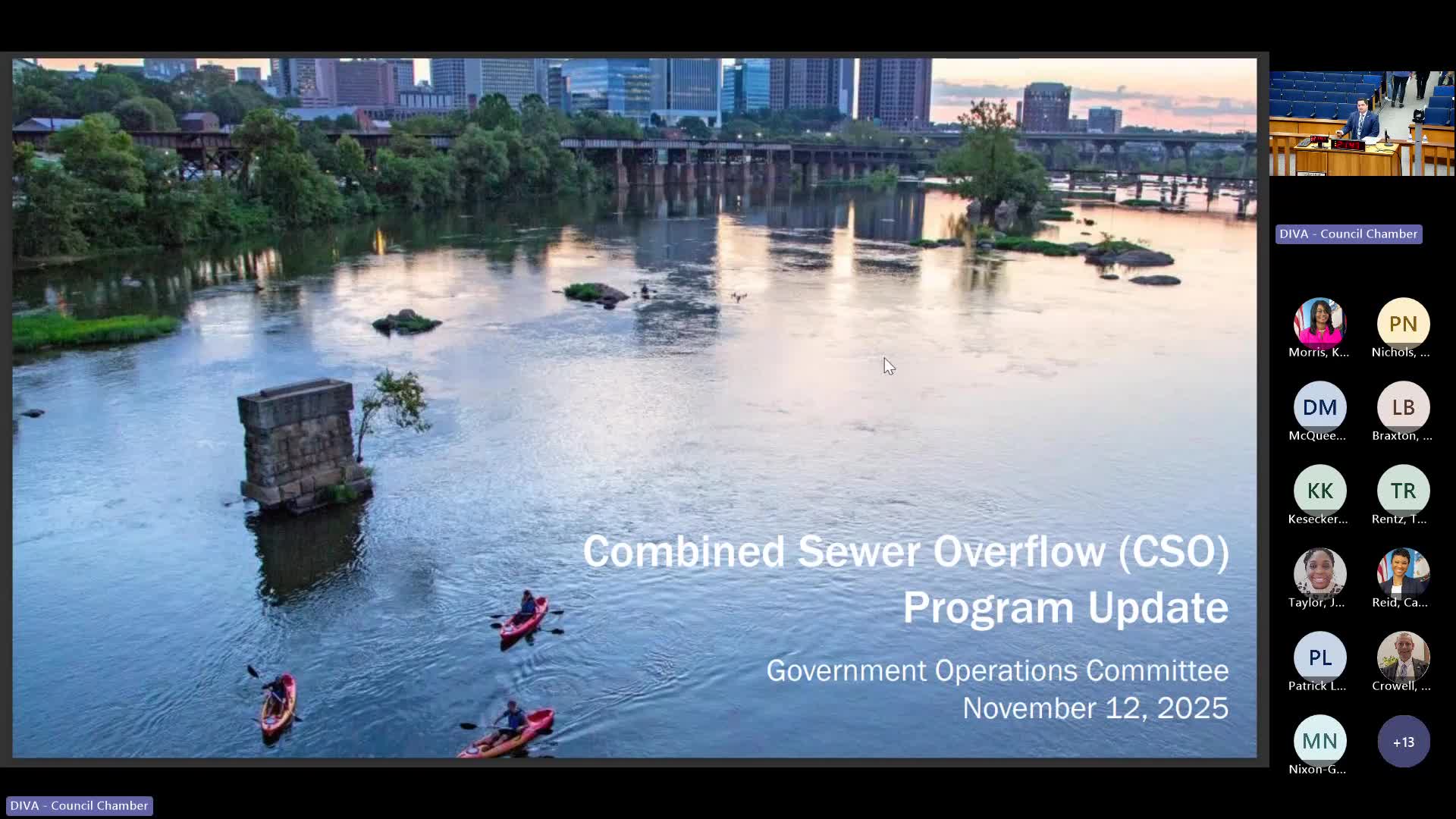
Morris reviewed past investments and the three-phase program and said the city has met interim-plan milestones: submitting the interim plan and starting construction by the statutory dates. "We were required to complete construction, by 07/01/2027," Morris said, and for the final plan the department was required to submit by "07/01/2024" and institute construction by "07/01/2025," noting the department met those obligations.
He told the committee the original final-plan cost estimate was about $1,200,000,000 but after extensive value engineering engineers reduced that estimate by "over $500,000,000" while still targeting required bacterial-load reductions. The department projected that implementing the interim and final plans will achieve roughly a 70% reduction in bacterial loading to the James River and help meet the river's TMDL requirements.
Morris also described near-term project activity: advancing interim-plan projects, starting construction on additional projects, completing design work for storage tanks, advancing the Shakop (Shaco/Shako) retention-basin high-rate disinfection project, and awarding a fixed-price design-build contract supported by a newly received $100,000,000 appropriation for Canoe Run (design-build support noted). He highlighted that many interim projects are funded by ARPA and that additional state and federal funding will be needed to close remaining gaps before 2035.
Council members pressed on what was given up during value engineering and whether there are negative trade-offs; Morris said alternatives were vetted to meet required reductions while reducing cost, and that trade-offs include more projects, property acquisition, easements, and community impacts during construction.
Next steps recorded by staff include advancing design and procurement for the major final-plan projects, awarding the fixed-price design-build contract, and reporting annually to the General Assembly on progress. The committee recorded DPU audit and follow-up items separately.
View the Full Meeting & All Its Details
This article offers just a summary. Unlock complete video, transcripts, and insights as a Founder Member.
30-day money-back guarantee
Sponsors
Proudly supported by sponsors who keep Virginia articles free in 2025

