Residents urge Raleigh to halt streamside Big Branch Greenway route, cite conservation easement and flood risks
November 13, 2025 | Raleigh, Wake County, North Carolina
This article was created by AI summarizing key points discussed. AI makes mistakes, so for full details and context, please refer to the video of the full meeting. Please report any errors so we can fix them. Report an error »
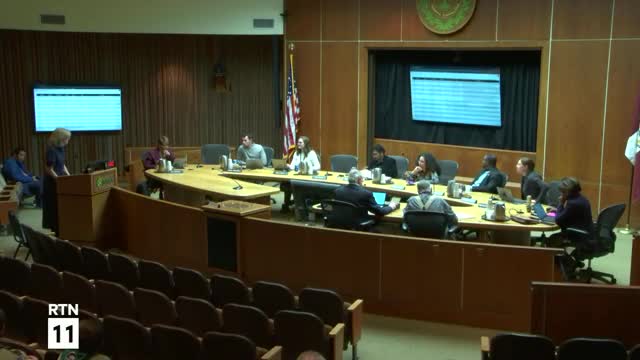
“We urge you to listen to us who know this land firsthand, not to those who have only seen it on a map,” said Helen Kervin, one of nine nearby property owners who addressed council during public comment. Kervin said the city proposal would condemn roughly one-third of her property and intrude nearly entirely into the 30-foot Zone 1 riparian buffer, which the North Carolina Division of Water Quality says is critical for filtering runoff, moderating temperature, controlling erosion, and stabilizing stream banks.
Several other speakers echoed that characterization. Elizabeth Scott said the city accepted a 1986 conservation easement expressly prohibiting tree removal, signage, and trail construction along Big Branch Creek, and that a 10-foot asphalt trail through a 35-foot riparian buffer would “destroy tree canopy, increase runoff, and violate environmental regulations in the very terms of this easement.” Kevin Curran and Jane Hubben told council they believed the alignment posed legal, environmental, and fiscal risks and noted nine of 14 Parks Board members opposed the streamside option.
Speakers also criticized the city’s public engagement materials. Multiple residents said the phase‑2 survey used imagery that misrepresented site conditions—calling photos “photoshopped”—and that a second survey’s presentation biased responses toward the streamside route after an earlier preference for a street-side alignment. “When you are looking at 62 choosing streamside alignment, that seems really big. But if we know that the picture and the in-person is different, it’s hard to take that as seriously,” said Kim Hobin recounting advisory-board comments.
Taylor Stewart told council the proposed alignment would require safety railings and private fencing because the trail would run so close to the creek and adjacent homes, and that users would need to cross a stretch of Forch Road the city’s traffic department reported had a 35% higher accident rate than comparable five-lane roads. Speakers warned that stabilizing the stream bank to protect the trail would itself require additional tree removal and that, once canopy is removed and an asphalt trail is installed, those changes are effectively permanent.
None of the public comments at this meeting reported a formal staff response or a council decision on funding or approvals for Segment 1B. The Parks Advisory Board’s October vote against the option and repeated public objections were presented to council as reasons to reconsider the alignment before any condemnation or construction action.
What happens next: this meeting recorded public opposition and advisory-board objections but did not include a council vote or a staff decision on Segment 1B. Council will need to decide whether to direct staff to modify the route, pause condemnation activity, or proceed; no council direction or formal action was recorded in public comment at this session.
View the Full Meeting & All Its Details
This article offers just a summary. Unlock complete video, transcripts, and insights as a Founder Member.
30-day money-back guarantee
Sponsors
Proudly supported by sponsors who keep North Carolina articles free in 2025

