Board discusses railroad crossing repairs and pilot base stabilization for gravel roads
November 13, 2025 | Winnebago County, Iowa
This article was created by AI summarizing key points discussed. AI makes mistakes, so for full details and context, please refer to the video of the full meeting. Please report any errors so we can fix them. Report an error »
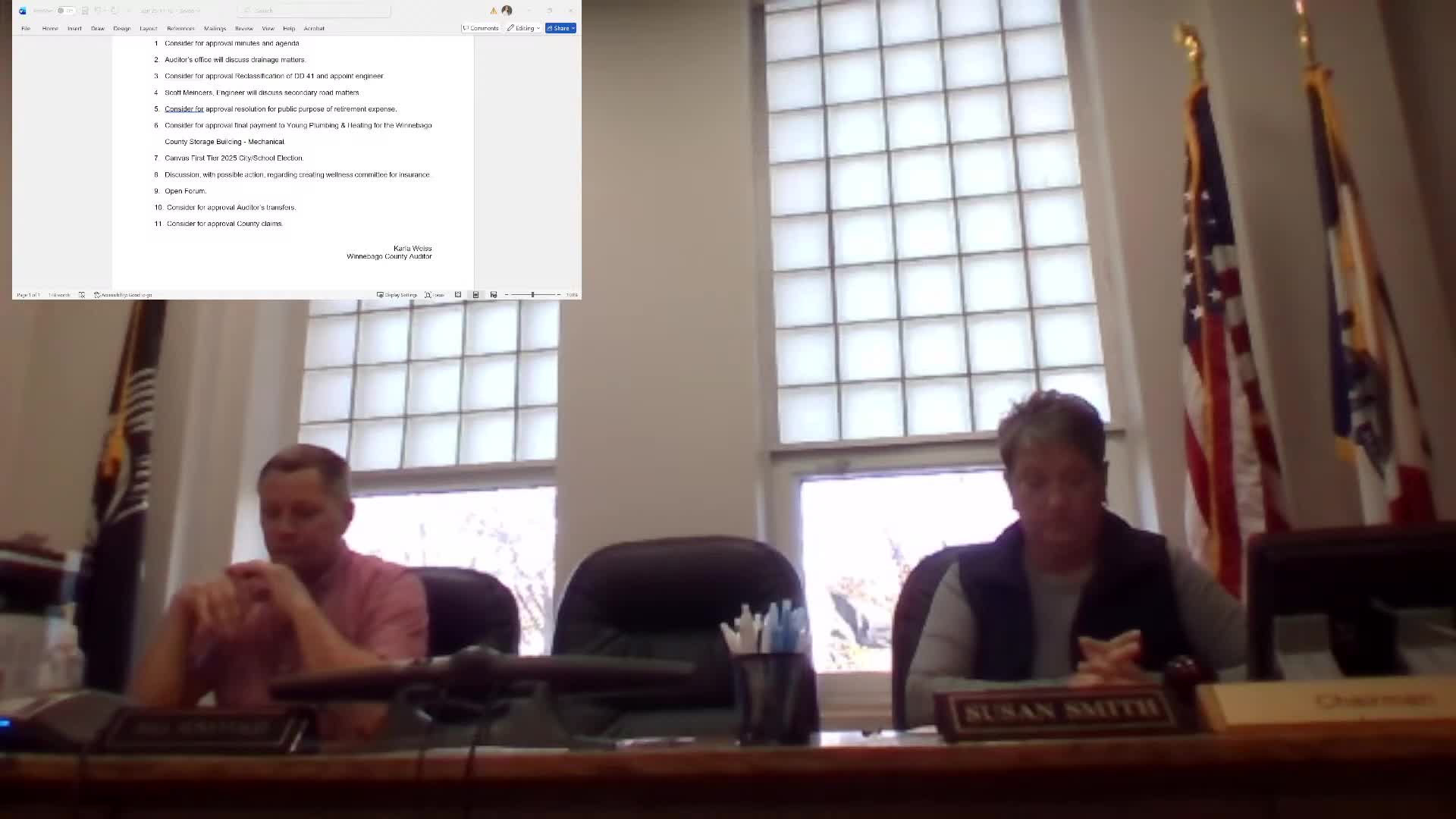
Speaker 2 reported that railroad track patching is tentatively scheduled and described two funding approaches: have the railroad design and the county pay 100% for the repairs, or use the Department of Transportation’s 60/20 program—DOT covering 60%, the railroad 20% and the county 20%. "The DOT pays 60, the railroad pays 20, the county pays 20," Speaker 2 said while explaining the options.
Board members expressed frustration that Union Pacific has been slow to advance grant applications in the past and discussed short-line versus class 1 railroad responsibilities for crossing maintenance. Staff said they will continue coordinating with DOT contacts and attempt to advance grant funding where possible.
Separately, supervisors discussed experimenting with a chemical 'base stabilization' product intended to lengthen the life of treated gravel sections. Staff described the product as a lab-formulated additive that reacts with local soils to create a more stable base. The board discussed equipment needs (scarifier, rollers, tanker for application), possible inter-county sharing of equipment and a preliminary per-mile cost estimate in the high thousands (a rough figure of about $8,000 per mile was mentioned). Speaker 2 cautioned that savings are realized over time and that upfront costs may be material.
The board did not take formal action on funding either the crossing reconstruction or the stabilization pilot at the meeting; staff were directed to continue planning, check specifications and include potential costs in next season's budget process.
View the Full Meeting & All Its Details
This article offers just a summary. Unlock complete video, transcripts, and insights as a Founder Member.
30-day money-back guarantee
Sponsors
Proudly supported by sponsors who keep Iowa articles free in 2025

