Lynchburg staff brief council on group-home, recovery-home definitions ahead of public hearing
November 13, 2025 | Lynchburg, Campbell County, Virginia
This article was created by AI summarizing key points discussed. AI makes mistakes, so for full details and context, please refer to the video of the full meeting. Please report any errors so we can fix them. Report an error »
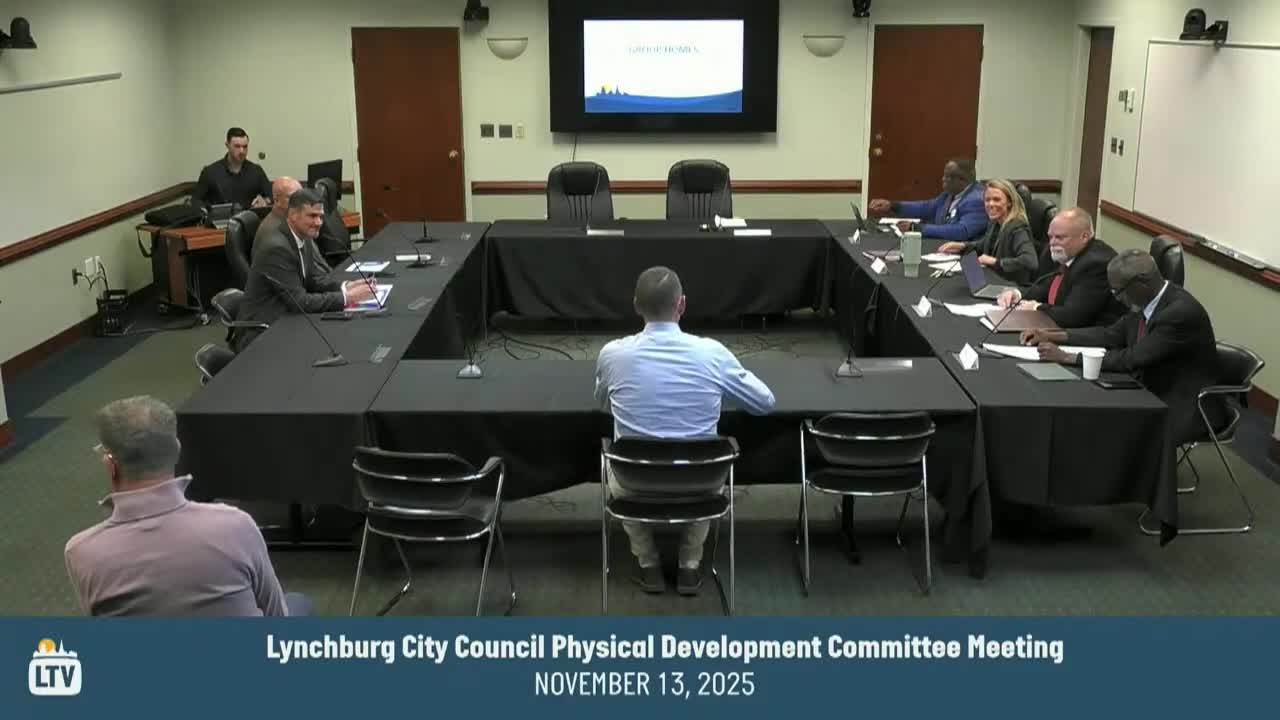
"Webster's defines a group home as a residence for persons requiring care or supervision," said Kevin Henry, the city's planning staffer, summarizing the local definition used in Lynchburg's zoning ordinance. He told the committee that the Federal Fair Housing Act lists disabilities that can qualify residents for protections under fair‑housing rules.
Henry explained the thresholds that prompt a CUP under Lynchburg code: more than eight residents with mental disabilities; more than four residents who are elderly or physically disabled; and more than three residents with alcohol or substance‑abuse disabilities. "That's our criteria when you would see a conditional use permit come before council for a decision," he said.
Henry noted licensing authorities differ by facility type: the Virginia Department of Behavioral Health handles certain residential facilities; the Department of Social Services licenses others. He emphasized that federally defined "recovery homes" — residential programs centered on peer support and abstinence from substances — are not always treated as group homes under state law.
That distinction matters because a residence that fits a by‑right category (for example, a residential facility for up to eight individuals with mental illness) is treated as a single‑household residential use, while larger or different‑type facilities may require public hearings and special permits.
The briefing also covered appeal routes: decisions can be reviewed by the Board of Zoning Appeals, then circuit court and, ultimately, the Virginia Supreme Court if necessary. Henry encouraged residents with questions to contact the planning department for clarification.
The council had scheduled a public hearing on a group‑home matter for the same evening.
Don't Miss a Word: See the Full Meeting!
Go beyond summaries. Unlock every video, transcript, and key insight with a Founder Membership.
30-day money-back guarantee
Sponsors
Proudly supported by sponsors who keep Virginia articles free in 2025

