West Haven planning commission forwards water-use element to council after urging stronger data coordination
November 13, 2025 | West Haven, Weber County, Utah
This article was created by AI summarizing key points discussed. AI makes mistakes, so for full details and context, please refer to the video of the full meeting. Please report any errors so we can fix them. Report an error »
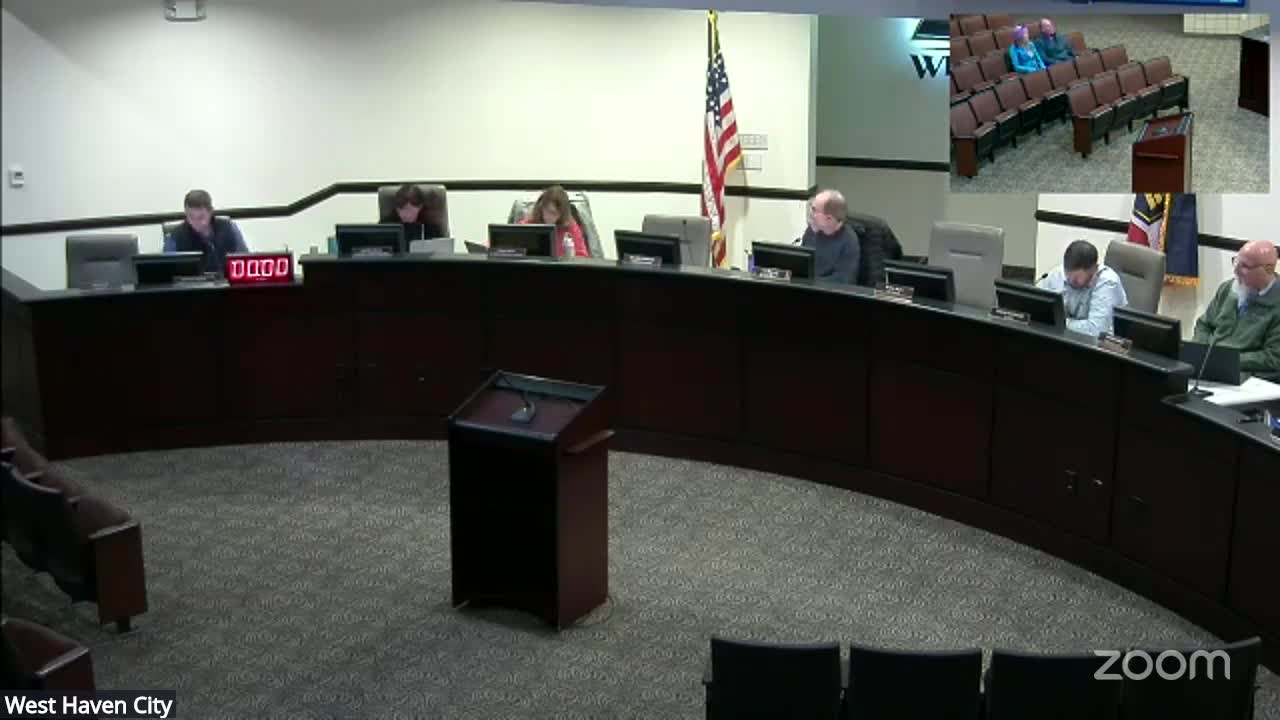
Aubrey Larson of Landmark Design, the consultant on the project, told the commission the state requires the new water element and set a near-term deadline: "The deadline is December 2025, so the end of this year," she said. Larson summarized the draft, which focuses on reducing outdoor irrigation demand, clarifying administrative roles with water providers, and recommending conservation strategies tied to land use.
During public comment, resident Judith Sharp asked how West Haven's water use contributes to changes at the Great Salt Lake and what guidance the city could provide to residents. "What's our role with the city as far as what percentages were contributing to the demise of our lake?" she asked. Staff responded that the plan is required to address Great Salt Lake concerns and that outdoor irrigation is a primary local lever: "By state law, we're actually required ... to address concerns with the Great Salt Lake and making sure water returns to it," said Steven, a planning staff member.
Commissioner George Lamar pressed the consultants and staff on the quality of data underlying the draft. "The data that we're basing, presumably, data driven decisions on isn't very good data," Lamar said, noting the draft relies on district-wide figures rather than city-specific measurements and a resident survey with only 55 respondents. Commissioners asked the plan to require a formalized, standardized data-sharing approach among the four providers so West Haven can compare gallons-per-capita calculations and measure progress consistently.
Staff and the consultant acknowledged the limits of available data and said implementation item 1.4—about data sharing—will be strengthened to call for quarterly reports, shared GIS layers, or other formal mechanisms. Commissioners also suggested clearer wording about which types of green space or clustering are water-efficient, and asked the consultant to add a summary of survey methodology to Appendix B so readers can judge the sample's limits.
The motion approved by the commission directed staff to make the discussed edits and send the revised draft to the city council. Chair indicated staff will report back to the commission on changes before the next council meeting.
Next steps: staff will make edits described at the meeting, circulate a report back to the commission, and present the revised water element to the city council in the coming weeks.
Don't Miss a Word: See the Full Meeting!
Go beyond summaries. Unlock every video, transcript, and key insight with a Founder Membership.
30-day money-back guarantee
Sponsors
Proudly supported by sponsors who keep Utah articles free in 2025

Excel Chiropractic

