Bangor City subcommittee adopts Moss Center grant-review policy, adds recusal option to speed opioid settlement awards
November 13, 2025 | Bangor City, Penobscot County, Maine
This article was created by AI summarizing key points discussed. AI makes mistakes, so for full details and context, please refer to the video of the full meeting. Please report any errors so we can fix them. Report an error »
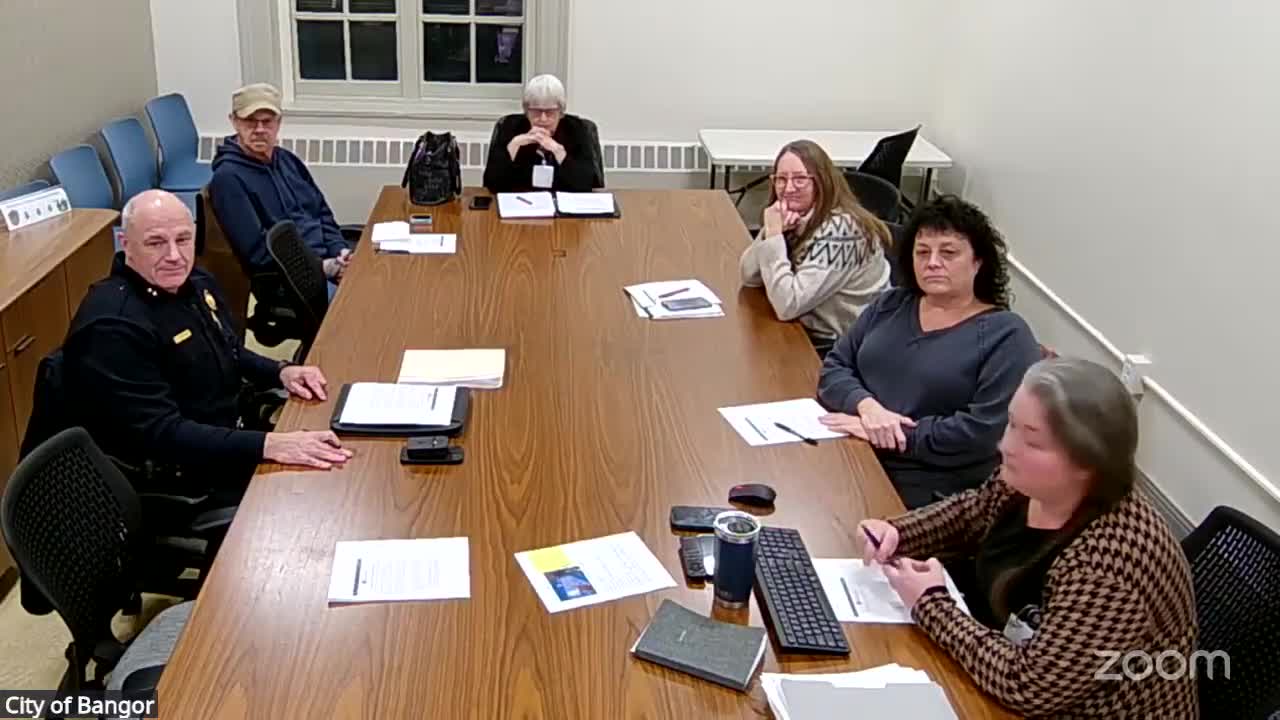
Lindsey Smith of the Moss Center explained the recommended process: assign each application to two impartial, non‑conflicted reviewers; have reviewers score applications independently; then hold a consensus discussion where reviewers present their rationale and the broader committee can ask questions. "That allows you to cut down on the review time, but still allows the broader committee to basically hear the reviewer's assessment," Smith said.
The policy also calls for providing score sheets and templated acceptance or rejection letters to applicants that explain strengths and weaknesses. Smith said that documentation reduces successful appeals because applicants receive concrete reasons for their score and, when necessary, redacted score information can be shared in an appeal.
Committee members raised concerns about appearance of bias and potential delays from appeals. One member argued the subcommittee should consider stepping back from scoring where conflicts or perceptions of partiality exist and asked for a formal vote on whether subcommittee members would participate in grading. "I think, to get the money out there quicker, we should take a vote on whether the subcommittee will do it or not," the member said.
City staff explained they would receive all applications and assign them among the committee; members would not rank their own submissions but could rank others. Staff committed to collecting completed applications by close of business on Dec. 1 so reviewer assignments can be made. The group discussed meeting to reconcile scores and debate applications tentatively on Dec. 17, or on Jan. 7 if application volume is higher.
During the meeting, a motion was made to adopt the Moss Center policy with an added edit explicitly allowing voluntary recusal for committee members who prefer not to participate in scoring. The motion was moved by a committee member and the presiding member called for the vote; members expressed support and the motion was adopted (no formal roll-call tally was recorded in the transcript). The committee thanked Moss Center staff and requested tailored templates for score sheets and notification letters.
Jamie Beck, who identified themself as chair of the county opioid settlement committee advisory committee, joined the meeting to request coordination between city and county processes so both bodies can cross-check duplicate applicants and compare project scopes. Beck said the county hopes to finalize recommendations to county commissioners by mid‑December so awards can be processed by year‑end. Committee staff agreed to compare applicant lists after the city's Dec. 1 deadline and to coordinate next steps.
Next steps recorded in the meeting: staff will collect and circulate completed applications by Dec. 1, assign applications to reviewers, circulate training/instruction materials and score-sheet templates, and set a follow-up meeting (tentatively Dec. 17) to reconcile scores and produce the committee's recommendations to the council. The meeting adjourned after these logistical items were confirmed.
Don't Miss a Word: See the Full Meeting!
Go beyond summaries. Unlock every video, transcript, and key insight with a Founder Membership.
30-day money-back guarantee
Sponsors
Proudly supported by sponsors who keep Maine articles free in 2025

