Commission debates how to sustain Palo Alto Link as grants and partner subsidies wane
November 13, 2025 | Palo Alto, Santa Clara County, California
This article was created by AI summarizing key points discussed. AI makes mistakes, so for full details and context, please refer to the video of the full meeting. Please report any errors so we can fix them. Report an error »
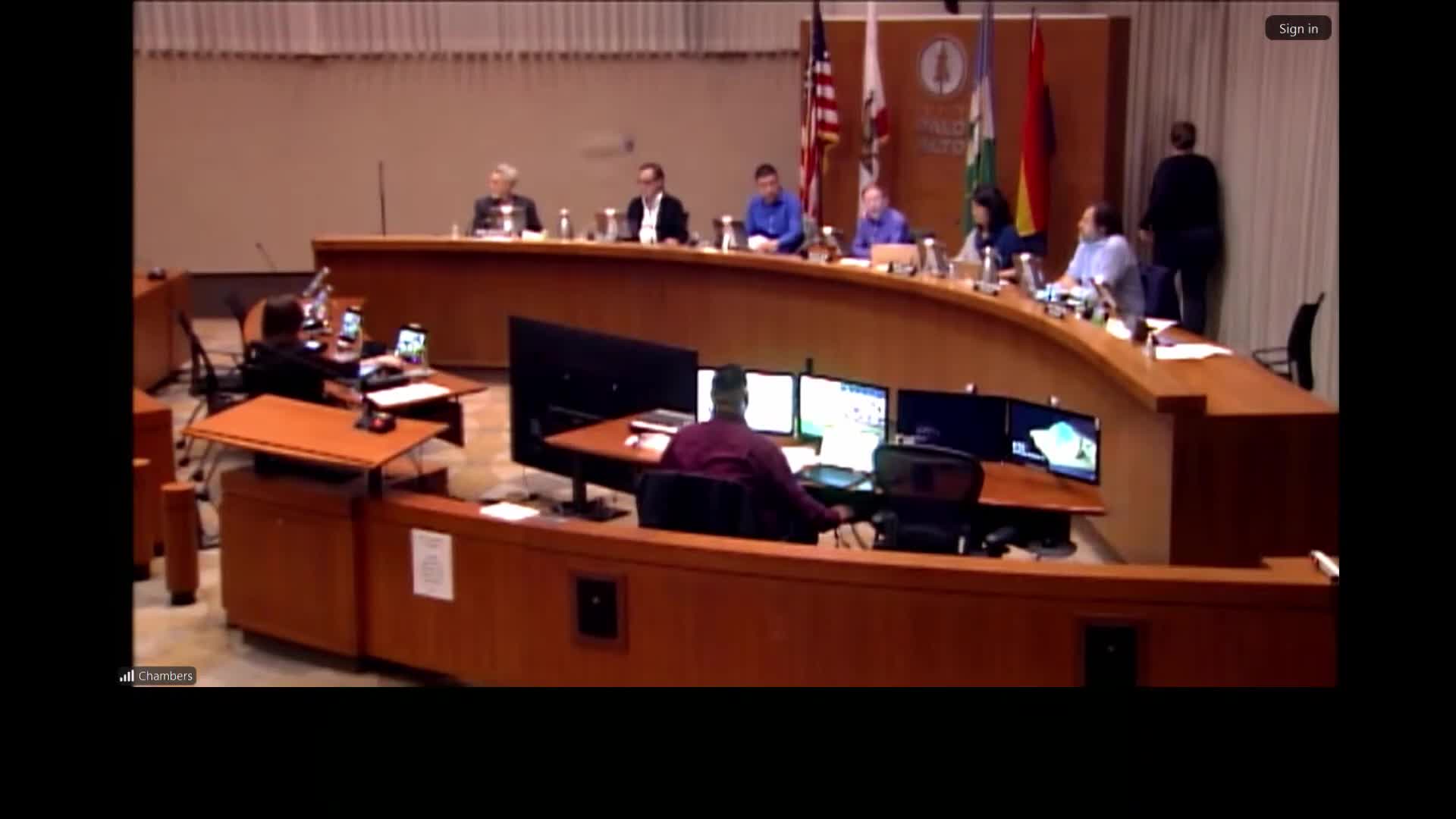
Nathan Baird (Office of Transportation) reviewed the pilot’s history — including a March 7, 2023 start with Via (Nomad Transit) — and said the service typically operates 7 a.m. to 7 p.m., covering most of the city but excluding the Baylands and hills. Staff presented user demographics they have tracked: roughly 30% seniors, 15% low‑income riders, 15% youth and 5% people with disabilities; they also said the pilot has shown strong early growth and reported efficiency metrics (rides per driver‑service hour ≈3.1–3.2 and booked seat occupancy above 50%).
Funding and partners were central to the discussion. Staff said the program initially ran near $1.8 million annually, later reduced to about $1.2 million per year; council had previously signaled that it was not willing to cover a large general‑fund subsidy. Stanford Research Park (SRP) contributes a usage‑based subsidy (staff cited an up‑to $600,000 figure that SRP can provide, with actual monthly SRP payments often substantially lower). The city has also won TFCA (Transportation Fund for Clean Air) grants that staff said could cover a portion of the program (a figure of roughly $450,000 was discussed); staff emphasized uncertainty about future grant availability.
Public testimony underscored the service’s role for riders with disabilities. A regular user said Link was essential for a severely disabled relative, calling it “Link beats them all by in spades,” and contrasted Link’s reliability and cost with county paratransit and unconditional TNC options.
Commissioners diverged on next steps. Some urged narrowing city subsidy to explicitly vulnerable riders (low‑income and disability populations) and using vouchers, TNC pool subsidies, or VTA paratransit coordination to reduce city exposure. Others argued Link provides last‑mile coverage, a city‑controlled experience (vetted drivers, fleet EVs, customizable stop locations), and partnership leverage that could grow into a more sustainable model; some commissioners pointed to strong ridership growth (staff/Via said ridership roughly doubled from year 1 to year 2) and noted most capital costs (vehicles) are already in place.
Staff said they will incorporate the commission’s feedback and present options and timing to council. They flagged that some grant funds can be stretched to June of the next fiscal year and that staff aim to minimize general fund use while continuing to pursue partnerships and TFCA grants.
Outcome: The commission did not adopt a single policy motion on the spot. Staff will bring the feedback and options to city council, clarifying costs, scenarios that target vulnerable populations, and tradeoffs between microtransit, shuttle routes, and subsidized TNCs.
Don't Miss a Word: See the Full Meeting!
Go beyond summaries. Unlock every video, transcript, and key insight with a Founder Membership.
30-day money-back guarantee
Sponsors
Proudly supported by sponsors who keep California articles free in 2025

