Venice preservation board approves 3‑story mixed‑use building at 256 Nokomis Ave S with remaining design details for staff review
November 13, 2025 | Venice, Sarasota County, Florida
This article was created by AI summarizing key points discussed. AI makes mistakes, so for full details and context, please refer to the video of the full meeting. Please report any errors so we can fix them. Report an error »
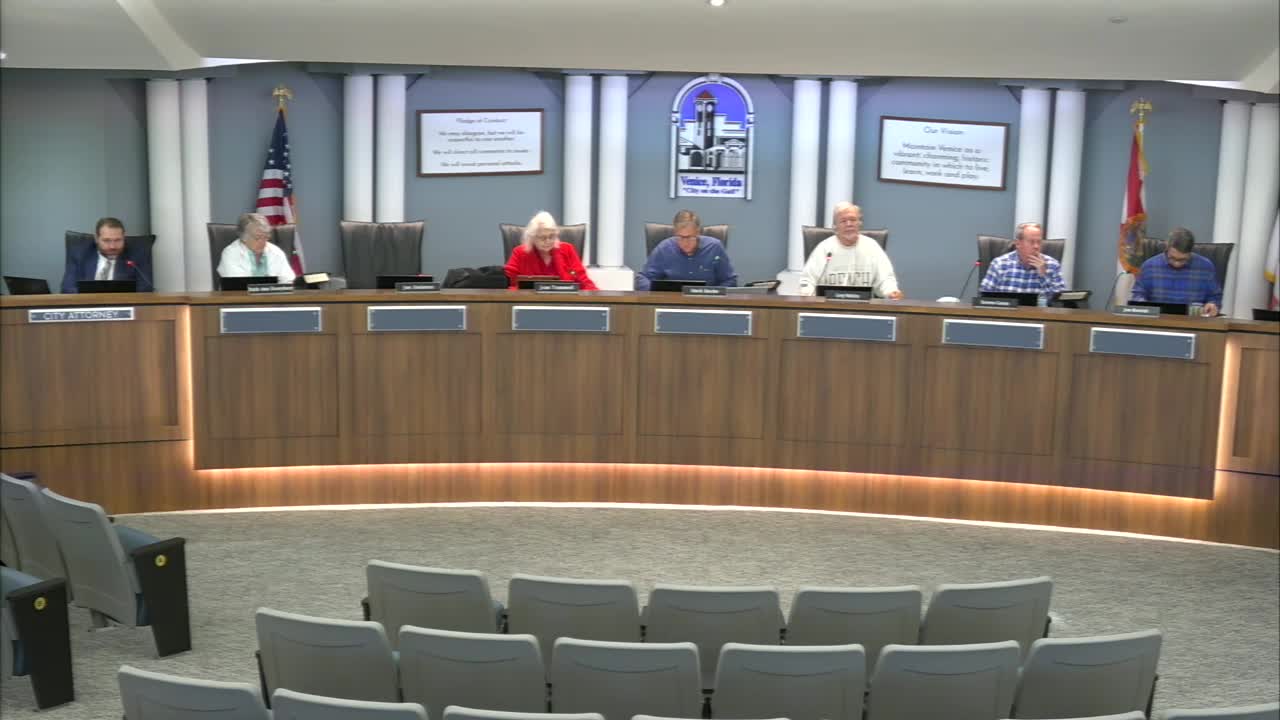
Britney Smith, city planner, clarified code language during the hearing: "the code reads... a maximum of 10% of wall area of the front elevation can be" other materials, which staff said makes the 10% allowance optional rather than a mandatory condition. That clarification framed much of the board's review of façade materials and trim.
The applicant described changes made since earlier hearings, including recessed balconies to reduce perceived massing and added roof elements above balcony levels. "We sacrificed square footage. We pushed inside the balconies," the applicant said, noting the team also revised entry scale on Nokomis and adjusted moldings and color choices to produce a lighter overall appearance.
Board members pressed for detail sheets and profiles on several visible elements. Chair Beebe highlighted the importance of a deep parapet molding that "leaves a more shadow line," and members asked that the drawing set clearly identify which molding corresponds to the visible shadow line on the 2D elevations. The applicant identified "detail 1" as the deeper molding to be used at the parapet.
The roof tile proposed by the applicant is a light‑weight, metal‑coated profile intended to resemble clay tile. The board asked to see a physical sample; Roger Clark, planning and zoning director, and staff inspected a sample and the board signaled consensus that a metal composite tile that closely matches the profile and appearance of terracotta would be acceptable when recorded by staff. The board emphasized that where code allows composite or alternative roofing materials, the appearance and profile must be substantially similar to clay/terracotta tiles.
Members also discussed a decorative 16‑inch French‑balcony detail and a center roof over the south elevation facing the library. Several members suggested lowering that center roof slightly or adding corbels/brackets to integrate it with the elevation. The applicant agreed to consider the adjustment and to show clarified dimensions on revised drawings. The board and applicant also resolved a discrepancy between 2D line drawings and 3D renderings related to column alignment; the applicant stated that the 3D representation reflects the intended condition and that the plan set will be corrected.
Following discussion, a board member moved to approve PLR25193 subject to staff review of the identified technical and design details and with the chair's consultation; another member seconded. On a roll‑call vote, all voting members present voted yes (Mr. Watkins, Ms. Trammell, Mr. Barrick, Ms. Derryberry, Mr. Green and Chair Beebe). The board cited that the revised massing and detailing resulted in a project that better fits the city's historic context.
What happens next: staff will document the accepted roof sample and confirm molding/column details on the plan set; if staff identifies unresolved issues, they will confer with the chair and, if necessary, return the item to the board.
View the Full Meeting & All Its Details
This article offers just a summary. Unlock complete video, transcripts, and insights as a Founder Member.
30-day money-back guarantee
Sponsors
Proudly supported by sponsors who keep Florida articles free in 2025

