Lancaster police detail multi‑agency sweep of smoke shops; commission already put moratorium on new stores
November 13, 2025 | Lancaster City, Los Angeles County, California
This article was created by AI summarizing key points discussed. AI makes mistakes, so for full details and context, please refer to the video of the full meeting. Please report any errors so we can fix them. Report an error »
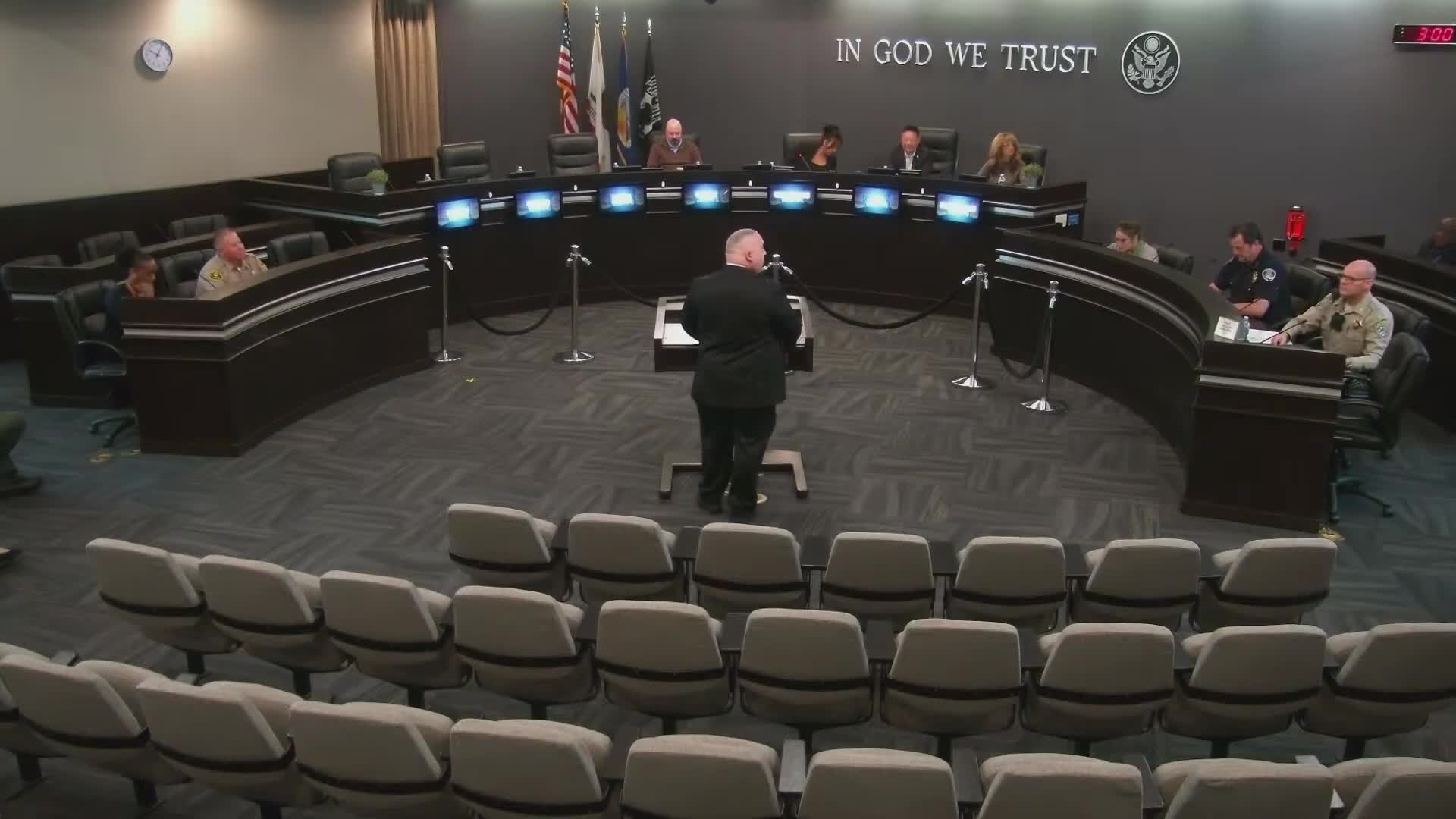
"We hit 30 locations. We found violations at all locations," Mike Johnson of the Lancaster Police Department told the Lancaster Criminal Justice Commission. Johnson said the operation included partners from the California Department of Tax and Fee Administration, the California Department of Cannabis Control, LA County Probation (with a cannabis‑trained canine), and LA County Public Health.
Johnson said many products discovered evade current local rules because the city's cannabis ordinance only explicitly prohibits delta‑9 THC, leaving other intoxicating hemp cannabinoids outside the municipal definition. "So one of the things the city might consider is expanding the definition of cannabis in the cannabis ordinance to cover these intoxicating hemp products," he said.
The presentation identified recurring problems: kratom products with amplified potency that Johnson said had been linked by the LA County coroner to local deaths, mushroom products labeled with vague "proprietary blend" ingredients instead of psilocybin, and flavored nitrous oxide canisters marketed to youth. He also described counterfeit cigarette tax stamps and untaxed cigarette packages seized during surveillance.
Johnson outlined existing enforcement steps: written violation notices that put businesses on formal notice and can support future actions up to revoking business licenses and filing nuisance/drug‑house abatement suits against property owners. He noted, however, that many enforcement tools are administered by state agencies. "The California Department of Tax and Fee Administration does the flavored tobacco enforcement. The Department of Cannabis Control does the cannabis products. Public Health does the mushrooms and the kratom," he said, adding that state agencies are often resource‑constrained.
The police recommended looking at other cities' ordinances. Johnson pointed to Rialto's full ban on nitrous oxide sales and San Diego's broad novel‑drug ordinance as models. He said the city is also reviewing model language with the city attorney and may pursue a local ordinance that can capture rapidly changing synthetic or novel substances.
The commission has already placed a moratorium on new smoke shops while the city studies potential code changes, Johnson said. He described the moratorium as a first step while staff and legal counsel evaluate an ordinance that would expand local authority to regulate intoxicating hemp products, kratom and nitrous oxide.
Asked about penalties, Johnson said CDTFA may issue fines ("$50 fine for each package that's in violation") that can add up to hundreds of thousands of dollars in state penalties, and that seized contraband such as illegal weapons would be destroyed if not appealed. He also said the city is considering applying for state tobacco enforcement grant funding in the next cycle to support local enforcement work.
The commission and staff said they will continue interagency operations and pursue legal reviews of model ordinances. Johnson said the department plans to keep conducting similar operations until problems decrease.
Don't Miss a Word: See the Full Meeting!
Go beyond summaries. Unlock every video, transcript, and key insight with a Founder Membership.
30-day money-back guarantee
Sponsors
Proudly supported by sponsors who keep California articles free in 2025

