Fall River council adopts 1.75 tax factor for FY2026 after assessor outlines valuation growth
November 13, 2025 | Fall River City, Bristol County, Massachusetts
This article was created by AI summarizing key points discussed. AI makes mistakes, so for full details and context, please refer to the video of the full meeting. Please report any errors so we can fix them. Report an error »
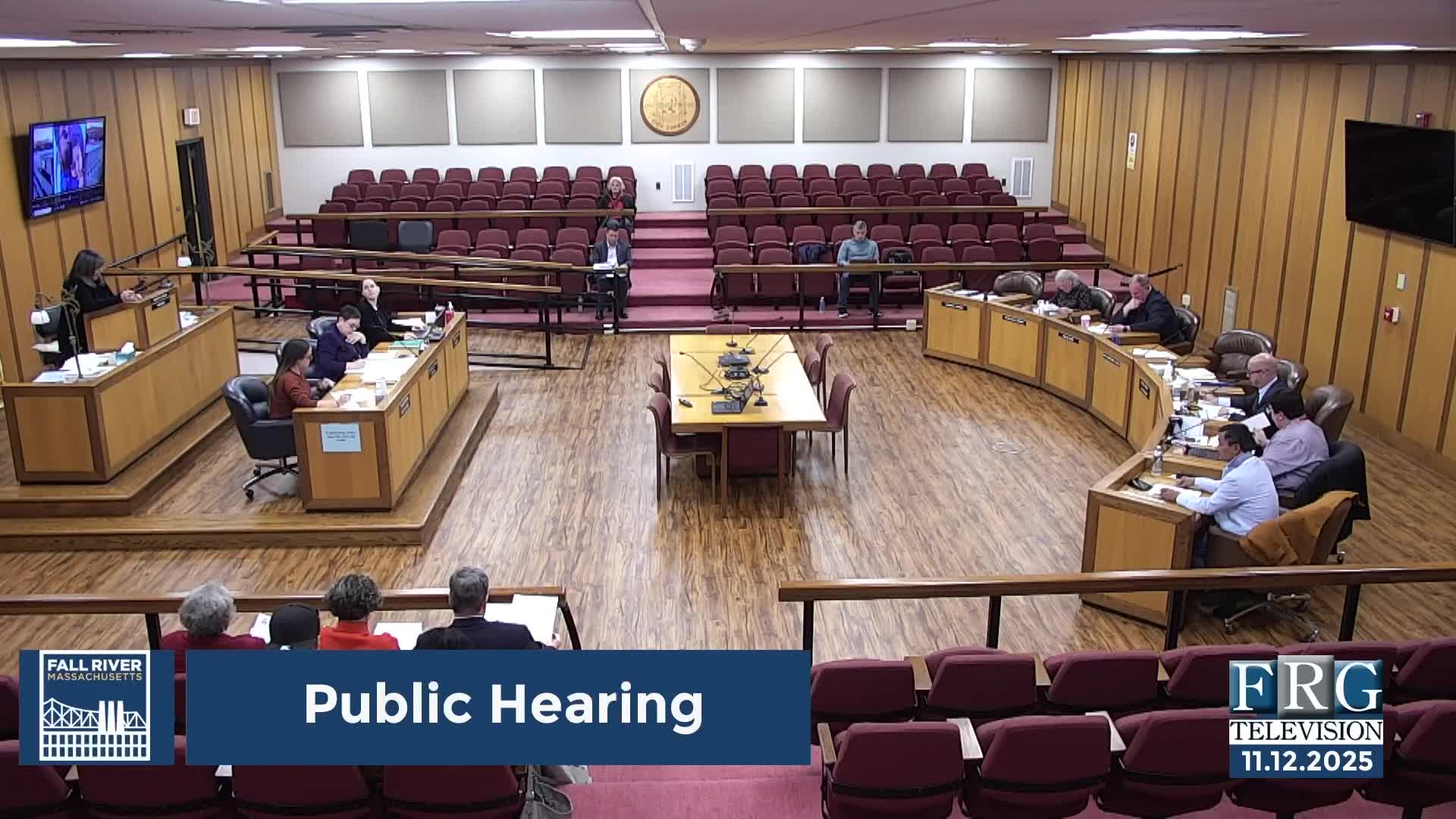
Dan Lane, the city’s tax assessor, told the council that residential values rose about 6% on average, commercial values about 3% and industrial about 2%, producing roughly $2.5 million to $2.6 million in new growth this year. Lane listed recent projects that contributed to the rise — King Philip Lofts, a Tayco expansion and an 82,000‑square‑foot cold storage facility along Innovation Way — and said utilities and new substations were major drivers of personal property growth.
“Overall, residential properties in the city increased about 6% on an overall basis for FY2026,” Lane said, describing the class breakouts and the worksheet in council packets. Board of Assessors Chair Richard Gonzales recommended the 1.75 shift to the council to recapture lost revenue from parcels that recently became tax‑exempt.
Councilors pressed staff on how Tax Increment Financing (TIF) schedules and parcel exemptions affect who ultimately pays. Councilor Ponte and others asked how developments such as Amazon and the South Coast Marketplace move through phased TIF schedules (100% → 75% → 50% → 25% → 100%), and why the commercial class showed a paper decline when several large parcels — notably Saint Anne’s hospital and associated parcels that became exempt — dropped from the tax roll.
Gonzales said the apparent drop reflected the conversion of some parcels to exempt status and that, after excluding those parcels, commercial valuations actually rose. Councilors also sought clarification that the council’s action to set the factor is a rate‑assignment mechanism, not a direct short‑term tax increase. “People are under the impression… that we’re here tonight to increase their taxes,” Councilor Dionne said; assessors and council members reiterated the distinction between valuation, the factor and taxpayers’ bills.
The council carried the related motions by roll call, including the separate adoption of a residential factor of 85.2057. The clerk recorded the votes and the motions were announced as carried.
What’s next: Assessors said the council will see the final tax recap after the vote and that any budget amendments tied to the vote will appear in the next quarterly book. Staff also agreed to provide a more detailed breakdown of exemptions and the number of residents benefiting from senior and veteran exemptions.
View the Full Meeting & All Its Details
This article offers just a summary. Unlock complete video, transcripts, and insights as a Founder Member.
30-day money-back guarantee
Sponsors
Proudly supported by sponsors who keep Massachusetts articles free in 2025

