Mobile council delays vote on vacant‑property ordinance after debate over owner self‑reporting
November 13, 2025 | Mobile City, Mobile County, Alabama
This article was created by AI summarizing key points discussed. AI makes mistakes, so for full details and context, please refer to the video of the full meeting. Please report any errors so we can fix them. Report an error »
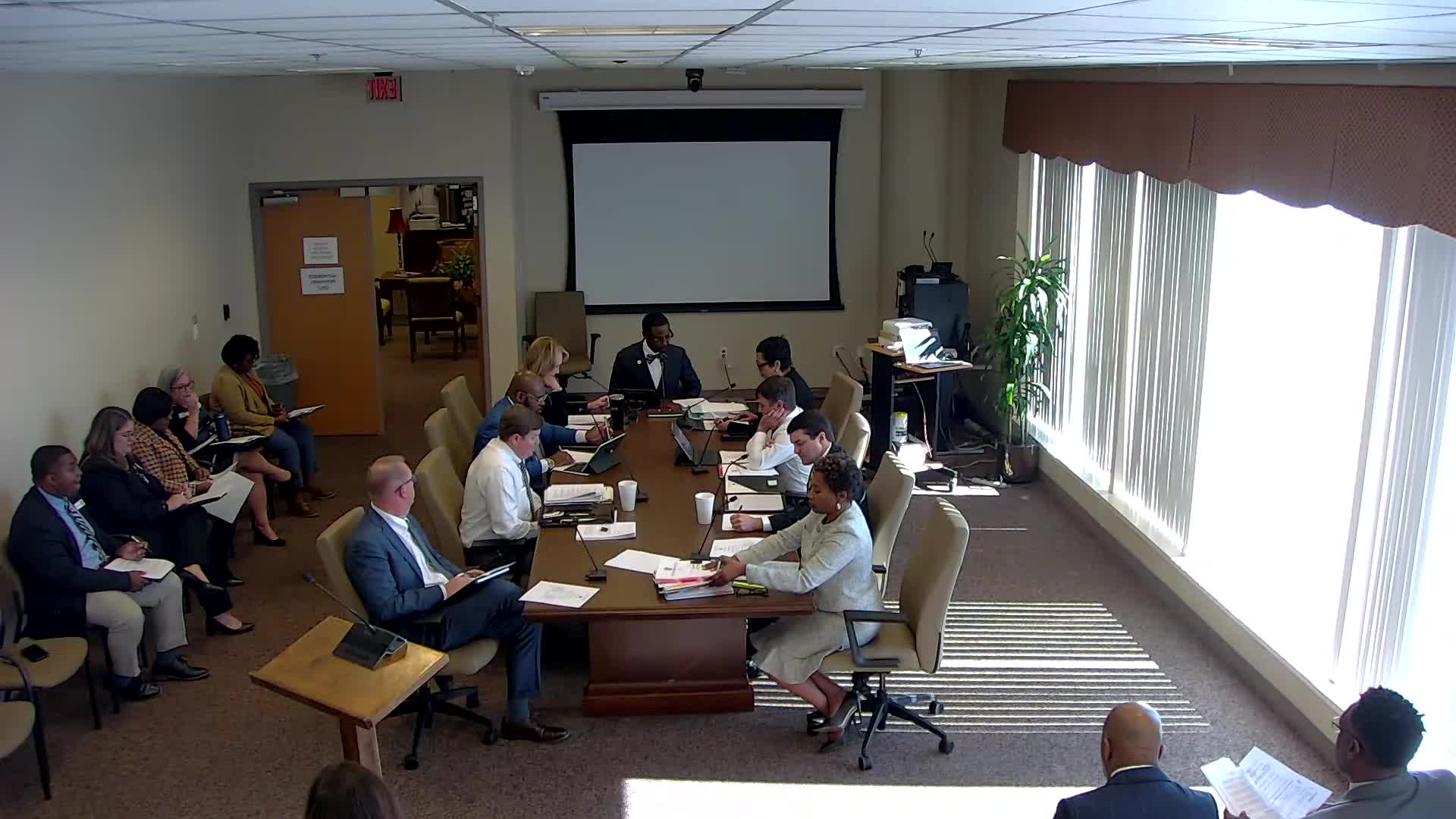
Councilman Reynolds, who circulated a replacement text, said his amendment removes paragraphs that would force owners to register vacant buildings. "My amendment has removed those paragraphs, and I've got a copy for everybody of the final clean version here," Reynolds said, arguing the registration requirement would place an unnecessary burden on owners.
City attorneys and other council supporters pushed back, saying the owner‑duty subsections (including parts of section 52‑201 and registration language in 52‑203(a)) are essential enforcement tools. During a question and answer period Attorney Woods explained how the proposed self‑reporting system would work: "You fill out the form and you send it in to the city, and that doesn't start for another six months," Woods said, adding the administration plans an education campaign, mailers and coordination with neighborhood and business groups to reduce surprise and encourage compliance.
Supporters of keeping owner self‑reporting said the approach narrows enforcement work by separating compliant owners from the small number of "bad actors," enabling targeted use of municipal enforcement and public‑safety resources. Opponents said mandatory registration would be a long‑term obligation that is confusing to responsible owners and could duplicate existing municipal tools such as certificates of occupancy, utility checks and business‑license records.
Fred, president of the Downtown Mobile Alliance, and staff both said outreach and an easy application could limit the burden on small businesses; staff told council the process is intended to be quarterly so that, over time, the city focuses resources on properties that do not comply.
After extended discussion — which included questions about legal limits tied to private property rights and how the city would fund enforcement — the council president recommended and the council agreed to hold the item for one week so staff and councilmembers could reconcile the two competing texts and present a final version at the next meeting.
The council did not take a final vote on Ordinance 52 at the pre‑meeting; councilmembers asked staff to prepare a consolidated text that reflects agreed amendments.
Don't Miss a Word: See the Full Meeting!
Go beyond summaries. Unlock every video, transcript, and key insight with a Founder Membership.
30-day money-back guarantee
Sponsors
Proudly supported by sponsors who keep Alabama articles free in 2025

