House Rules Committee advances Senate continuing resolution to reopen government amid bitter debate over health care, SNAP and a Senate 'payday' provision
November 12, 2025 | Rules: House Committee, Standing Committees - House & Senate, Congressional Hearings Compilation
This article was created by AI summarizing key points discussed. AI makes mistakes, so for full details and context, please refer to the video of the full meeting. Please report any errors so we can fix them. Report an error »
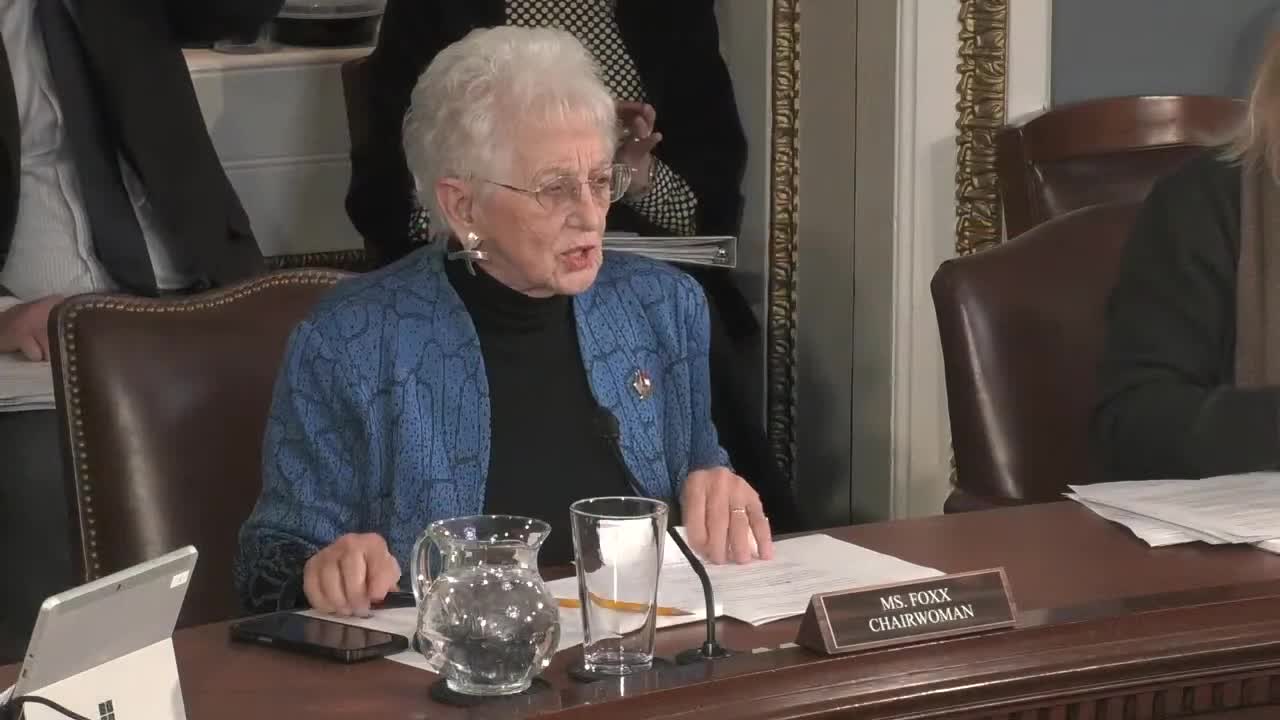
The House Rules Committee on Nov. 11 approved a rule to bring the Senate'passed continuing resolution (H.R. 5371) to the House floor, clearing a path to reopen the federal government after a shutdown that stretched more than six weeks.
Chairman Tom Cole, presenting the Senate package to the committee, said the measure "will finally end this pointless shutdown" and includes three bipartisan, bicameral appropriations divisions that would fund military construction and veterans affairs, the legislative branch, and parts of agriculture and the Food and Drug Administration. "With passage of these three divisions, we will have full-year funding in place for many of our most crucial programs," Cole said.
Democrats argued the CR is incomplete and warned voters would feel immediate harm if enhanced Affordable Care Act premium tax credits are not extended. "Tens of millions of working-class Americans are about to experience dramatically increased premiums," House Democratic Leader Hakeem Jeffries said in support of an amendment to extend the credits for three years. "We respectfully urge our Republican colleagues to join us."
Ranking Member Rosa DeLauro of the Appropriations Committee, who testified against the bill, said the CR "does nothing to address the Republican health care crisis" and objected that the measure excludes $51.7 billion of advance funding for the PACT Act toxic-exposure fund she had negotiated earlier in the year. "This bill fails to extend the ACA premium tax credits. It fails to guarantee that states will be reimbursed for SNAP funds they advanced," DeLauro said.
A central flash point in the hearing was language the Senate attached to the legislative-branch division that would create a private cause of action tied to certain "senate data" and make statutory damages available for alleged violations. Several members described it as a retroactive provision that could produce large taxpayer payouts to individual senators if court-authorized records were acquired without notice. "This is a multimillion-dollar slush fund tucked into the bill," Representative Joe Neguse said. Representative Jamie Raskin called the provision "one of the most blatantly corrupt" he had seen and said it could be unconstitutional.
The committee considered numerous proposed changes to the rule, ranging from making WIC mandatory spending and ensuring SNAP reimbursements to restoring the toxic-exposure fund's advance funding and fast-tracking a House vote on ACA credits. Most of those proposals failed in committee votes. After final debate and a roll call, the Rules Committee adopted the majority motion to report the rule to the House (clerk reported 8 yeas, 4 nays). The rule, if adopted by the full House under the schedule set by House leaders, would allow a floor vote on the Senate amendment and set debate time for further action.
Members on both sides framed the moment as an urgent choice between reopening the government immediately so federal workers, veterans and SNAP recipients receive pay and benefits, and holding the line to remove or change provisions they argued were corrupt or harmful. "This is a binary question: open the government or prolong the shutdown," Representative Tom Cole said. Democrats countered that reopening without addressing what they described as a looming health'care shock would leave millions exposed to skyrocketing premiums during open enrollment.
The House is expected to consider the rule and the Senate amendment on the floor in the hours after the committee vote. If the rule passes the House, the continuing resolution will move forward; if it fails, the shutdown could persist longer while members seek an alternative path.
What happens next: The committee reported the rule to the full House; the House will consider the Senate amendment under the rule when scheduled by floor leaders. Several members said they would press the House floor for amendments once the measure arrives.
Attributions: Quotes and paraphrases in this report come from testimony and statements on the record before the House Rules Committee at the Nov. 11 hearing. Speakers quoted include Chairman Tom Cole (Chairman, Committee on Appropriations), Representative Rosa DeLauro (Ranking Member, Appropriations Committee), Representative Hakeem Jeffries (House Democratic Leader), and Representative Joe Neguse (member of the Rules Committee).
Chairman Tom Cole, presenting the Senate package to the committee, said the measure "will finally end this pointless shutdown" and includes three bipartisan, bicameral appropriations divisions that would fund military construction and veterans affairs, the legislative branch, and parts of agriculture and the Food and Drug Administration. "With passage of these three divisions, we will have full-year funding in place for many of our most crucial programs," Cole said.
Democrats argued the CR is incomplete and warned voters would feel immediate harm if enhanced Affordable Care Act premium tax credits are not extended. "Tens of millions of working-class Americans are about to experience dramatically increased premiums," House Democratic Leader Hakeem Jeffries said in support of an amendment to extend the credits for three years. "We respectfully urge our Republican colleagues to join us."
Ranking Member Rosa DeLauro of the Appropriations Committee, who testified against the bill, said the CR "does nothing to address the Republican health care crisis" and objected that the measure excludes $51.7 billion of advance funding for the PACT Act toxic-exposure fund she had negotiated earlier in the year. "This bill fails to extend the ACA premium tax credits. It fails to guarantee that states will be reimbursed for SNAP funds they advanced," DeLauro said.
A central flash point in the hearing was language the Senate attached to the legislative-branch division that would create a private cause of action tied to certain "senate data" and make statutory damages available for alleged violations. Several members described it as a retroactive provision that could produce large taxpayer payouts to individual senators if court-authorized records were acquired without notice. "This is a multimillion-dollar slush fund tucked into the bill," Representative Joe Neguse said. Representative Jamie Raskin called the provision "one of the most blatantly corrupt" he had seen and said it could be unconstitutional.
The committee considered numerous proposed changes to the rule, ranging from making WIC mandatory spending and ensuring SNAP reimbursements to restoring the toxic-exposure fund's advance funding and fast-tracking a House vote on ACA credits. Most of those proposals failed in committee votes. After final debate and a roll call, the Rules Committee adopted the majority motion to report the rule to the House (clerk reported 8 yeas, 4 nays). The rule, if adopted by the full House under the schedule set by House leaders, would allow a floor vote on the Senate amendment and set debate time for further action.
Members on both sides framed the moment as an urgent choice between reopening the government immediately so federal workers, veterans and SNAP recipients receive pay and benefits, and holding the line to remove or change provisions they argued were corrupt or harmful. "This is a binary question: open the government or prolong the shutdown," Representative Tom Cole said. Democrats countered that reopening without addressing what they described as a looming health'care shock would leave millions exposed to skyrocketing premiums during open enrollment.
The House is expected to consider the rule and the Senate amendment on the floor in the hours after the committee vote. If the rule passes the House, the continuing resolution will move forward; if it fails, the shutdown could persist longer while members seek an alternative path.
What happens next: The committee reported the rule to the full House; the House will consider the Senate amendment under the rule when scheduled by floor leaders. Several members said they would press the House floor for amendments once the measure arrives.
Attributions: Quotes and paraphrases in this report come from testimony and statements on the record before the House Rules Committee at the Nov. 11 hearing. Speakers quoted include Chairman Tom Cole (Chairman, Committee on Appropriations), Representative Rosa DeLauro (Ranking Member, Appropriations Committee), Representative Hakeem Jeffries (House Democratic Leader), and Representative Joe Neguse (member of the Rules Committee).
Don't Miss a Word: See the Full Meeting!
Go beyond summaries. Unlock every video, transcript, and key insight with a Founder Membership.
✓
Get instant access to full meeting videos
✓
Search and clip any phrase from complete transcripts
✓
Receive AI-powered summaries & custom alerts
✓
Enjoy lifetime, unrestricted access to government data
30-day money-back guarantee
