South Bend Council approves local emergency consent, expands utility-assistance and meal support amid SNAP disruption
November 12, 2025 | South Bend City, St. Joseph County, Indiana
This article was created by AI summarizing key points discussed. AI makes mistakes, so for full details and context, please refer to the video of the full meeting. Please report any errors so we can fix them. Report an error »
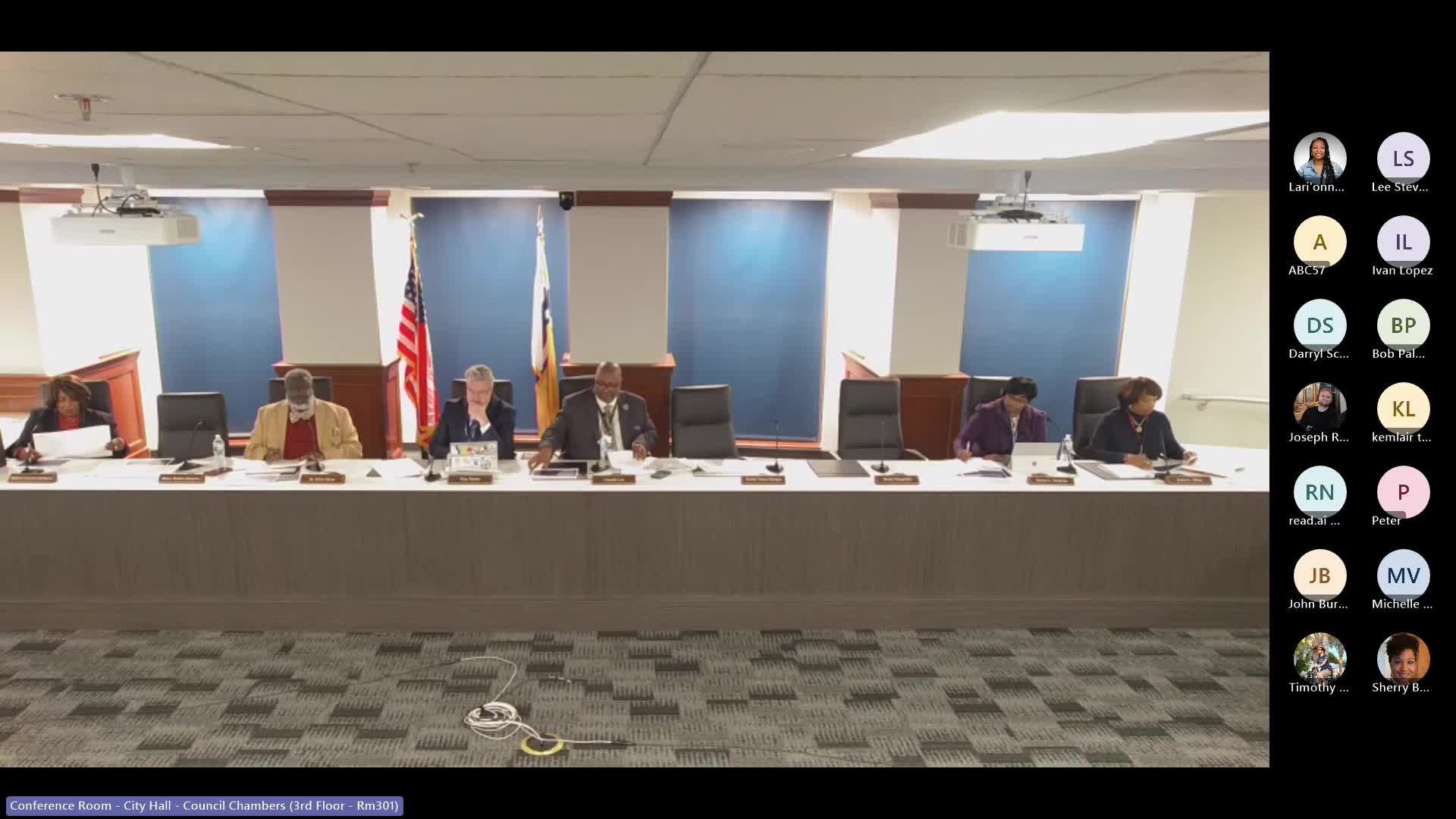
The council adopted Resolution 25-48 after a presentation explaining that state law limits an emergency declaration to seven days unless the council consents to continuation. Daryl Scott, the mayor’s chief of staff, said the administration has focused on "supporting our residents, stabilizing community resources, and leading with facts and compassion," and confirmed the city contributed "$50,000 to the Food Bank of Northern Indiana" and that community donations have raised "over a $125,000 in total donations." Scott also said the city is finalizing a meal distribution plan based at the MLK Dream Center and that residents can enroll in the Utility Assistance Program (UAP) at southbendin.gov/uap.
Why it matters: Council consent allows the local disaster emergency to remain in effect beyond the seven-day statutory limit so the city can use the UAP and related measures to prevent utility shutoffs and coordinate distribution while SNAP benefits are only partially funded. The measure preserves the administration’s ability to operate outreach and temporary relief until the council or the mayor ends the emergency.
What officials said: Scott described outreach and logistics for the moratorium and rapid enrollment, stressing that the moratorium applies only to enrolled UAP participants and that "if you can pay your water bill, that you pay it" because accrued charges will still be owed when the moratorium ends. During the council Q&A Scott said he believed more than 2,900 residents were already enrolled in the UAP but did not provide an exact enrollment number.
Public concerns and council follow-up: Jordan Geiger, a resident who addressed the council in favor of the resolution, urged clearer public information about program design and whether the moratorium delivers net financial relief when residents still owe accumulated bills later. Councilmembers, including Dr. Davis, pressed the administration for a timeline and for explicit criteria that would determine when the emergency is "earlier terminated" (for example, full restoration of SNAP at the federal level). Scott and the administration committed to provide clearer public guidance and to follow up on outstanding enrollment and fiscal-availability questions.
Next steps: City staff will proceed with the meal distribution plan and UAP outreach; administration staff committed to provide council members a clearer accounting of discretionary funds and the criteria the mayor will use to end the local emergency. The council’s consent keeps the local declaration active until further action by the mayor or council.
View the Full Meeting & All Its Details
This article offers just a summary. Unlock complete video, transcripts, and insights as a Founder Member.
30-day money-back guarantee
Sponsors
Proudly supported by sponsors who keep Indiana articles free in 2025

