Cottage Grove Council approves first reading of urban renewal plan ordinance
November 11, 2025 | Cottage Grove, Lane County, Oregon
This article was created by AI summarizing key points discussed. AI makes mistakes, so for full details and context, please refer to the video of the full meeting. Please report any errors so we can fix them. Report an error »
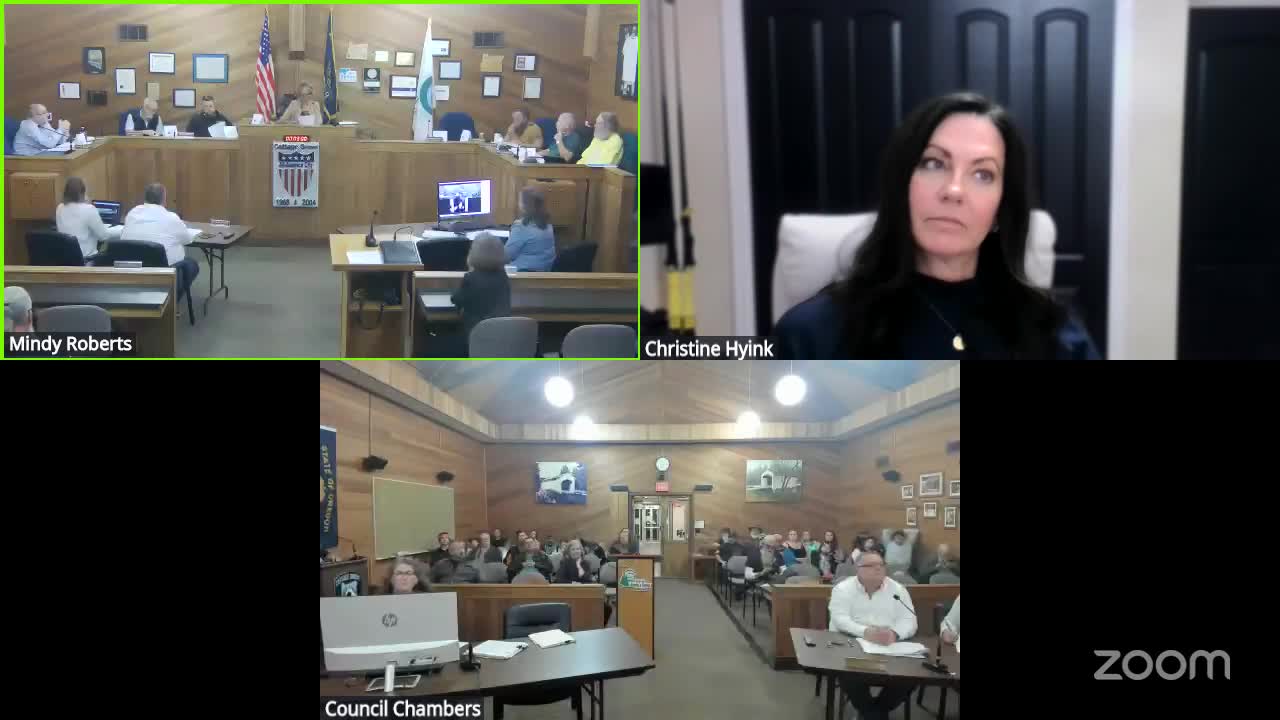
Consultant Colleen Howard outlined the plan and next steps and told the council, “Urban renewal is not a new tax,” explaining that the plan would establish an urban renewal area in which future increases in assessed value would fund projects inside the district while the pre‑existing tax base continues to flow to other taxing jurisdictions. Howard said the plan has been under development since 2024 (with work reaching back about five years) and noted the Urban Renewal District approved noticing to taxing districts earlier in the process.
The plan identifies project categories including economic development, land acquisition, emergency preparedness, parks, transportation and ADA improvements, utilities, a development loan program and staffing. Howard said the plan includes a $2,000,000 allocation to South Lane Fire and Rescue for equipment replacement projected in 2044. She also presented a maximum indebtedness figure of $65,400,000 for roughly a 30‑year planning horizon and displayed year‑of‑expenditure costs for identified projects at about $37,000,003.31.
After closing the hearing at 7:29 p.m. with no public testimony, staff recommended the council approve the ordinance’s first reading and set the second reading for the December meeting. The council then moved and approved the ordinance first reading on a unanimous voice vote.
Councilors asked how the district would respond if assessed values fell during the plan’s life; staff replied that lower assessed values would produce less tax‑increment revenue to spend on projects but would not impose a statutory penalty. Howard emphasized that property owners’ tax bills do not automatically increase because an urban renewal area is adopted; instead, tax revenues from future assessed‑value growth inside the district would be used for the plan’s projects.
Next steps: staff will publish the notice required by the ordinance and return to council for the second reading and final adoption at the December meeting.
Don't Miss a Word: See the Full Meeting!
Go beyond summaries. Unlock every video, transcript, and key insight with a Founder Membership.
30-day money-back guarantee
Sponsors
Proudly supported by sponsors who keep Oregon articles free in 2025

