St. Francis reports new literacy, math and special‑education initiatives; vaccination coverage flagged
November 11, 2025 | St. Francis Area Schools, School Boards, Minnesota
This article was created by AI summarizing key points discussed. AI makes mistakes, so for full details and context, please refer to the video of the full meeting. Please report any errors so we can fix them. Report an error »
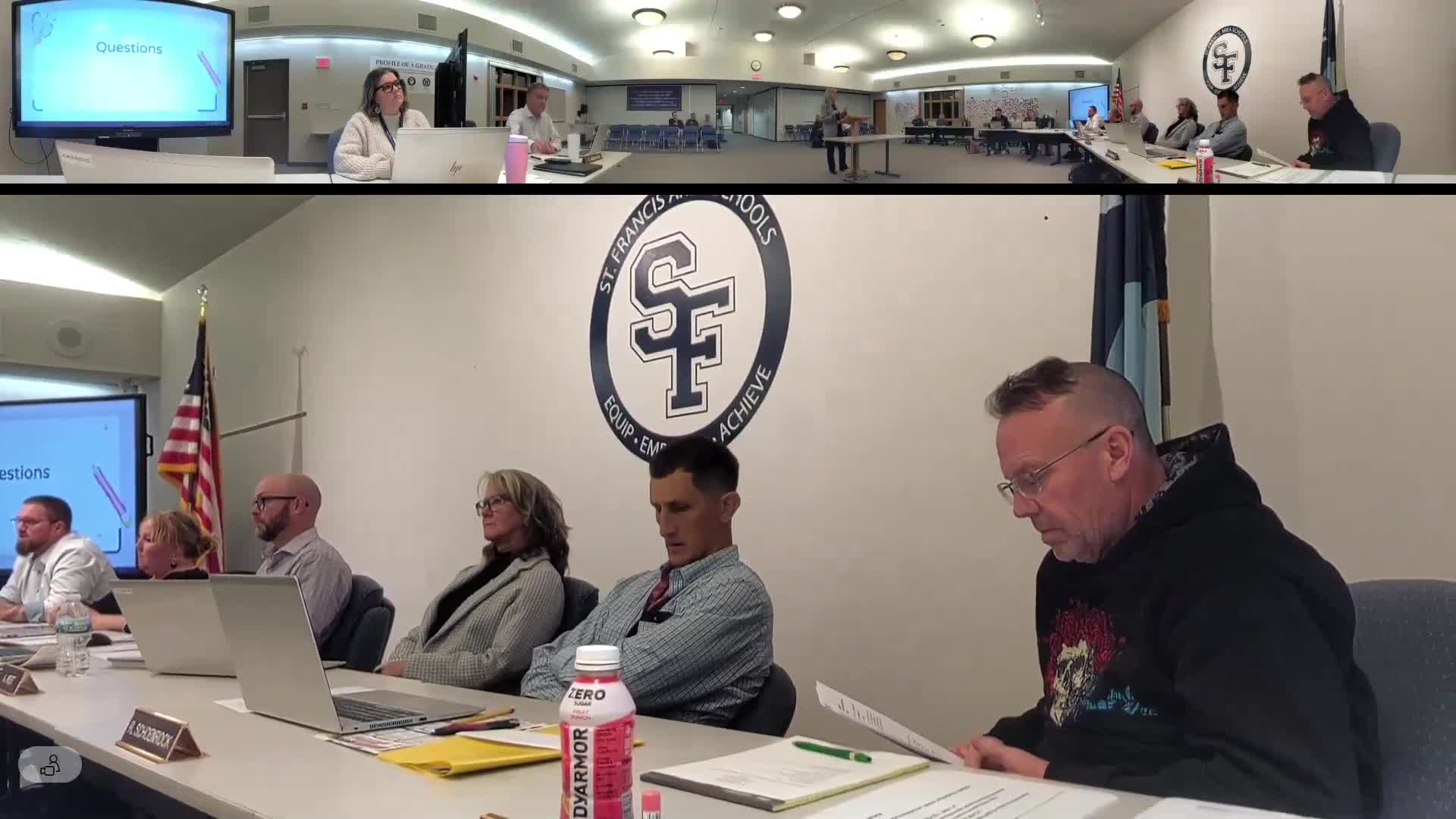
The district introduced two new principals — Carla Winter at St. Francis Elementary and Jamie Carpenter at Cedar Creek — and described changes in early literacy. District staff said most teachers completed LETRS (Language Essentials for Teachers of Reading and Spelling) units last year and that the district is implementing University of Florida–aligned literacy materials in kindergarten through second grade and Bridge to Read in grade 3. "We're seeing evidence of these practices happening in our classrooms every day," a district elementary leader said, citing classroom examples such as scripted, explicit phonics lessons and spelling rules taught by heart.
On math, staff described a shift to daily number talks and a more conceptual approach that builds from kindergarten through fifth grade; teachers also use tiered interventions and small‑group instruction to support students who need additional help.
Administrators reported a combined Title I family engagement night on Oct. 28 at the middle school with about 280 RSVPs, during which families received instructional resources and presentations about Title I services. Staff said survey feedback asked for more events of that kind.
Special‑education and student‑support updates included restructuring alternative‑to‑suspension services (Genesis/Restore), launching a setting‑3 program at the middle school to ease transitions for students with higher behavioral needs, a rollout of a new online special‑education paperwork system (SpedForms) now in phase 2, and a district special‑ed website for live updates. District leaders also described increased family communications for the Restore program, including a three‑week check‑in cadence for case managers.
The board discussed immunization compliance: administrators cited a 95% target for MMR coverage to approach herd immunity and reported a district figure of about 92.7% for MMR vaccinations. They noted the state expects either vaccination or a completed opt‑out form for all students and said the district still needs to reach that standard. "We have a ways to go," one administrator said.
Officials also noted operational items such as a naloxone distribution plan, an AED replacement schedule and recruitment challenges for special‑education staff. One board member urged continued focus on staffing because shortages of licensed special‑education teachers and educational assistants affect program delivery.
What's next: the district said it will continue implementation of literacy and math standards, expand family engagement events, refine special‑education staffing and communication, and pursue actions to increase vaccination compliance.
Don't Miss a Word: See the Full Meeting!
Go beyond summaries. Unlock every video, transcript, and key insight with a Founder Membership.
30-day money-back guarantee
Sponsors
Proudly supported by sponsors who keep Minnesota articles free in 2025

