Wayzata board approves resolution to call April 2026 special election for large facilities package, including separate pool question
November 10, 2025 | Wayzata Public School District, School Boards, Minnesota
This article was created by AI summarizing key points discussed. AI makes mistakes, so for full details and context, please refer to the video of the full meeting. Please report any errors so we can fix them. Report an error »
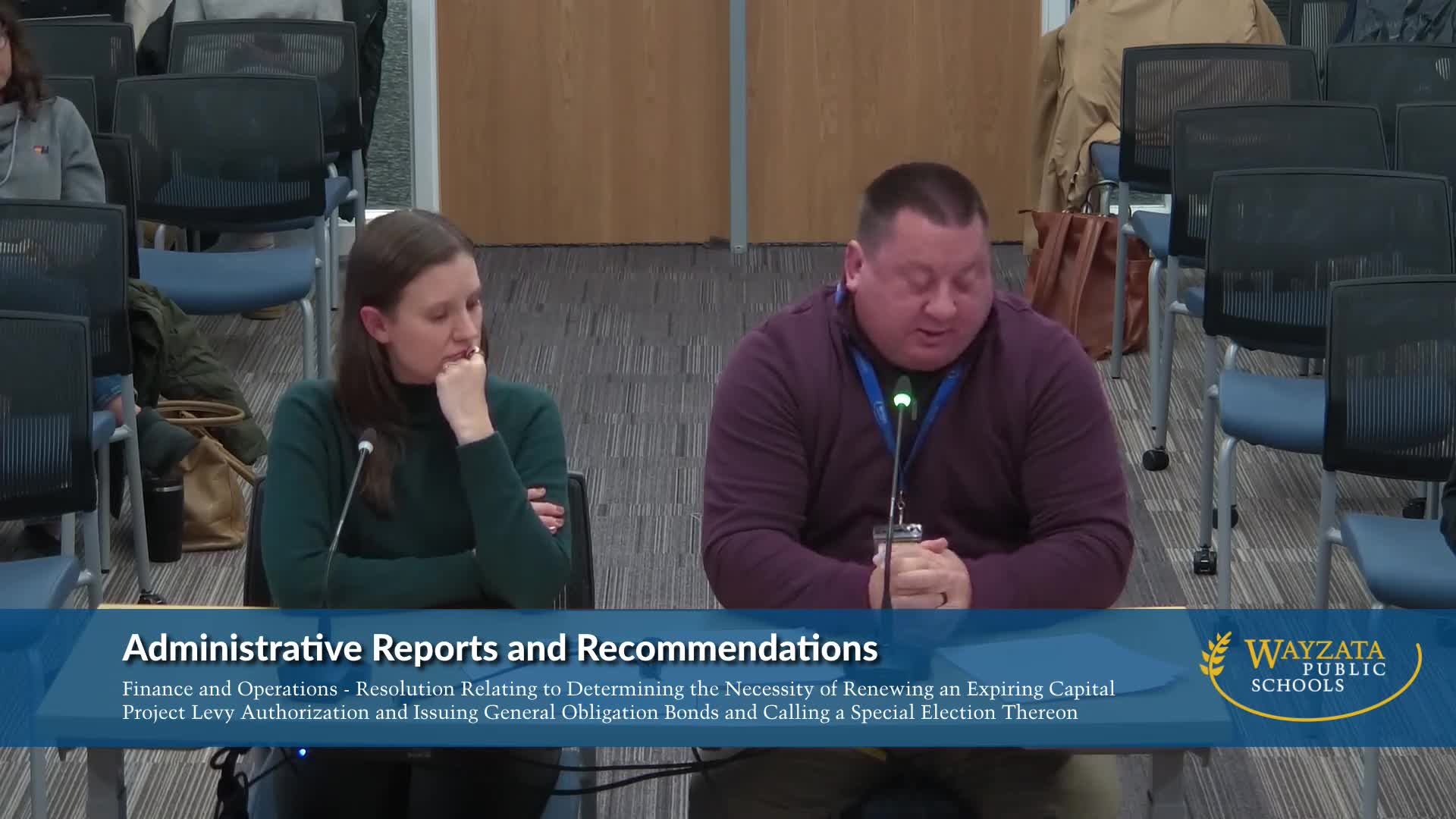
The package presented by district leaders and its facility partners would fund a new elementary school and a new middle school, additions at Wayzata High School, kitchen and cafeteria upgrades, expanded physical‑education and athletics spaces, special‑education spaces and other capital projects. A standalone ballot question would request voter approval to construct an eight‑lane pool at Wayzata High School.
Executive Director of Finance and Operations Trevor Peterson told the board the proposal is the product of multi‑year planning with Wold Architects, Kraus Anderson, and public financial advisors, and that, "the issuance of the general obligation building bonds would be structured over 2 ballot questions" (presentation summarized SEG 2719–2734). The administration also asked the board to authorize submitting required documents to the Minnesota Department of Education by Nov. 25, 2025.
Parents and students urged board support for the pool during the public comment period. "Having a pool at Wayzata High School would make a huge difference to the swimmers in the quality of our programs," said Emery Marks, a Wayzata High School junior and swimmer, arguing the teams now must practice off campus and face privacy and transportation challenges. Parent and volunteer Erin Haldean said a district aquatic center could expand opportunities for swim lessons, community rentals, masters programs and jobs for students.
Board members and members of the public pressed administration for more detailed itemization and information about operating and maintenance costs, the rationale for making the pool a separate ballot question, and why existing district pools were not sufficient. A board member summarized public concerns about timing and transparency: "This is over half of a billion dollars decision…we need to be able to individually explain to our neighbors why it is a good decision to spend half of a billion dollars" (public comment paraphrased from SEG 2903–2968).
Administration responded that some existing pools are contractually used by the community (the east pool is contracted) or are old and not fit for modern curricular use (the west pool was built in 1957 and lacks locker rooms), and that a high‑school pool would better align with scheduling and curriculum at the secondary level (discussion and administration response summarized SEG 2803–2845). Superintendent and facilities staff said the facilities package is the outcome of demographic studies, steering committees and a community task force and that the resolution simply takes the proposal to voters.
When the board took a roll‑call vote on the motion to adopt the resolution calling the special election, the motion carried. Valentina Ayers recorded a No vote; other members voted Yes. The board chair asked for a five‑minute break after the vote. The board’s vote authorizes the administration to proceed with the next steps required to place the questions on the April ballot and to submit required documentation to state reviewers.
What happens next: the district will finalize ballot language and the materials required for state review and begin the voter‑education process ahead of the April 14, 2026, special election. The motion’s adoption does not appropriate funds; it only authorizes the district to ask voters for approval.
Don't Miss a Word: See the Full Meeting!
Go beyond summaries. Unlock every video, transcript, and key insight with a Founder Membership.
30-day money-back guarantee
Sponsors
Proudly supported by sponsors who keep Minnesota articles free in 2025

