UN: aid to Gaza constrained by limited crossings and coordination bottlenecks
November 10, 2025 | United Nations, Federal
This article was created by AI summarizing key points discussed. AI makes mistakes, so for full details and context, please refer to the video of the full meeting. Please report any errors so we can fix them. Report an error »
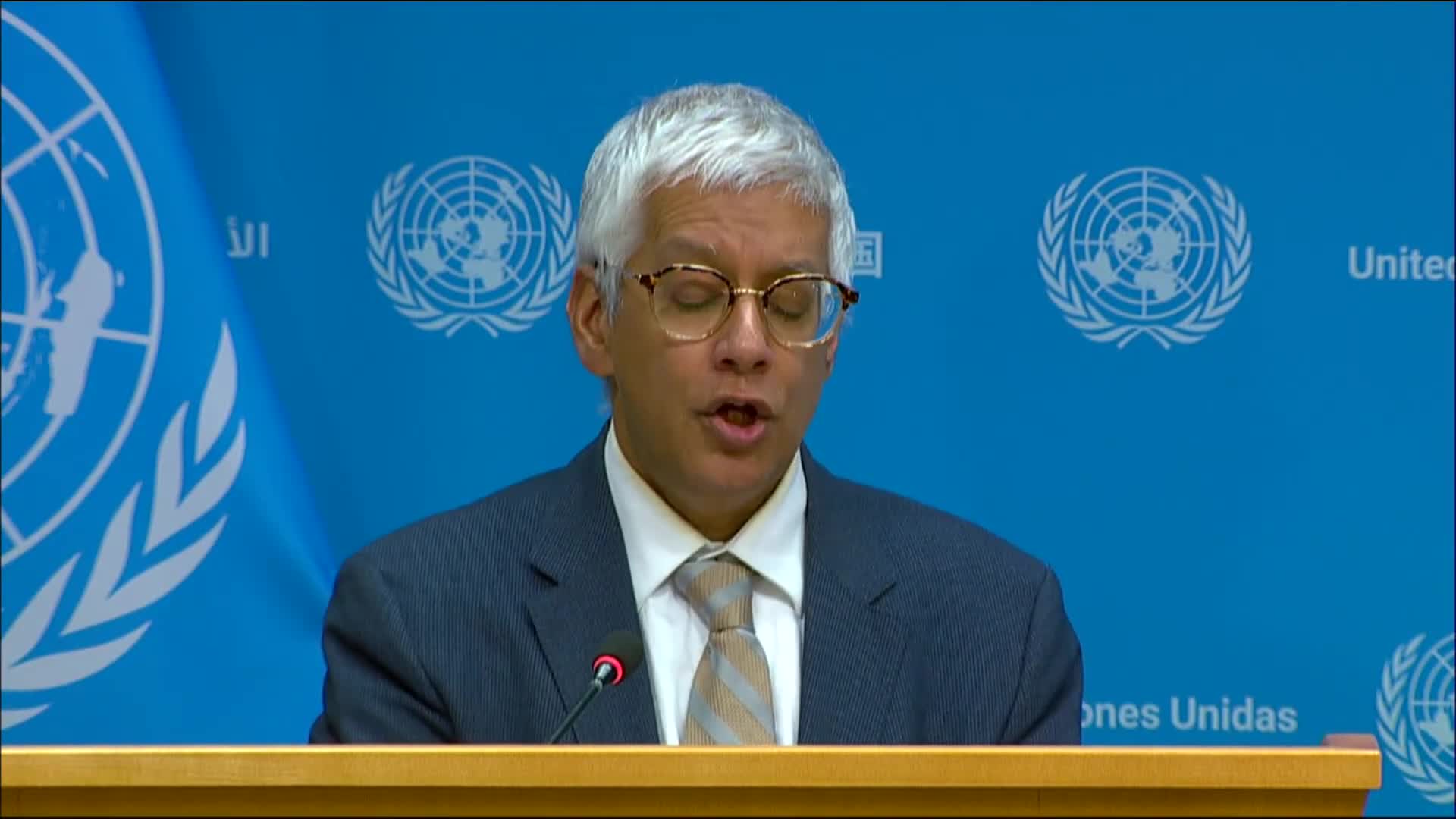
The United Nations Office for the Coordination of Humanitarian Affairs (OCHA) told a press briefing that one month into the ceasefire efforts to ramp up aid to Gaza remain constrained by red tape, bans on some humanitarian partners, too few border crossings and persistent insecurity.
Briefing official Farhan said UN teams made eight coordination attempts with Israeli authorities in recent days; only two were fully facilitated, four were impeded on the ground and one was delayed for 10 hours before receiving clearance. "The holdup is on the Israeli side," Farhan said in response to a journalist’s question about why only two crossings are open.
UN agencies have tried to expand operations where possible: UNICEF, the UN Relief and Works Agency for Palestine Refugees (UNRWA), and the World Health Organization launched a catch-up campaign for routine immunization, nutrition and growth monitoring that aims to reach about 44,000 children who missed earlier vaccinations.
The World Health Organization reported that Al Khair Hospital in Khan Yunus resumed operations after attacks earlier in 2024 and that WHO set up a 20-bed nutrition stabilization centre there; the briefing said Gaza now has seven such centres with about 70 inpatient beds in total. Partners also reported distributing nearly 40,000 winter clothing kits, some 50,000 blankets over four days, 15,000 hygiene kits, and running water-trucking services to roughly 2,000 locations across the Gaza Strip since the ceasefire.
Journalists pressed for more detailed naming of specific incidents, including children killed; the briefing official said he believed such incidents had been mentioned in a previous briefing and referred questioners to briefing notes.
The briefing did not announce any new formal UN-authorized change in access arrangements; it described operational constraints, the UN and partners’ mitigation steps, and ongoing efforts to coordinate with Israeli authorities and other actors to expand aid deliveries.
Briefing official Farhan said UN teams made eight coordination attempts with Israeli authorities in recent days; only two were fully facilitated, four were impeded on the ground and one was delayed for 10 hours before receiving clearance. "The holdup is on the Israeli side," Farhan said in response to a journalist’s question about why only two crossings are open.
UN agencies have tried to expand operations where possible: UNICEF, the UN Relief and Works Agency for Palestine Refugees (UNRWA), and the World Health Organization launched a catch-up campaign for routine immunization, nutrition and growth monitoring that aims to reach about 44,000 children who missed earlier vaccinations.
The World Health Organization reported that Al Khair Hospital in Khan Yunus resumed operations after attacks earlier in 2024 and that WHO set up a 20-bed nutrition stabilization centre there; the briefing said Gaza now has seven such centres with about 70 inpatient beds in total. Partners also reported distributing nearly 40,000 winter clothing kits, some 50,000 blankets over four days, 15,000 hygiene kits, and running water-trucking services to roughly 2,000 locations across the Gaza Strip since the ceasefire.
Journalists pressed for more detailed naming of specific incidents, including children killed; the briefing official said he believed such incidents had been mentioned in a previous briefing and referred questioners to briefing notes.
The briefing did not announce any new formal UN-authorized change in access arrangements; it described operational constraints, the UN and partners’ mitigation steps, and ongoing efforts to coordinate with Israeli authorities and other actors to expand aid deliveries.
Don't Miss a Word: See the Full Meeting!
Go beyond summaries. Unlock every video, transcript, and key insight with a Founder Membership.
✓
Get instant access to full meeting videos
✓
Search and clip any phrase from complete transcripts
✓
Receive AI-powered summaries & custom alerts
✓
Enjoy lifetime, unrestricted access to government data
30-day money-back guarantee
