Wayzata begins enrichment program review; administration proposes CogAT layer and appeals process for gifted identification
November 10, 2025 | Wayzata Public School District, School Boards, Minnesota
This article was created by AI summarizing key points discussed. AI makes mistakes, so for full details and context, please refer to the video of the full meeting. Please report any errors so we can fix them. Report an error »
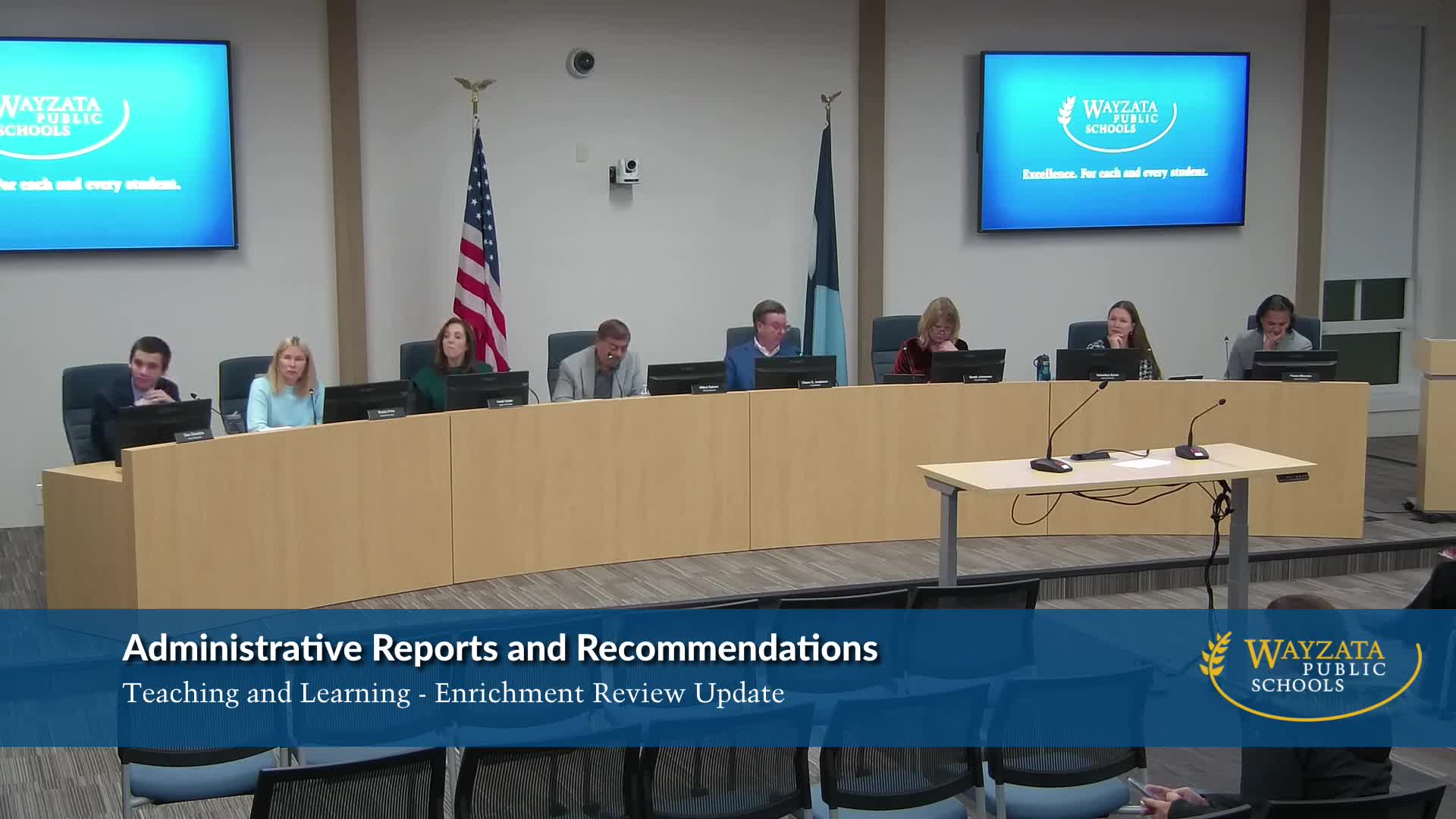
Executive Director Dana Miller and the enrichment review team said the review was prompted by recent attendance‑area changes and a need to ensure identification and services are equitable across buildings. Administration described a four‑phase program review (envision/assess; plan/develop; implement; evaluate/adjust) and reviewed historical models including the district’s earlier "Vision 21" approach.
For 2025, the district used FastBridge achievement data with a 2‑of‑3 administrations threshold at the 90th percentile for advanced academics. Administrators reported that applying that threshold in Wayzata yields higher qualifying percentages than national norms (administration cited roughly 16% qualifying in math grades 2–5 at a 90.7 cutoff and about 21% in reading at the 90th percentile) and said nationwide practice typically identifies about 3–6% for pullout programs.
In response to parent concerns — including a public comment that "Wayzata relies solely on FastBridge for gifted identification" — the administration proposed adding a CogAT (cognitive aptitude) layer for students who are near‑qualifying (e.g., within one standard error of measurement) and creating a reconsideration/appeal process for families. The team said that fourth graders are already screened with CogAT and that targeted second‑ and third‑grade CogAT administration could be used for small, near‑qualifying groups rather than grade‑wide testing.
The presentation also outlined steps to align enrichment curriculum across buildings, including adopting shared units and using ConceptQuest for enriched math thinking and revised reading units tied to standards. Administrators emphasized the goal is consistency across buildings and better alignment between tier‑1 classroom instruction and enrichment pullouts.
Parents at the meeting asked whether the changes would make entry into enrichment programs more or less difficult and whether the weekly pullout minutes had changed. Administrators said the district is not setting an aim to expand or shrink the program but to ensure equitable access; they noted current enrichment pullouts are typically twice weekly for math/reading (30 minutes each session in the current model) and that the district has increased tier‑1 instructional time to complement pullouts.
Next steps: the enrichment team said it will gather additional feedback from enrichment specialists and principals, refine identification language and timelines, and consider pilot implementations as early as this winter for selected changes including adding the CogAT layer and a formal reconsideration process.
Don't Miss a Word: See the Full Meeting!
Go beyond summaries. Unlock every video, transcript, and key insight with a Founder Membership.
30-day money-back guarantee
Sponsors
Proudly supported by sponsors who keep Minnesota articles free in 2025

