Planning board reviews major solar law redlines and a new battery storage law; sheep grazing, overlay zones and 200‑foot setback draw questions
November 11, 2025 | Grand Island, Erie County, New York
This article was created by AI summarizing key points discussed. AI makes mistakes, so for full details and context, please refer to the video of the full meeting. Please report any errors so we can fix them. Report an error »
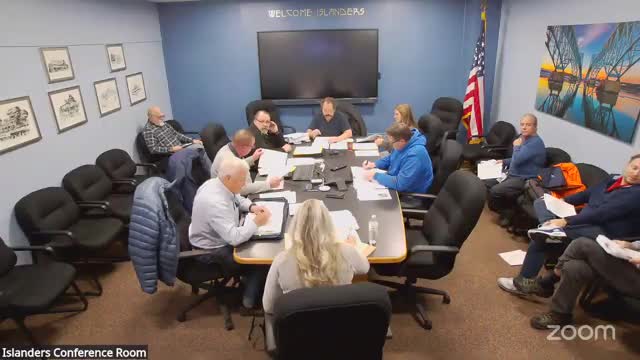
Lydia (presenter, speaker 10) said the solar law redlines aim to incorporate lessons from permits issued since 2021, improve application completeness, add definitions (including building‑mounted and ground‑mounted systems) and move battery rules into a separate law because standalone battery projects are now common (transcript SEG 930–SEG 1004, SEG 1500–SEG 1510). She told the board the draft clarifies that megawatt figures are measured in AC, and adds a prohibition on glare that could reflect onto neighboring properties, roads or public facilities.
Sheep grazing: Lydia recommended allowing sheep grazing as part of a vegetation management plan without a separate special‑use permit but limited each grazing event to 14 days to prevent a solar array from functioning as a permanent sheep farm. That limit prompted questions about enforcement and whether bringing off‑site supplemental feed should be prohibited; Lydia said she would research and consider adding language to prevent import of feed if the board wants.
Overlay district: Lydia proposed exploring a renewable energy overlay district to steer projects toward areas with better interconnection to transmission and distribution lines (she presented a Google Earth map showing existing and permitted solar projects and two proposed battery project sites). Board members generally expressed support for an overlay to concentrate projects near infrastructure but asked for GIS assistance to define overlay boundaries and criteria.
Screening and visual impact: The draft includes strong screening requirements for community and utility‑scale projects, including complete screening from adjacent property lines and suggested two rows of native evergreen shrubs in some situations; several members said these provisions may be excessive and should allow flexibility based on site context. Lydia said screening must be maintained for the life of the project and should be described in a vegetation management plan.
Battery storage law: Lydia presented a separate draft local law for battery energy storage systems (BESS). She described containerized battery systems, noted safety improvements in modern designs and recommended that the town require applicants to demonstrate compliance with rigorous testing standards (she cited New York City Fire Department testing criteria as a model). The draft would require a detailed electrical diagram, equipment maintenance plans, annual reporting of maintenance and operational data, a decommissioning cost estimate and, for large (tier 3) systems, a 200‑foot setback from occupied structures.
Board concerns and technical items: Members asked whether batteries should be allowed in residential districts, how to define setbacks and wetlands protections, whether noise from inverters/transformers requires study, and whether metering or operational data should be submitted annually to confirm systems are active and safe. Lydia and staff agreed to circulate redlines, get GIS support and share related comments from other stakeholders and boards.
Next steps: Lydia said she would recirculate redlines and collect feedback from other boards; several board members asked the zoning committee and conservation advisory board to weigh in prior to final recommendations. The board did not take a formal vote on the solar or battery laws at this meeting; the draft laws will return for further review and redlining with input from GIS and other advisory boards.
View the Full Meeting & All Its Details
This article offers just a summary. Unlock complete video, transcripts, and insights as a Founder Member.
30-day money-back guarantee
Sponsors
Proudly supported by sponsors who keep New York articles free in 2025

