Debate over 10‑year mobile‑home rule draws residents to Sulphur council
November 10, 2025 | Sulphur, Calcasieu Parish, Louisiana
This article was created by AI summarizing key points discussed. AI makes mistakes, so for full details and context, please refer to the video of the full meeting. Please report any errors so we can fix them. Report an error »
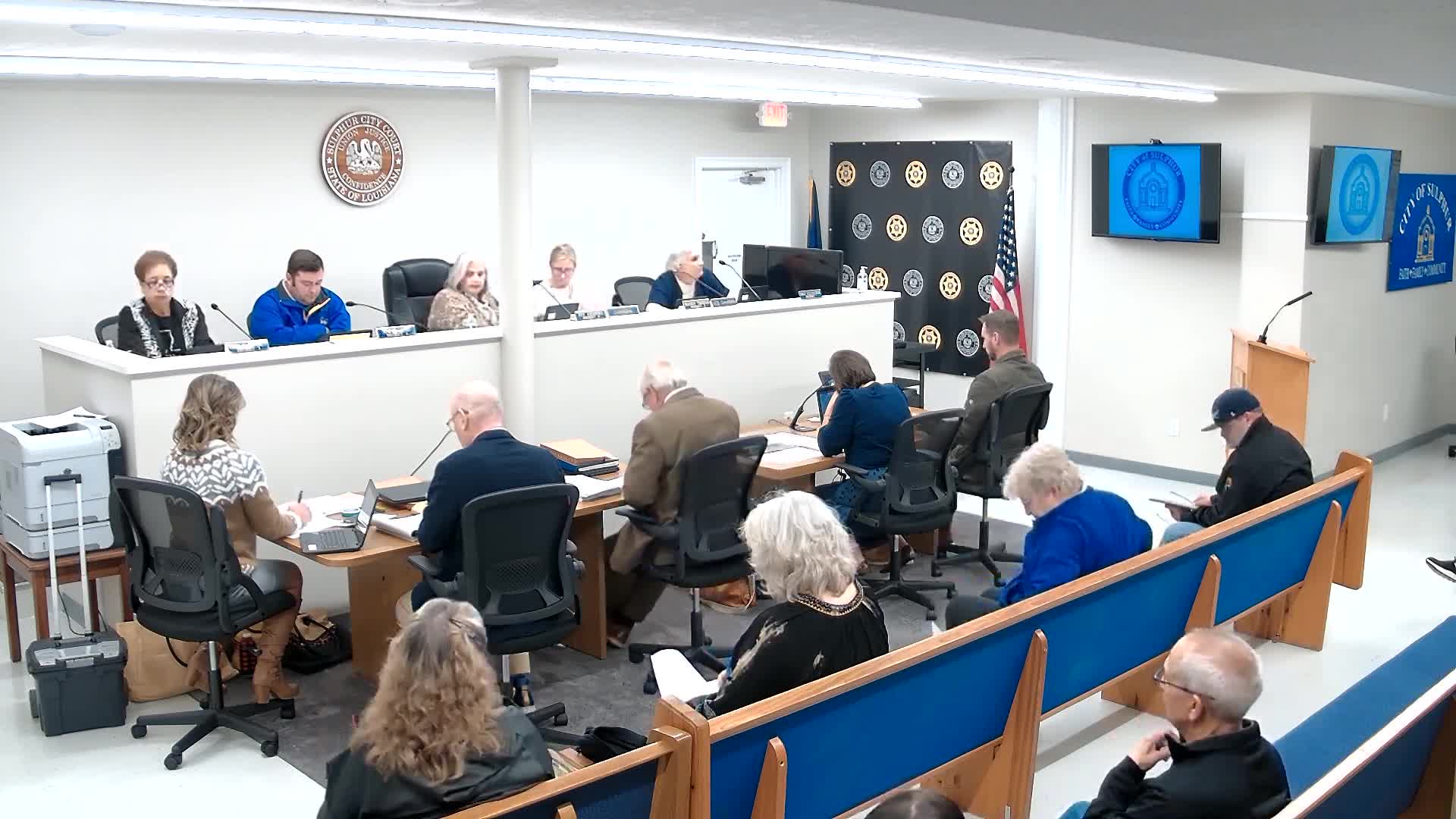
Vernon Tanner, the applicant, confirmed he would owner‑finance the structure; speakers asked the council whether the application process requires expensive preapproval work such as elevation surveys and inspections. Staff clarified that elevation certificates and surveying are part of the permitting process but not required prior to coming before council, and that some fees are paid only after council approval.
Several commenters asked why applicants incur inspection and survey costs before the council acts. Council and staff said applicants should be able to come before the council first and complete surveys and elevations after conditional approval; staff noted $50 sign/posting and other administrative costs but indicated the city does not mandate payment of all fees before the hearing.
Why it matters: The variance and how the city applies the 10‑year rule affects housing stability for low‑income residents and may impose out‑of‑pocket costs that deter legal compliance. Commenters suggested alternatives such as a landlord‑licensing regime and better buyer protections to prevent owners from losing investments.
Outcome: The council took testimony, asked staff for follow‑up and recorded motions and roll‑call votes tied to the related agenda items (the transcript shows subsequent motions and roll calls on related variances and condemnations), with staff committing to follow up on procedural clarifications and permitting guidance for applicants.
Quote: "We're talking about an area that is probably one of the oldest areas in Sulphur that people are living in poverty in," Josh Baden said in urging leniency where homes are safe and livable.
Don't Miss a Word: See the Full Meeting!
Go beyond summaries. Unlock every video, transcript, and key insight with a Founder Membership.
30-day money-back guarantee
Sponsors
Proudly supported by sponsors who keep Louisiana articles free in 2025

