Cuyahoga County Board of Health presents services, seeks 12% contract increase; Lakewood committee forwards renewal to council
November 10, 2025 | Lakewood, Cuyahoga County, Ohio
This article was created by AI summarizing key points discussed. AI makes mistakes, so for full details and context, please refer to the video of the full meeting. Please report any errors so we can fix them. Report an error »
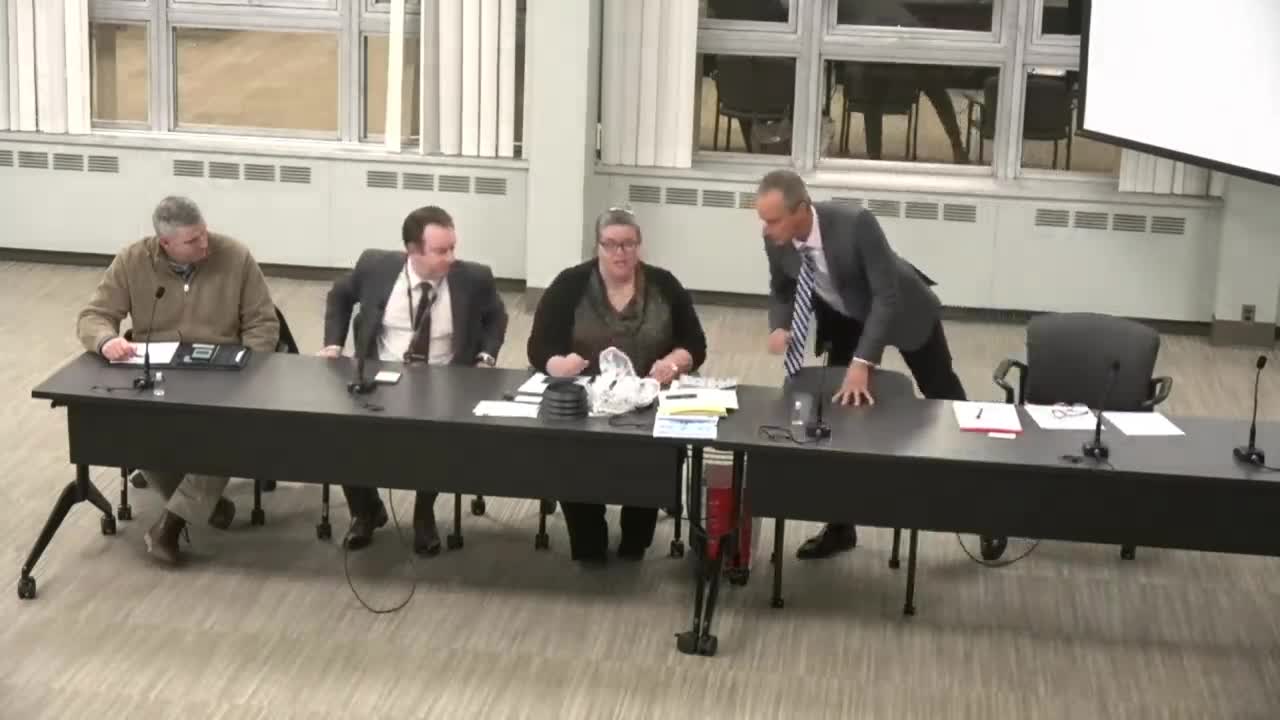
Suzanne Rush, director of external affairs for the county board, said the county serves about 58 communities (outside the city of Cleveland) and employs roughly 188 people. "We're about a 188 people strong at the board of health," Rush said, and described the board’s program areas including food protection, watershed and water work, district sanitation, population health and clinical services. She said county staff operate a Lakewood clinic (79 patients, 122 visits in 2024; 67 patients, 106 visits in 2025) and recently launched a mobile medical unit that expands outreach.
Rush described the rationale for the funding request: the county is investing in a mobile unit and in expanded outreach, communications and IT capacity to boost vaccine delivery, chronic-disease prevention and walk-in clinical services. "One of the reasons that we want an increase, a 12% increase for 2 years, we have just launched a mobile medical unit," Rush said. She also said the board has filed for reaccreditation through the Public Health Accreditation Board and planned to announce the result shortly.
Committee members pressed for more local detail. A councilmember asked whether Lakewood-specific health outcomes are available; Rush said much county data is collected and reported countywide and not stratified by ZIP code, but the board is developing a community-level report card by jurisdiction that she expects to release in late 2026 or early 2027. Rush offered to provide county-level data and anecdotal information about outbreaks when asked.
Rush also reviewed other county services frequently used by Lakewood residents, including emergency response for rabies exposure and rare infectious events, a child-fatality review used for prevention work, and lead-hazard remediation. She said the county has invested more than $450,000 in home remediation over the last five to six years and addressed lead hazards in 25 units during that time.
After questions, Chair Marks moved to forward the renewal agreement to full council for approval; the motion was seconded and approved by voice vote in committee.
What happens next: the renewal and related appropriation will be considered by the full City Council following committee referral.
Don't Miss a Word: See the Full Meeting!
Go beyond summaries. Unlock every video, transcript, and key insight with a Founder Membership.
30-day money-back guarantee
Sponsors
Proudly supported by sponsors who keep Ohio articles free in 2025

