Lakewood Alive outlines housing outreach and small-business support; flags garages, hoarding and senior housing needs
November 10, 2025 | Lakewood, Cuyahoga County, Ohio
This article was created by AI summarizing key points discussed. AI makes mistakes, so for full details and context, please refer to the video of the full meeting. Please report any errors so we can fix them. Report an error »
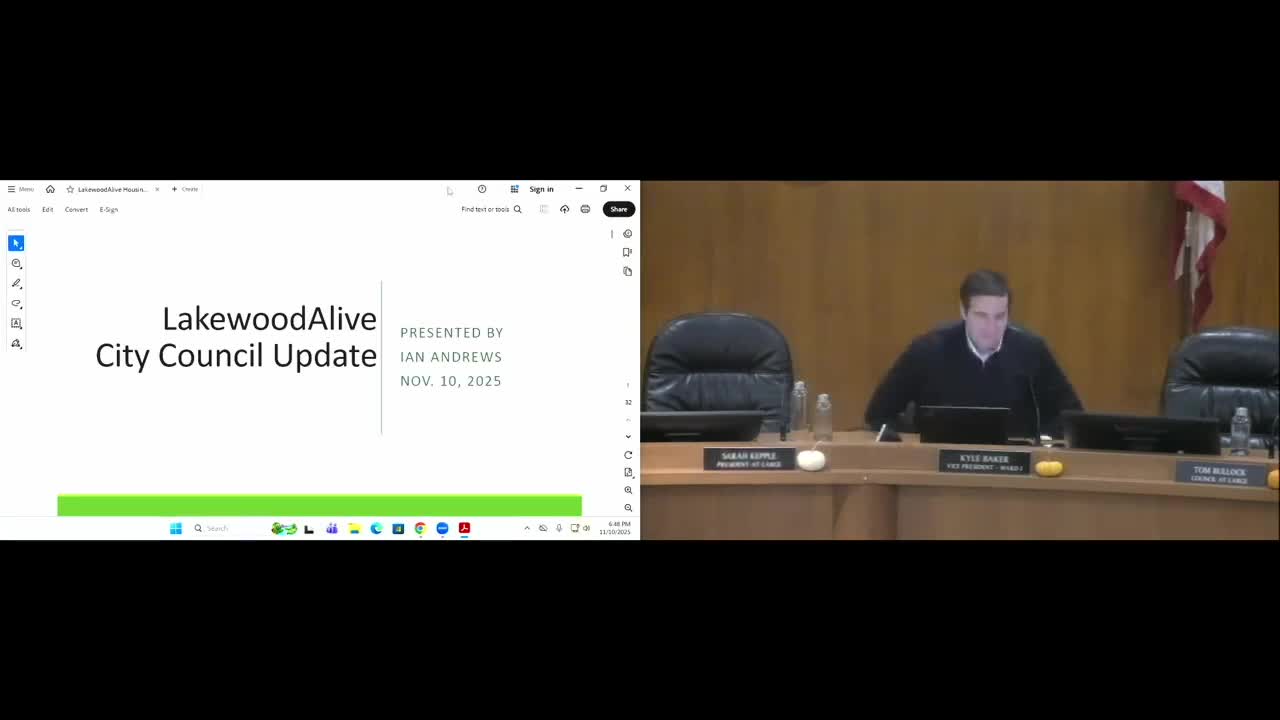
"Housing is economic development in Lakewood," Ian Andrews, executive director of Lakewood Alive, told the committee as he summarized programs that include Paint Lakewood (exterior paint and lead remediation funded with CDBG), a bed‑bug program that inspects alleged infestations and helps coordinate remediation, aging‑in‑place home assessments paired with neighborhood paramedic services, volunteer repair projects, and a toolbox of donated equipment and skilled volunteers. Andrews said volunteers and partners helped stabilize porches, furnaces and electrical panels for elderly residents and delivered low‑cost beds and other basic items to seniors in need.
The presentation flagged three persistent challenges: aging garages and driveways that can cost $30,000–$50,000 to replace and for which no federal funding stream exists; hoarding cases that raise access and mental‑health issues and often go unaddressed until a disaster; and an increasing share of senior clients (more than 70% of Lakewood Alive’s clientele now) living in homes 80–90 years old. Andrews said the organization leverages city partnerships and private grants to deliver services but cannot cover all needs without additional funding or policy shifts.
On business support, Lakewood Alive presented small‑business assistance programs that include sign grants (50% reimbursement up to $2,500), lease and lease‑review help through the Cleveland Legal Collaborative, a maintained available‑properties listing to help entrepreneurs find space, and fiscal sponsorship for neighborhood merchant associations. Presenters cited several recent successes in helping local entrepreneurs find and open spaces.
Committee members and staff praised Lakewood Alive’s role as a "force multiplier" for city services, noted the limits of municipal funding, and moved to receive and file the communication.
What happens next: the committee received the presentation and will consider related budget items and potential policy responses as part of future city work on housing, code enforcement and targeted assistance.
Don't Miss a Word: See the Full Meeting!
Go beyond summaries. Unlock every video, transcript, and key insight with a Founder Membership.
30-day money-back guarantee
Sponsors
Proudly supported by sponsors who keep Ohio articles free in 2025

