Santa Barbara planning staff previews single-family streamlining; ABR told substantive ABR triggers won’t change
November 10, 2025 | Santa Barbara City, Santa Barbara County, California
This article was created by AI summarizing key points discussed. AI makes mistakes, so for full details and context, please refer to the video of the full meeting. Please report any errors so we can fix them. Report an error »
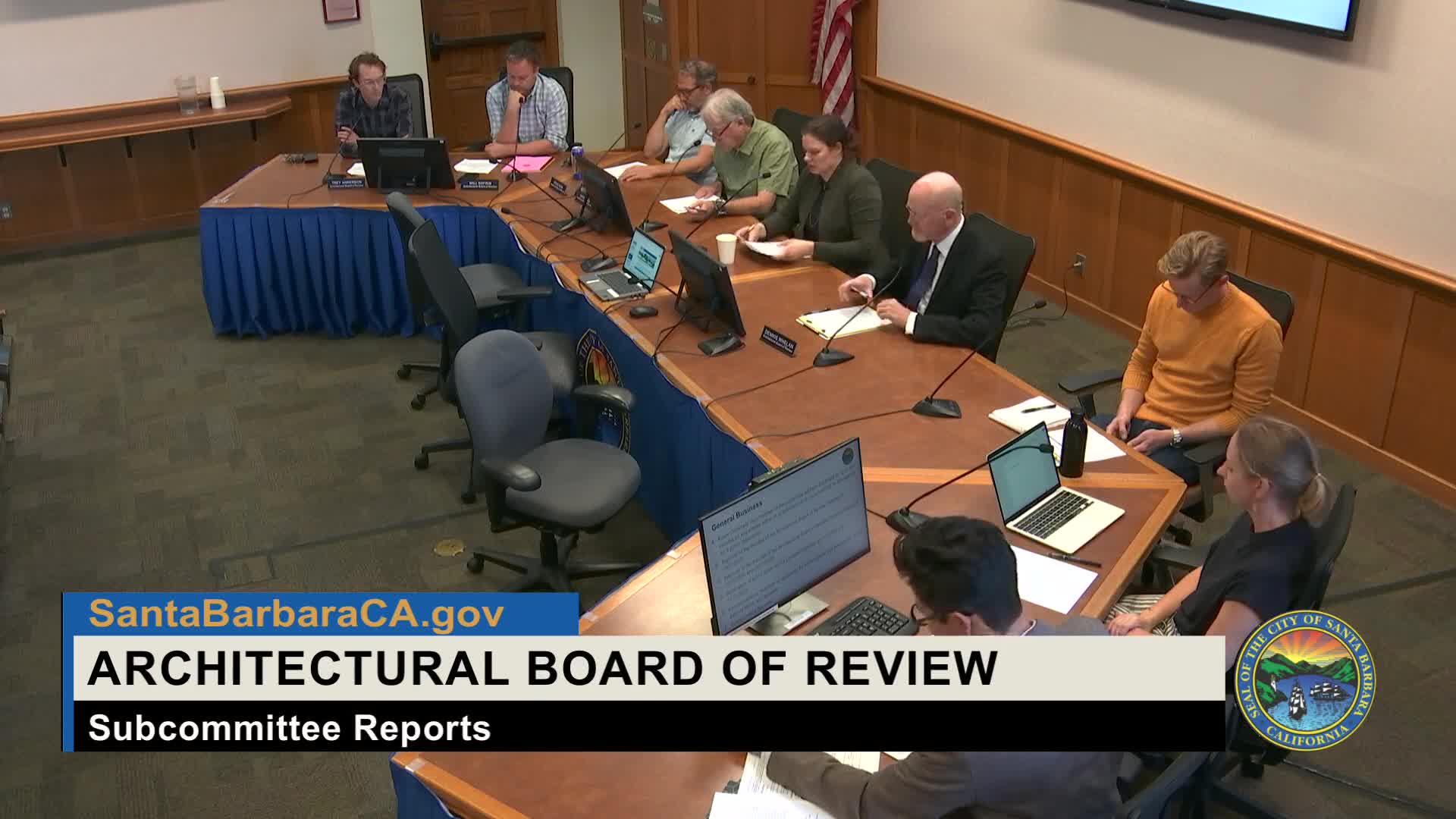
Ted Hamilton, acting design review supervisor in the Community Development Department, told the board the project’s goals are to reduce red tape for minor projects, consolidate several design‑review chapters into one ordinance, and convert commonly used design guidelines into objective development standards. "There really aren't substantive changes to the ABR design review triggers or process," Hamilton said, while noting several procedural and clarity changes are proposed.
Why it matters: the package seeks to reduce the number of small projects that require single‑family design board (SFDB) hearings, increase administrative approvals for minor work, and align review workload between SFDB, ABR and the Historical Landmarks Commission (HLC). Hamilton said SFDB currently sees roughly three times as many applications as ABR or HLC, in part because the Hillside Design District captures many exterior alterations and the existing triggers are comparatively low.
Key proposed and illustrative changes described by staff:
- Move design review chapters out of Title 22 into Title 30 to consolidate all design‑review provisions.
- Create objective design standards from existing design guidelines for items such as upper‑story balconies, decks, fences and retaining walls so applicants can design to clear standards or request exceptions at hearing.
- Eliminate the covered‑parking requirement for duplexes while retaining parking‑space counts; uncovered parking in driveways would be allowed to align with ADU rules.
- Add objective standards for multiunit balconies, privacy and patio covers, and update front‑setback landscaping, hedge/fence and retaining‑wall standards.
- Adjust mailed‑notice thresholds for additions; Hamilton said projects exempt from public hearings would typically also be exempt from the 300‑foot mailed‑notice requirement but would still require a building‑permit posting on site.
Process and schedule: staff expects to release the full draft code and guideline amendments later in the week and will post them on the project website. The planning commission recommendation hearing is scheduled for Dec. 4, 2025, and staff anticipates ordinance committee and city council introduction and adoption in spring 2026. Hamilton emphasized that no formal ABR action was requested at the Nov. 10 update; the board’s role for today was to receive the overview and ask clarifying questions.
Board questions and clarifications: Vice Chair Whalen asked whether exempt SFDB approvals would still notify neighbors; Hamilton confirmed exemptions generally remove mailed notice but building‑permit posting remains a public notice mechanism. Board members pressed staff about the composition of SFDB caseloads; staff said a combination of the large number of single‑family properties in the city and a low design‑review trigger (notably in the Hillside Design District covering roughly 40% of the city) explains the higher SFDB volume.
Next steps: staff will notify the ABR when the full draft is posted and return as needed for formal review or where ABR decisions or guidelines require board input. No votes or formal ABR decisions occurred on the streamlining package at this meeting.
View the Full Meeting & All Its Details
This article offers just a summary. Unlock complete video, transcripts, and insights as a Founder Member.
30-day money-back guarantee
Sponsors
Proudly supported by sponsors who keep California articles free in 2025

