Orono rolls out UFLI and Arts & Letters elementary curriculum; teachers report early gains in engagement and writing
November 10, 2025 | ORONO PUBLIC SCHOOL DISTRICT, School Boards, Minnesota
This article was created by AI summarizing key points discussed. AI makes mistakes, so for full details and context, please refer to the video of the full meeting. Please report any errors so we can fix them. Report an error »
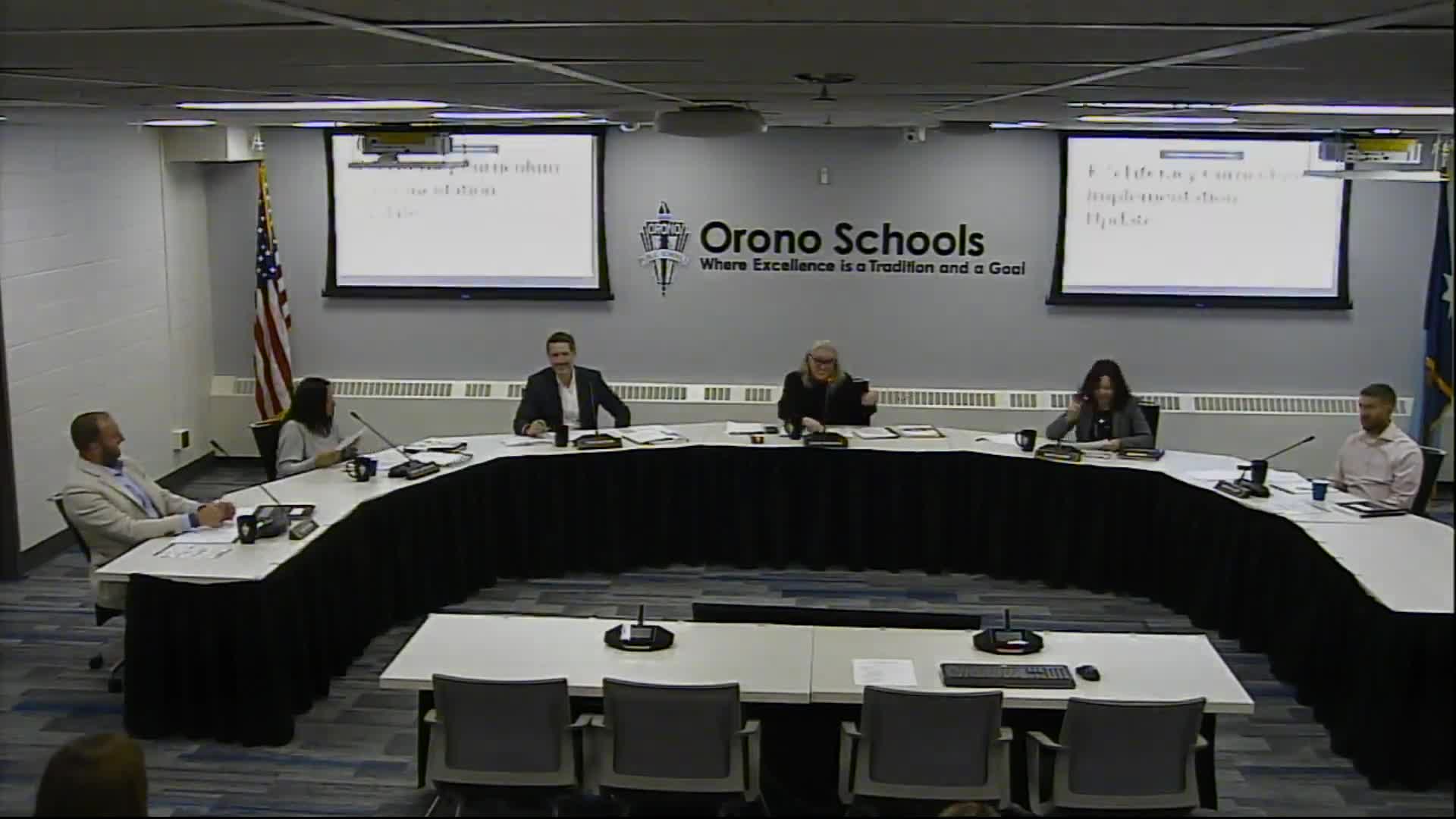
Beth Pearson, the district's literacy coordinator, told the board the district received boxed instructional texts and supplemental decodable texts ("geodes") funded by the Orono Foundation and PTO and has worked with the publisher Great Minds through a customer-success partnership that provided tailored professional development and classroom walkthroughs. "This was a moment to breathe and reflect on the first fall of module and do a little planning for the second," Pearson said, describing launch activities and an Oct. 23 implementation "health walk" used to tailor PD.
Second-grade teacher Cindy Verville described classroom outcomes: lessons that begin with art to open modules, scaffolded tasks that allow struggling and non-struggling readers to participate, weekly focus on a single text with varied tasks, and targeted writing instruction that builds toward end-of-module products. Verville offered an anecdote of a previously struggling reader who gained confidence and fluency through the curriculum.
Third-grade teacher Lindsay Nelson said the curriculum's design pairs essential questions, high-quality texts and art to build knowledge and vocabulary; she described students' early success writing literary essays and engaging in Socratic-style discussions. Nelson said the curriculum is rigorous but that teachers observed students "rise to meet it" and showed pride in their work.
Board members asked about inquiry/project-based work, professional development access (UFLI uses University of Florida training videos this year), measures of success and implementation challenges. Pearson said each grade level embeds inquiry (with a specific inquiry component in the last module), Great Minds will provide guided observations for leaders, and the district will collect both quantitative (student achievement, referrals to special education/reading intervention) and qualitative (teacher/family reports) indicators over time. Teachers also raised implementation constraints, including teacher time and materials (Post-it notes used as part of lessons).
One board member expressed concern that some students "miss" free-form creative writing under a more structured curriculum; teachers explained they are exploring ways to preserve student choice and creativity within the curricular framework.
The board thanked the teachers and district leaders for the presentation and for prioritizing professional development and resources; the presentation concluded with plans for continued PD and classroom coaching in January and next steps to collect data through winter for a fuller assessment of student outcomes.
Don't Miss a Word: See the Full Meeting!
Go beyond summaries. Unlock every video, transcript, and key insight with a Founder Membership.
30-day money-back guarantee
Sponsors
Proudly supported by sponsors who keep Minnesota articles free in 2025

