Planning commission backs stronger protections for 'grand trees,' recommends 1:1.5 buffer and arborist exceptions
November 10, 2025 | York County, South Carolina
This article was created by AI summarizing key points discussed. AI makes mistakes, so for full details and context, please refer to the video of the full meeting. Please report any errors so we can fix them. Report an error »
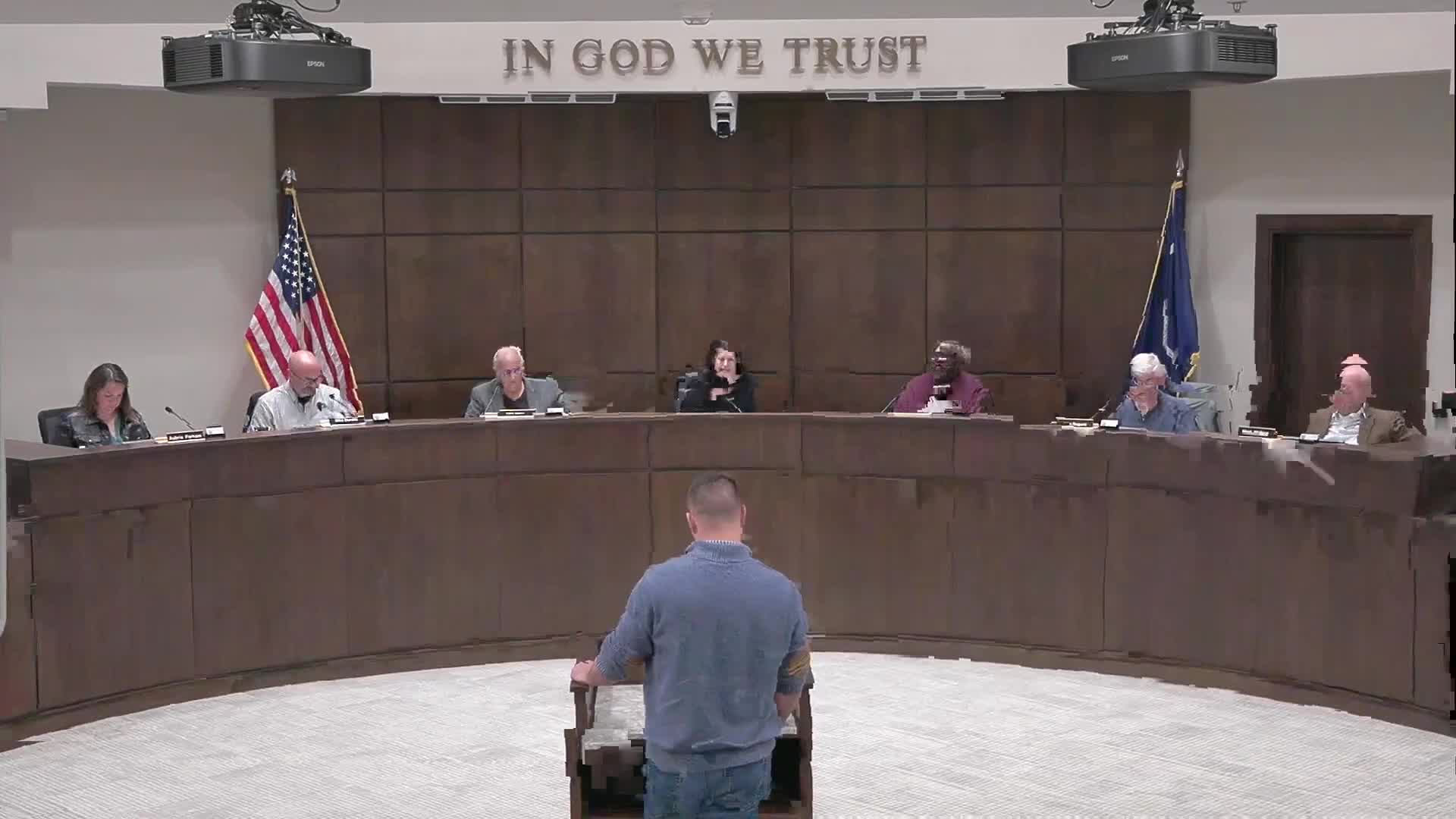
York County staff presented evidence on Nov. 10 that the existing tree-protection fencing standard (a 1:1 ratio: one inch DBH to one foot of canopy/radial protection) is not adequately protecting older, large-diameter 'grand trees'—particularly white oaks—adjacent to construction. Peter Kacicky, the county’s resident landscape architect, recommended raising the protection ratio to 1:1.5 for grand trees and leaving the 1:1 standard in place for routine tree-save areas and buffers.
Kacicky explained that older trees have more extensive feeder-root systems—sometimes extending three to four times the canopy radius—and that a 1:1 protection radius has not prevented decline in several observed cases, including a recent project near Clover Village where trees fenced at the 1:1 ratio declined over two years. He said a 1:1.5 ratio is supported by arboricultural references and local municipal practice and represents a balance between protection and development feasibility.
Commissioners asked about species differences, mitigation and whether the county arborist should have the authority to make exceptions. Members generally supported a higher default standard and agreed it should be paired with a clear, staff-managed exception process. A motion to recommend the staff amendment (increase grand-tree protection to 1:1.5 and include language allowing the county arborist to grant exceptions) passed by voice vote.
What happens next: Staff will draft precise ordinance language and a documented exception process for the county arborist; future development applications affecting grand trees will be evaluated against the new standard and the arborist’s discretionary framework.
Kacicky explained that older trees have more extensive feeder-root systems—sometimes extending three to four times the canopy radius—and that a 1:1 protection radius has not prevented decline in several observed cases, including a recent project near Clover Village where trees fenced at the 1:1 ratio declined over two years. He said a 1:1.5 ratio is supported by arboricultural references and local municipal practice and represents a balance between protection and development feasibility.
Commissioners asked about species differences, mitigation and whether the county arborist should have the authority to make exceptions. Members generally supported a higher default standard and agreed it should be paired with a clear, staff-managed exception process. A motion to recommend the staff amendment (increase grand-tree protection to 1:1.5 and include language allowing the county arborist to grant exceptions) passed by voice vote.
What happens next: Staff will draft precise ordinance language and a documented exception process for the county arborist; future development applications affecting grand trees will be evaluated against the new standard and the arborist’s discretionary framework.
Don't Miss a Word: See the Full Meeting!
Go beyond summaries. Unlock every video, transcript, and key insight with a Founder Membership.
✓
Get instant access to full meeting videos
✓
Search and clip any phrase from complete transcripts
✓
Receive AI-powered summaries & custom alerts
✓
Enjoy lifetime, unrestricted access to government data
30-day money-back guarantee
