Mercy Mount Shasta warns federal HR1 changes could squeeze rural hospitals, urges state collaboration
November 10, 2025 | Mount Shasta, Siskiyou County, California
This article was created by AI summarizing key points discussed. AI makes mistakes, so for full details and context, please refer to the video of the full meeting. Please report any errors so we can fix them. Report an error »
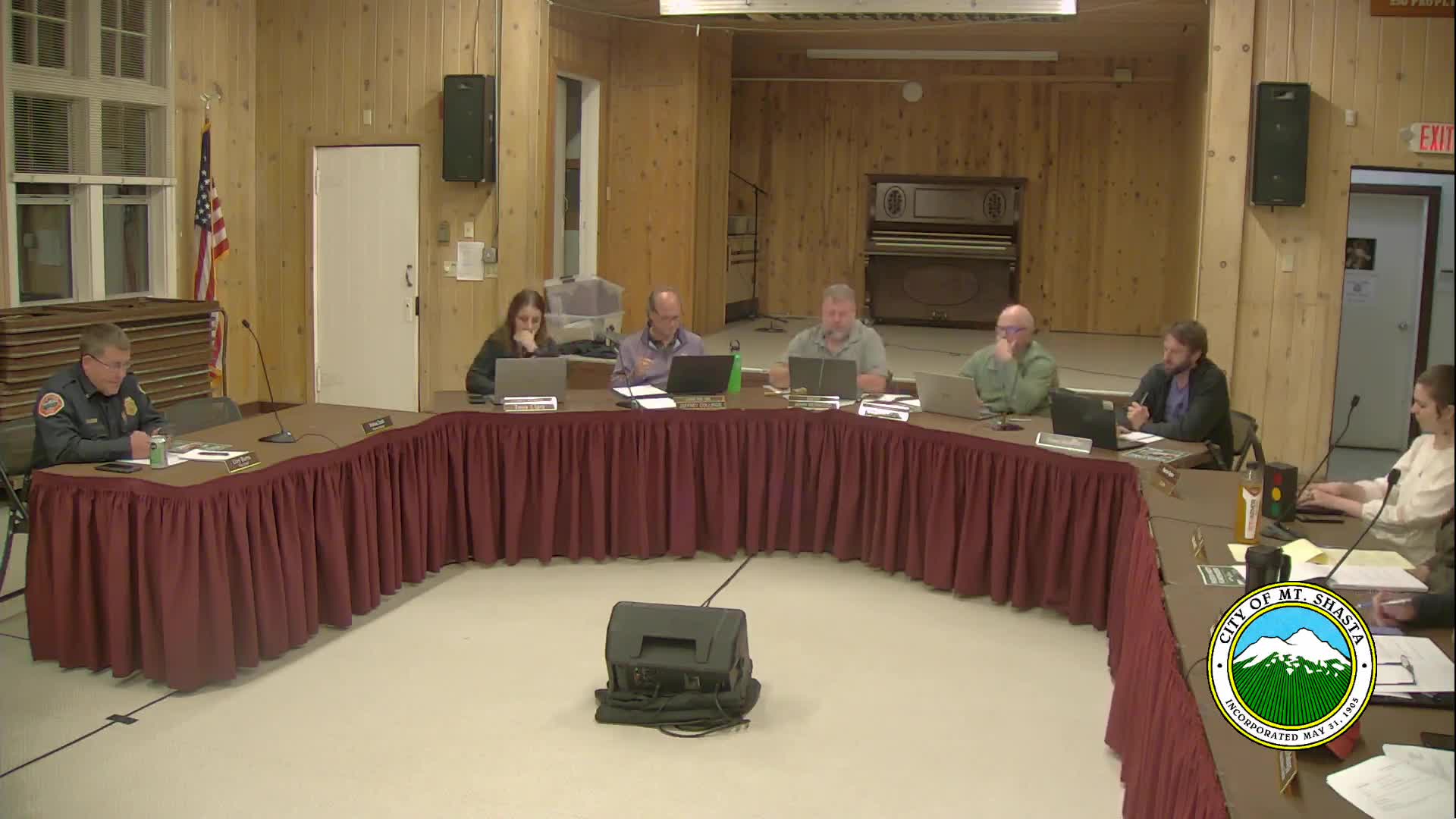
"If healthcare were a cake...and all of a sudden you need all the ingredients," Page said, using an analogy to describe how cuts to payer funding would make it hard to deliver the same services. He told the council that more than 70% of patients at his hospitals are covered by Medicare or Medi‑Cal and that proposed federal changes would shift some costs and administrative burdens to states and providers.
Page flagged several specific concerns discussed in the presentation: a new work or community‑engagement verification for some Medicaid populations (reported as an 80‑hours‑per‑month showing requirement for 19–64‑year‑olds in the current bill text), a return to more frequent eligibility "redeterminations" (noted in the presentation as occurring every six months beginning Jan. 1, 2027 in the bill language), and uncertainty over how a reduced federal rural hospital funding pool will be distributed by states and CMS.
He described the rural hospital funding picture as uneven: that prior programs were smaller and that the federal package includes a new Rural Health Transformation fund; he and other speakers repeatedly emphasized that the final impact depends on state decisions about how to allocate these dollars once they are received.
Council members asked for clarification about likely state responses and local impacts. Page said hospital leaders are engaging with state advocacy groups, including the California Hospital Association, and with the systems advocacy arm in Washington to press for mitigations. He also warned that if coverage shrinks, patients could delay care until emergencies and hospitals would see higher uncompensated care costs that can increase overall premiums and strain emergency departments.
What happened next: the presentation ended with an offer to return with updates and to help the city understand how state and federal decisions evolve; councilors thanked Page and asked for future updates.
Why it matters: small hospitals in rural areas handle a large share of Medicaid/Medi‑Cal patients and provide services that are costly to replace locally. Changes to eligibility, verification, and federal funding flows can affect whether those services remain available without additional state or local support.
Sources and provenance: the report and quotations above are drawn from the Mercy presentation and Q&A on the council agenda (topic opening SEG 178; presentation close SEG 428).
View the Full Meeting & All Its Details
This article offers just a summary. Unlock complete video, transcripts, and insights as a Founder Member.
30-day money-back guarantee
Sponsors
Proudly supported by sponsors who keep California articles free in 2025

