Terrebonne sanitary-district sewer project nears construction as design, annexations and grants advance
November 10, 2025 | Deschutes County, Oregon
This article was created by AI summarizing key points discussed. AI makes mistakes, so for full details and context, please refer to the video of the full meeting. Please report any errors so we can fix them. Report an error »
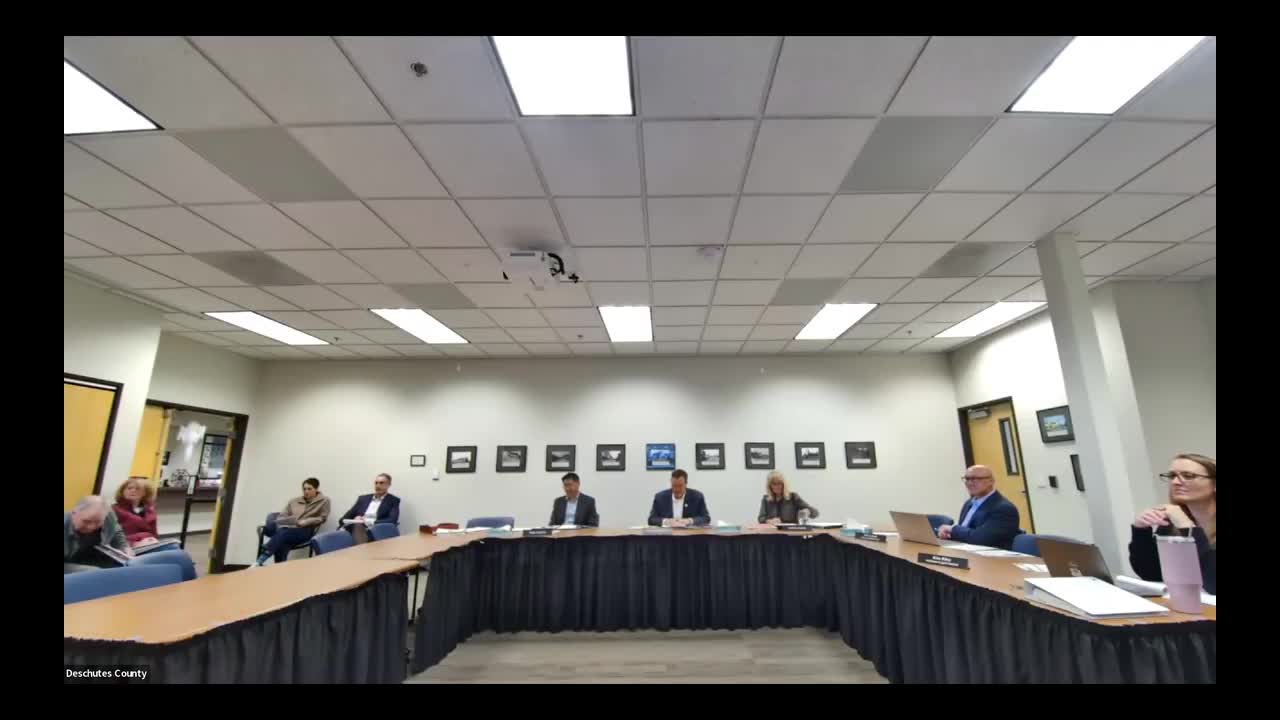
Parker (speaker 10), speaking for the district, said design work is roughly 90% complete and that the district has coordinated an intergovernmental agreement to use space at the Redmond wetlands treatment facility. “Current efforts are focused on finalizing design, securing key funding, and expanding district boundaries to include additional properties,” Parker said, and added that Taylor Northwest has been selected as a contractor for the wetlands project expected to complete in 2027.
Parker reported the district has received a signed $100,000 Clean Water State Revolving Fund loan intended to reimburse and fund annexation work and that the district has applied for an additional $100,000 from the same source to support further annexations and the development of a fair, equitable user-charge system, including systems development charges (SDCs) and monthly rates. He said awards from a Business Oregon housing and infrastructure support fund were expected by Thanksgiving.
The presenters said 105 additional properties have annexed to the district—approximately 200–250 equivalent units (EUs)—and that a spring annexation push could add another 100 properties or several hundred EUs. Project supporters told the board that completing sewer infrastructure would reduce septic failures, unlock roughly 400 developable lots and allow local schools to expand because septic constraints would be relieved.
Speakers explained how grant and loan mechanics will affect costs to property owners: local planning and match dollars can reduce SDCs and monthly fees, and more hookups reduce per-user costs. Guy Vernon (speaker 2), a mobile-home-park owner in the area, gave a worked example of SDCs in conversation: “So if you have 300 hookups, that will do a lot to pay back some of these funds we owe,” and described the $100,000 planning grant as essential to finalize engineering estimates.
The group told the board it is pursuing additional DEQ construction loans and other funding streams but said the board’s earlier county contribution and ARPA set-asides already funded pipe under certain roads and helped move the project forward. Presenters asked for continued county advocacy during annexation and final funding applications; commissioners thanked the district and offered to help coordinate further conversations with county planning and road departments.
No formal county action or vote was taken; presenters said they will return with updated cost and user‑charge estimates after completing final design and bid documents.
Don't Miss a Word: See the Full Meeting!
Go beyond summaries. Unlock every video, transcript, and key insight with a Founder Membership.
30-day money-back guarantee
Sponsors
Proudly supported by sponsors who keep Oregon articles free in 2025

