FDA announces removal of boxed warnings on many menopause hormone therapies
November 10, 2025 | U.S. Department of Health and Human Services
This article was created by AI summarizing key points discussed. AI makes mistakes, so for full details and context, please refer to the video of the full meeting. Please report any errors so we can fix them. Report an error »
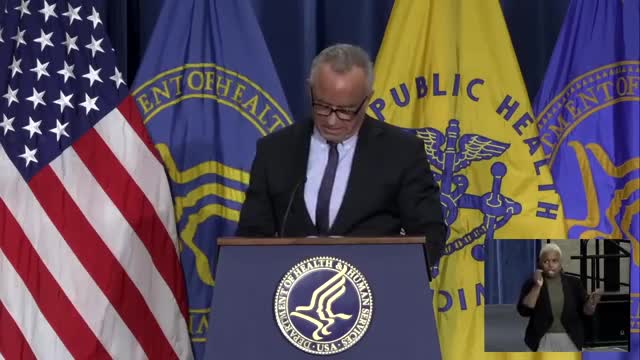
The Food and Drug Administration on Friday announced it will remove broad boxed warning labels from many estrogen-related hormone replacement therapy products used to treat menopausal symptoms, agency officials said at a Department of Health and Human Services news event.
"The FDA is initiating the removal of a broad black box warnings from hormone replacement therapy products for menopause," Health and Human Services Secretary Robert F. Kennedy Jr. said during opening remarks, arguing the 2003 boxed warnings discouraged doctors and "scared away" tens of millions of women from therapies he described as beneficial.
FDA Commissioner Marty Makary, who led the agency's review, said the recommendation followed a comprehensive literature review, an expert panel and public testimony. "The conclusion of that review was a recommendation to remove certain black box warnings," Makary said, adding that he accepted the recommendation and made the change final.
Officials framed the action as a correction to what they described as misinterpretation of the 2002 Women's Health Initiative (WHI) findings. Makary disputed that the WHI showed an increase in breast cancer mortality, saying the original coverage focused on diagnosis rather than mortality and that later analyses do not support the same degree of risk.
Commissioner Makary and other presenters cited several studies and reviews — referencing New England Journal and Circulation summaries and an upcoming Journal of the American Medical Association piece — as part of the evidence base they used to justify the change. Makary said the FDA also approved "two new drugs for the treatment of menopausal symptoms," including a generic form of Premarin and another non‑estrogen medication for patients who cannot take estrogen.
Several clinicians at the event urged broader clinician education. Dr. Rachel Rubin, who discussed genitourinary syndrome of menopause, said vaginal estrogen can prevent recurrent urinary tract infections and reduce severe complications such as urosepsis. "We call these symptoms the genitourinary syndrome of menopause or GSM," Rubin said, and she urged clinicians to consider vaginal hormones for appropriate patients.
Dr. Kelly Caspersen, a urologist, said the boxed warning had contributed to extremely low treatment rates: "As a surgeon and advocate, I stand here for the 80,000,000 American women whose health has been shaped by misinformation," she said, noting that while an estimated 80 percent of women experience notable menopausal symptoms, only about 5 percent receive treatment.
Reporters asked how the agency will measure whether removing the boxed warnings increases HRT uptake. Makary pointed to a published survey by Dr. Oona Lee that tracked women's access to vaginal estrogen and reported that nearly 30 percent forego use because of warning labels. On questions about compounded or bioidentical hormones, Makary said clinicians should exercise judgment and that legal criteria for compounding will continue to be respected.
On the advisory process, Makary said the FDA used an expert panel format to permit a robust, less bureaucratic discussion than the formal advisory committee (AdCom) process, while stating the agency continues to use formal advisory committees when appropriate.
The agency said companies will reprint product labels to reflect the FDA decision. Makary said the change is intended to move nuanced risk–benefit information into product labeling and clinical guidance rather than a concise boxed warning that he said discouraged individualized decision‑making.
The announcement does not create new mandates on prescribing or replace individualized clinical judgment; officials repeatedly urged patients to consult their doctors. The agency also said it will continue to respect statutory and regulatory limits on compounding.
The press event concluded after a short question-and-answer period; officials said academic publications and additional guidance would accompany the announcement.
"The FDA is initiating the removal of a broad black box warnings from hormone replacement therapy products for menopause," Health and Human Services Secretary Robert F. Kennedy Jr. said during opening remarks, arguing the 2003 boxed warnings discouraged doctors and "scared away" tens of millions of women from therapies he described as beneficial.
FDA Commissioner Marty Makary, who led the agency's review, said the recommendation followed a comprehensive literature review, an expert panel and public testimony. "The conclusion of that review was a recommendation to remove certain black box warnings," Makary said, adding that he accepted the recommendation and made the change final.
Officials framed the action as a correction to what they described as misinterpretation of the 2002 Women's Health Initiative (WHI) findings. Makary disputed that the WHI showed an increase in breast cancer mortality, saying the original coverage focused on diagnosis rather than mortality and that later analyses do not support the same degree of risk.
Commissioner Makary and other presenters cited several studies and reviews — referencing New England Journal and Circulation summaries and an upcoming Journal of the American Medical Association piece — as part of the evidence base they used to justify the change. Makary said the FDA also approved "two new drugs for the treatment of menopausal symptoms," including a generic form of Premarin and another non‑estrogen medication for patients who cannot take estrogen.
Several clinicians at the event urged broader clinician education. Dr. Rachel Rubin, who discussed genitourinary syndrome of menopause, said vaginal estrogen can prevent recurrent urinary tract infections and reduce severe complications such as urosepsis. "We call these symptoms the genitourinary syndrome of menopause or GSM," Rubin said, and she urged clinicians to consider vaginal hormones for appropriate patients.
Dr. Kelly Caspersen, a urologist, said the boxed warning had contributed to extremely low treatment rates: "As a surgeon and advocate, I stand here for the 80,000,000 American women whose health has been shaped by misinformation," she said, noting that while an estimated 80 percent of women experience notable menopausal symptoms, only about 5 percent receive treatment.
Reporters asked how the agency will measure whether removing the boxed warnings increases HRT uptake. Makary pointed to a published survey by Dr. Oona Lee that tracked women's access to vaginal estrogen and reported that nearly 30 percent forego use because of warning labels. On questions about compounded or bioidentical hormones, Makary said clinicians should exercise judgment and that legal criteria for compounding will continue to be respected.
On the advisory process, Makary said the FDA used an expert panel format to permit a robust, less bureaucratic discussion than the formal advisory committee (AdCom) process, while stating the agency continues to use formal advisory committees when appropriate.
The agency said companies will reprint product labels to reflect the FDA decision. Makary said the change is intended to move nuanced risk–benefit information into product labeling and clinical guidance rather than a concise boxed warning that he said discouraged individualized decision‑making.
The announcement does not create new mandates on prescribing or replace individualized clinical judgment; officials repeatedly urged patients to consult their doctors. The agency also said it will continue to respect statutory and regulatory limits on compounding.
The press event concluded after a short question-and-answer period; officials said academic publications and additional guidance would accompany the announcement.
Don't Miss a Word: See the Full Meeting!
Go beyond summaries. Unlock every video, transcript, and key insight with a Founder Membership.
✓
Get instant access to full meeting videos
✓
Search and clip any phrase from complete transcripts
✓
Receive AI-powered summaries & custom alerts
✓
Enjoy lifetime, unrestricted access to government data
30-day money-back guarantee
