Clinton council extends Hobo Renewable Diesel deadline to allow financing push
November 11, 2025 | Clinton City, Clinton County, Iowa
This article was created by AI summarizing key points discussed. AI makes mistakes, so for full details and context, please refer to the video of the full meeting. Please report any errors so we can fix them. Report an error »
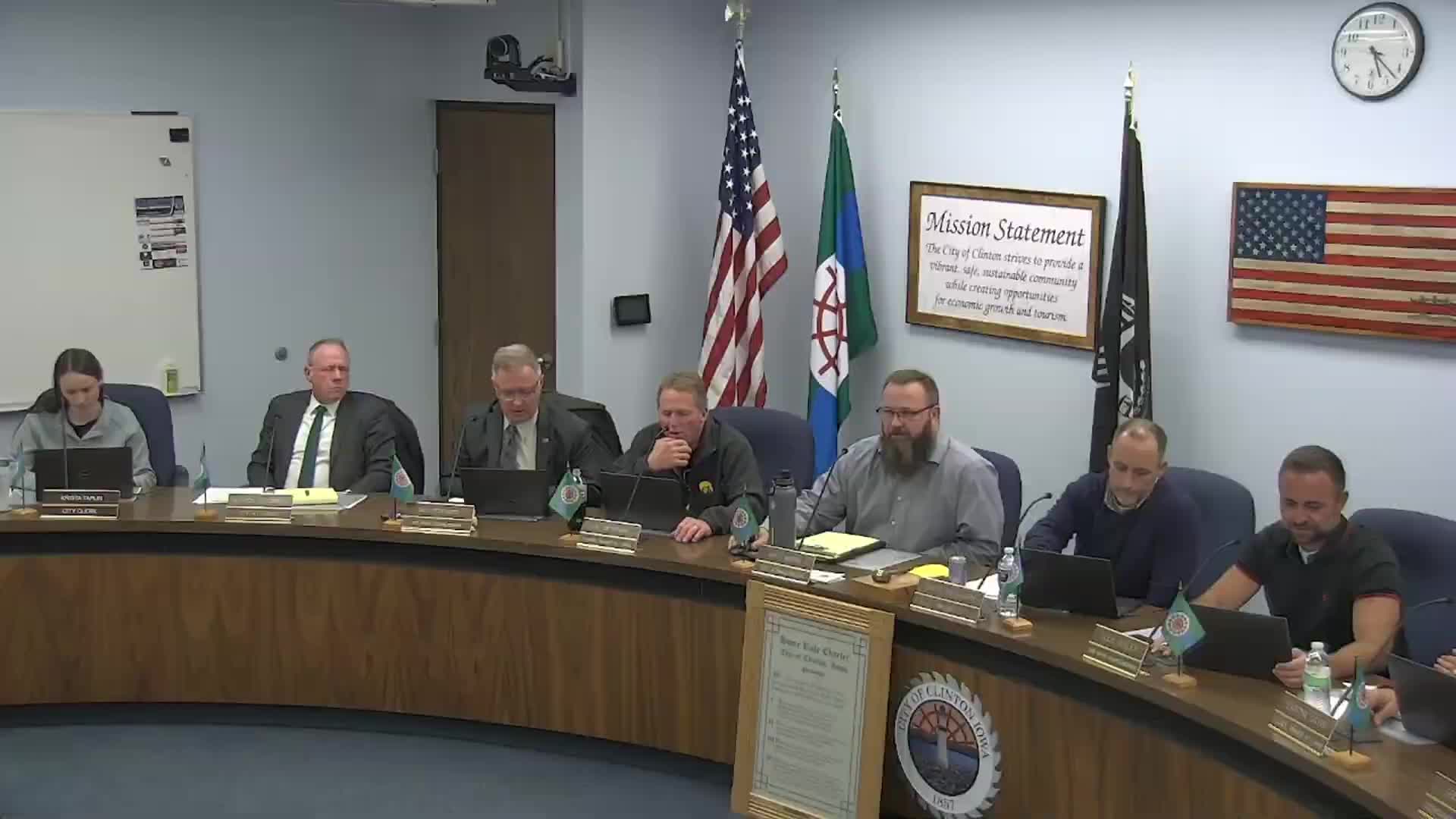
Matt (city staff) told council the extension is intended to align Hobo's final investment decision (FID) with engineering, procurement and construction timetables and the company's financing process. "This gives them runway to get to FID and align their EPC partners," Matt said during the meeting.
Mike Kois, representing Hobo, and John Gallagher, the company's financial adviser, described a multistage financing process. Gallagher said the total project financing would be "a little over 1 and a half billion" and later the team quantified the figure at about $1,900,000,000; Randy Gibbs said the equity portion would be "north of $500,000,000". Gibbs and Gallagher asked the council for roughly nine months of runway to complete equity commitments and debt arrangements.
Councilors pressed for milestones. City staff and Hobo representatives said the immediate benchmarks are a presentation to the IEDA board by March 20 and a state economic-development package in April (the city's April 17 meeting was cited as the subsequent milestone). Matt and the Hobo team said the March IEDA presentation is feasible and that failing to meet it could void parts of the agreement.
The amendment provides a schedule for those benchmark events but does not change previously approved payment terms, city staff said. Hobo representatives described the complex capital stack for the project and the need to avoid forcing equity sponsors to commit under a short deadline; "it makes the equity raise process a lot easier to attract interested parties if they don't have that cliff," Gibbs said.
The council adopted the resolution by roll call. Councilors asked staff to keep the body updated on progress toward the IEDA and state milestones.
Why it matters: Hobo's project, as described by its team in Clinton, would be a major private investment in the city and is tied to tax-abatement approvals and other state-level economic-development steps. Extending the local agreement gives the developer a longer window to complete financing and preserves the city's option to proceed if the project closes.
Next steps: Hobo and city staff said they expect to present to IEDA around March 20 and to seek state package approval in April; the council requested continuing updates.
Don't Miss a Word: See the Full Meeting!
Go beyond summaries. Unlock every video, transcript, and key insight with a Founder Membership.
30-day money-back guarantee
Sponsors
Proudly supported by sponsors who keep Iowa articles free in 2025

