Leland leaders review open‑burning ban after large land‑clearing blazes; residents urge stronger enforcement
November 10, 2025 | Leland, Brunswick County, North Carolina
This article was created by AI summarizing key points discussed. AI makes mistakes, so for full details and context, please refer to the video of the full meeting. Please report any errors so we can fix them. Report an error »
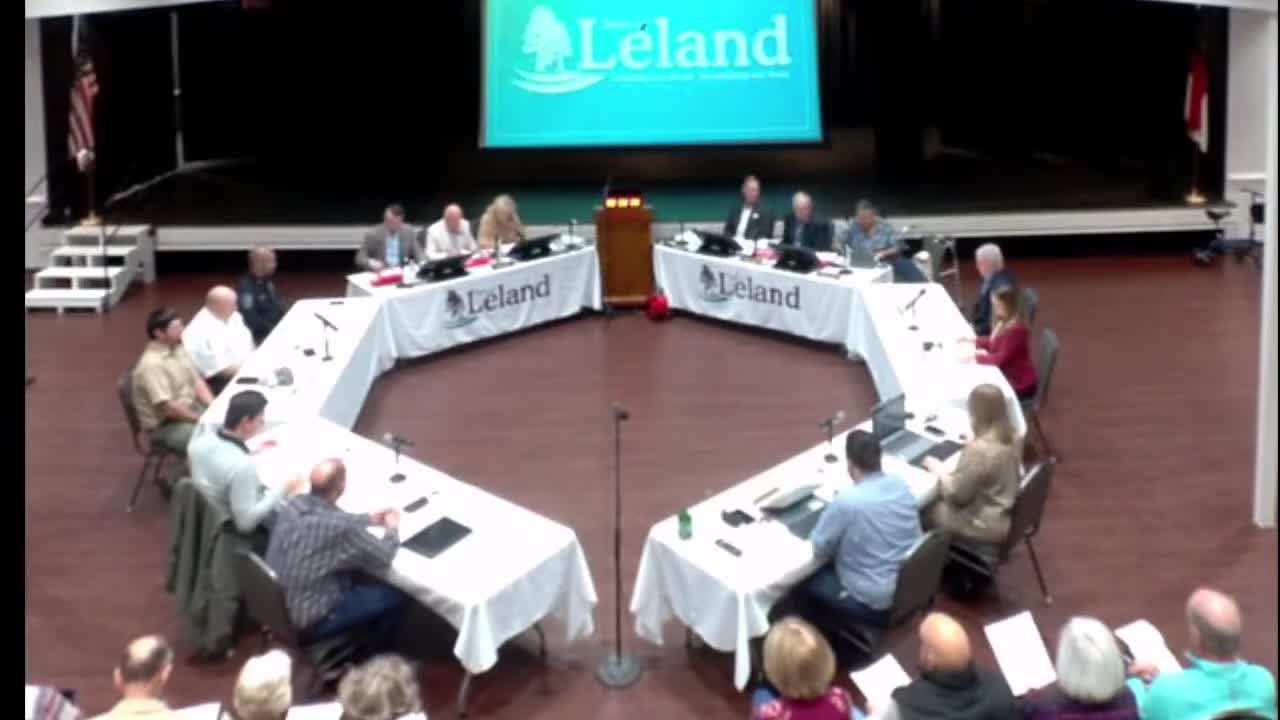
At the outset the council approved the meeting agenda by vote. Leland Fire Chief Ronnie Hayes summarized the state’s open‑burning rules for land‑clearing burns, including the burn‑day forecast (green and yellow days allow burns; orange, red and purple prohibit them), setbacks and timing rules. Hayes said land‑clearing burns may be started between 8:00 a.m. and 6:00 p.m. and no additional combustible material may be added after 6:00 p.m.; permitting thresholds require Forestry involvement for burns larger than 5 acres. Hayes recommended that whatever rules the town adopts be housed in its fire prevention and protection ordinance so enforcement and expectations are clear.
Town Attorney Steve Coggins told the council that municipalities in North Carolina only have authority granted by the legislature and that a town can pursue an EMC‑certified local air‑pollution control program but must show the state it can administer and enforce the program adequately. "It is much better to get permission first than to shoot first and ask for forgiveness," Coggins said, arguing EMC certification would reduce legal risk and make the town’s rules more defensible. He also said state law clearly places air‑curtain incinerators under state jurisdiction, not local control.
Representatives from state air quality (DAQ) and forestry confirmed that the Oct. 17 land‑clearing site involved in recent complaints had a state‑issued permit and that on‑site checks did not note violations of the stated limits during their visits. DAQ emphasized that open‑burning enforcement focuses on whether a burn complied with permit conditions (setbacks, materials burned and timing) rather than measuring and assigning short‑term particulate matter exceedances to a single source. A DAQ representative said the nearest DAQ monitor is at the Castle Haines site, about 14–15 miles away, and that the network is designed to measure long‑term background trends rather than attribute short‑term events to single burns.
More than a dozen residents spoke during public comment. Kim Ohanian of Brunswick Forest said the smoke was "dangerous" and urged the council to press the county and state. Several residents, including Scotty Watson and Linda Lang, described asthma or other health problems exacerbated by smoke and said they felt "like prisoners" in their homes during heavy burns. Multiple speakers said piles observed during the recent Publix‑area clearing appeared larger than the 20‑foot limit in state guidance and questioned whether accelerants had been used. Daniel Wright urged the council to consider enforcement tools used elsewhere, such as mandatory publicizing of violations, permit suspension and barring violators from future contracts.
Council members and visiting municipal leaders from neighboring jurisdictions endorsed a regional approach. Veronica (Speaker 11) asked whether the council should immediately seek EMC certification and recommended sharing Leland’s draft ordinance with nearby towns and the county to pursue broader coverage. Coggins called a regional petition and coordinated approach "a powerful statement" that could increase the chances of state approval.
On process, staff said proposed ordinance revisions reflecting the attorney’s clarifications would be placed on the consent agenda for the regular council meeting next week; until then, the town’s existing no‑burn rule for land clearing (referenced in the meeting as passed on Oct. 10) remains in effect. The council also agreed by vote to allow a small number of additional public speakers during the workshop. The meeting ended after a motion to adjourn carried.
What’s next: the council will consider the draft ordinance language on the consent agenda at the next regular meeting and staff indicated they will continue outreach to neighboring towns and the county about coordinated action and potential application to the EMC.
View the Full Meeting & All Its Details
This article offers just a summary. Unlock complete video, transcripts, and insights as a Founder Member.
30-day money-back guarantee
Sponsors
Proudly supported by sponsors who keep North Carolina articles free in 2025

