Easley Council dedicates city land for funded inclusive playground after presentation
November 11, 2025 | Easly City, Pickens, South Carolina
This article was created by AI summarizing key points discussed. AI makes mistakes, so for full details and context, please refer to the video of the full meeting. Please report any errors so we can fix them. Report an error »
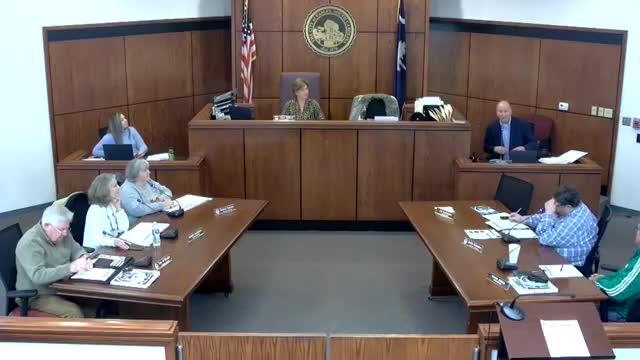
Council members voted to dedicate city-owned land as the future home of an inclusive playground after a lengthy presentation from Carolina Parks and Play that outlined the design and accessibility features.
Chris Yang, a representative of Carolina Parks and Play, told the council the proposed playground is designed so "all kids play together," using universal-play design principles vetted by occupational therapists and other experts. Yang said the plan emphasizes accessibility with ramps, turf for maneuverability, and more than 85 percent shade coverage to make the site usable year-round.
"These playgrounds that we're about to discuss deliver on that, in amazing ways," Yang said during the presentation, describing a two-phase layout with a main play area and a back-course designed for older children. He described the playground as unique to Easley and stressed that pieces were selected for documented social, developmental and physical benefits.
Council discussion noted community benefits and financial logistics. Councilwoman Davidson told colleagues that "the funding for all of this is coming through another source and it will not be funded by the city," a point echoed by others during debate. An attendee and staff described the chosen site as the area across from the recycle center, with an old white building proposed to be repurposed as restroom facilities if feasible.
The council moved and seconded resolution 2025-17, dedicating the city property for the playground; the motion passed. Council did not adopt construction contracts or a final budget at the meeting, and staff said further design and implementation steps will follow.
The measure advances a project organizers described as intended to serve children of different abilities and knit the community together around shared play opportunities. Council members thanked Parks & Recreation staff and volunteers who helped develop the proposal.
Next steps: staff will continue design work and return to council with construction specifics, contracts and any required approvals; the resolution adopted at the meeting dedicates the land but does not by itself authorize construction spending.
Chris Yang, a representative of Carolina Parks and Play, told the council the proposed playground is designed so "all kids play together," using universal-play design principles vetted by occupational therapists and other experts. Yang said the plan emphasizes accessibility with ramps, turf for maneuverability, and more than 85 percent shade coverage to make the site usable year-round.
"These playgrounds that we're about to discuss deliver on that, in amazing ways," Yang said during the presentation, describing a two-phase layout with a main play area and a back-course designed for older children. He described the playground as unique to Easley and stressed that pieces were selected for documented social, developmental and physical benefits.
Council discussion noted community benefits and financial logistics. Councilwoman Davidson told colleagues that "the funding for all of this is coming through another source and it will not be funded by the city," a point echoed by others during debate. An attendee and staff described the chosen site as the area across from the recycle center, with an old white building proposed to be repurposed as restroom facilities if feasible.
The council moved and seconded resolution 2025-17, dedicating the city property for the playground; the motion passed. Council did not adopt construction contracts or a final budget at the meeting, and staff said further design and implementation steps will follow.
The measure advances a project organizers described as intended to serve children of different abilities and knit the community together around shared play opportunities. Council members thanked Parks & Recreation staff and volunteers who helped develop the proposal.
Next steps: staff will continue design work and return to council with construction specifics, contracts and any required approvals; the resolution adopted at the meeting dedicates the land but does not by itself authorize construction spending.
Don't Miss a Word: See the Full Meeting!
Go beyond summaries. Unlock every video, transcript, and key insight with a Founder Membership.
✓
Get instant access to full meeting videos
✓
Search and clip any phrase from complete transcripts
✓
Receive AI-powered summaries & custom alerts
✓
Enjoy lifetime, unrestricted access to government data
30-day money-back guarantee
