City outlines DMC-funded projects, Link BRT progress and a prototype wayfinding plan for construction navigation
November 10, 2025 | Rochester, Olmsted County, Minnesota
This article was created by AI summarizing key points discussed. AI makes mistakes, so for full details and context, please refer to the video of the full meeting. Please report any errors so we can fix them. Report an error »
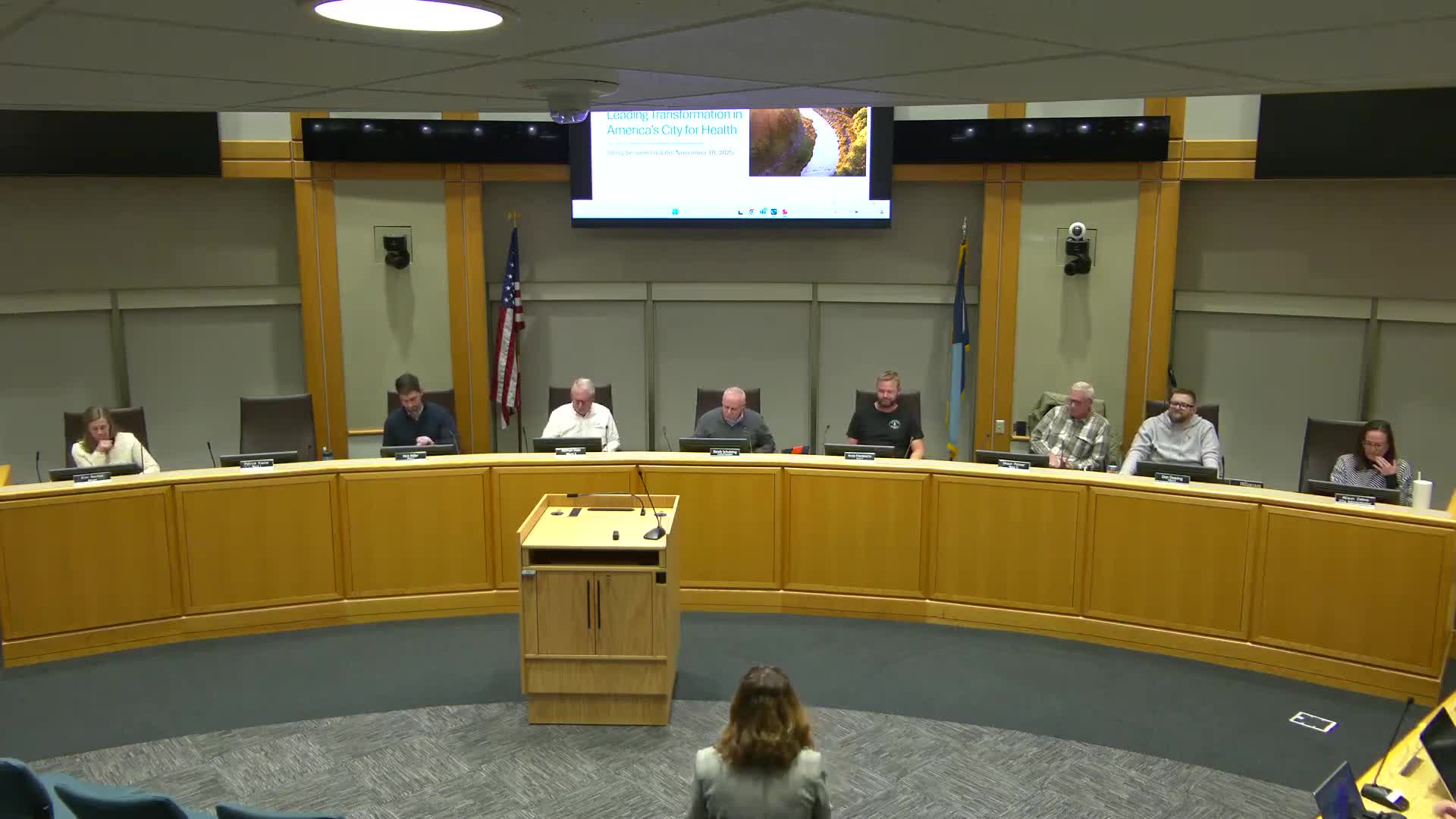
Deputy City Administrator Cindy Steinhauser said the city is working within an environment of rapid change — including Mayo Clinic’s multi‑billion‑dollar expansion and the city’s capital improvements program — and identified funding already committed: an Unbound allocation of $38,000,000 and a Mayo contribution that the city said will cover up to $480,000 for reestablishing the downtown mobility network.
On transit, staff reported Link BRT is about 20% through construction; the city has taken delivery of the first of 12 electric buses and is moving procurement of technology and contracts forward. Staff said a 6th Street bridge and riverfront project is approaching 90% design and that the administration will seek a MnDOT design variance to allow raised crosswalks as a traffic‑calming measure.
A substantial portion of the presentation covered a proposed interim wayfinding and construction‑navigation program intended to replace ad hoc orange pedestrian detour signs with a coherent brand and portable, prototyped trailblazer signs. Staff described a working tagline — “Detours lead to discoveries” — and a rollout plan that would prototype 3–4 intersections by December, deploy portable posts with maps and QR codes linking to pedestrian navigation, coordinate branding with Mayo and the RDA, and evaluate materials and storage/reuse strategies.
Council members praised the approach while raising operational questions: how temporary pedestrian signage will coexist with standard orange vehicular detour signs, how to support visually impaired pedestrians (staff said ADA compliance is a requirement and the team is researching audible portable devices), and where prototypes and portable bases will be stored or repurposed after construction. Staff said partners (DMC, RDA, Mayo) are working together and that some hardware could be reused for future city projects or events.
Staff also summarized near‑term contract and permitting steps tied to Mayo agreements: a campus site development agreement will come to council in early December to allow permits to issue while site development plans are finalized; additional agreements tied to the North Arrival and South Parking projects are scheduled for December and February meetings so construction can stay on schedule.
The council expressed support for piloting signage and the administration’s multi‑department approach, and asked staff to prioritize measurable data collection (pedestrian counters, StreetLight analytics) so post‑construction decisions are evidence‑based. Council accepted the update; no ordinances or binding agreements were approved in this session.
Don't Miss a Word: See the Full Meeting!
Go beyond summaries. Unlock every video, transcript, and key insight with a Founder Membership.
30-day money-back guarantee
Sponsors
Proudly supported by sponsors who keep Minnesota articles free in 2025

