Las Cruces lays out roughly $47 million in state capital requests, eyes federal earmarks
November 10, 2025 | Las Cruces, Doña Ana County, New Mexico
This article was created by AI summarizing key points discussed. AI makes mistakes, so for full details and context, please refer to the video of the full meeting. Please report any errors so we can fix them. Report an error »
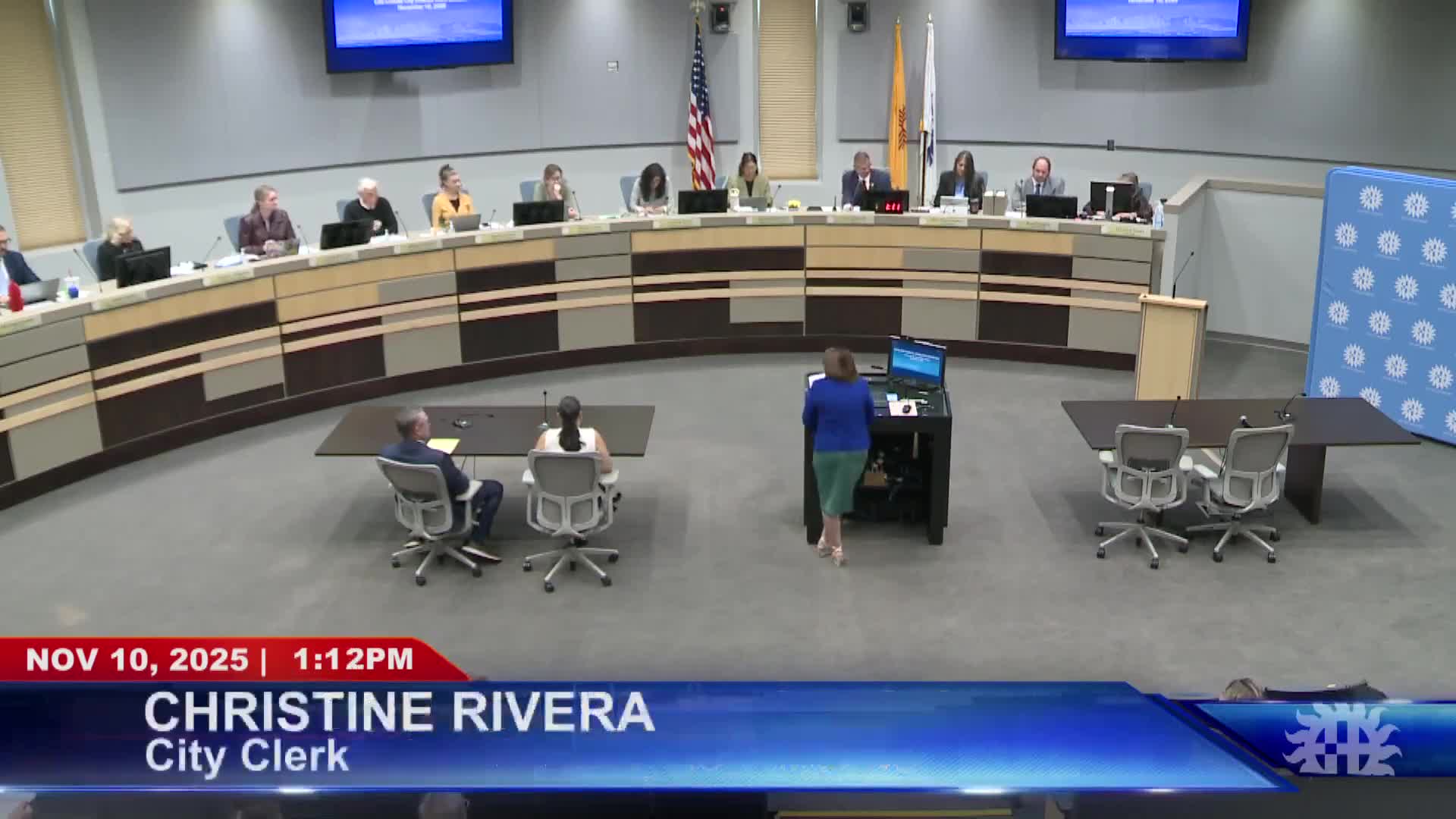
City Clerk Christine Rivera opened the session by walking council through state priorities developed with department input and consultation with the New Mexico Municipal League and the city’s lobbyists. “Together, these projects will add a total of 386 rental units to the community and we're asking this year for $6,000,000,” Rivera said when listing affordable‑housing requests tied to Paseos Verdes and Peach Tree phase 2. Rivera also listed other state requests, including $6,000,000 for improvements at Yonge Park, $10,000,000 for phase 1 of the Branigan Library renovation and expansion, $3,000,000 for continued build‑out of East Mesa Public Recreational Complex, $1,500,000 to start a joint city‑county police driving track, $500,000 for Klein Park work and $500,000 for fire station security upgrades; the city told council the subtotal of the projects presented is approximately $47,300,000.
State lobbyist Larry Horan told council the 2026 30‑day session is likely to be constrained by slowing revenue growth and cautioned that growth funds (House Bill 2 or 'HB2' allocations in prior cycles) may be limited. “What we're seeing this year… the budget is starting to constrict,” Horan said, noting pressure on capital outlay and the need for locally targeted protections if statewide tax changes are proposed.
On federal strategy, the city’s federal lobbyists from MMO Partners briefed the council on appropriations timing, continuing resolutions and the possibility of earmarks in the FY26/FY27 process. John O'Donnell and Kyriakos Paganas urged early prioritization so projects can be readied for congressional offices and subcommittee accounts. They identified a preliminary set of possible FY27 earmark candidates discussed with departments and congressional staff: airport hangar, Peachtree, South Fork Moreno Arroyo, Branigan Library, Railroad Museum, sewer connections, and Well 66.
Councilors generally supported a menu of public safety and quality‑of‑life priorities. Councilor McClure said she would specifically advocate for South Fork Moreno Arroyo drainage work after constituent flooding reports. Councilor Batiste emphasized public safety as his top priority and supported septic system removal inside the city to protect groundwater. Several councilors expressed strong support for the Branigan Library project and East Mesa Recreation Complex improvements.
Questions from councilors focused on strategy and timing. Mayor Pro Tem Bencomo and others asked staff how the city will sequence efforts across state, capital‑outlay and other pots of funding, and assistant city manager Sonia Delgado said staff is prioritizing state submissions first to meet ICIP deadlines before pursuing other funding sources. Councilors also sought additional details on a $3,000,000 request to upgrade bandwidth and integration for the city’s real‑time crime center; Interim Public Works Director Kyle Arnd explained that additional traffic signal and communications infrastructure is needed to fully operate the system and that the initial funding covered the center’s creation but not all integration needs.
Next steps: staff asked council to rank priorities so a resolution can be prepared in December for adoption and ICIP portal entry; advocacy with the legislature and congressional delegation will follow in January–February.
Provenance: Topic discussion begins at SEG 135 and continues through SEG 879 (state and federal priorities, lobbying briefings, CIP items); council Q&A and public comments related to the priorities are distributed in timeline entries SEG 908–1190 and SEG 1476–1560.
Quotes in this article come from the council meeting transcript of Nov. 10, 2025, as cited above. The council did not take formal votes on these requests at this meeting; staff will return with a resolution for adoption in December.
What’s next: city staff will finalize a ranked priority list, bring a resolution to council in December for adoption, and then submit projects into the ICIP portal and begin advocacy with the state and federal delegations in January.
Don't Miss a Word: See the Full Meeting!
Go beyond summaries. Unlock every video, transcript, and key insight with a Founder Membership.
30-day money-back guarantee
Sponsors
Proudly supported by sponsors who keep New Mexico articles free in 2025

