Las Cruces reviews four years of plastic bag fees, proposes broader uses for remaining funds
November 10, 2025 | Las Cruces, Doña Ana County, New Mexico
This article was created by AI summarizing key points discussed. AI makes mistakes, so for full details and context, please refer to the video of the full meeting. Please report any errors so we can fix them. Report an error »
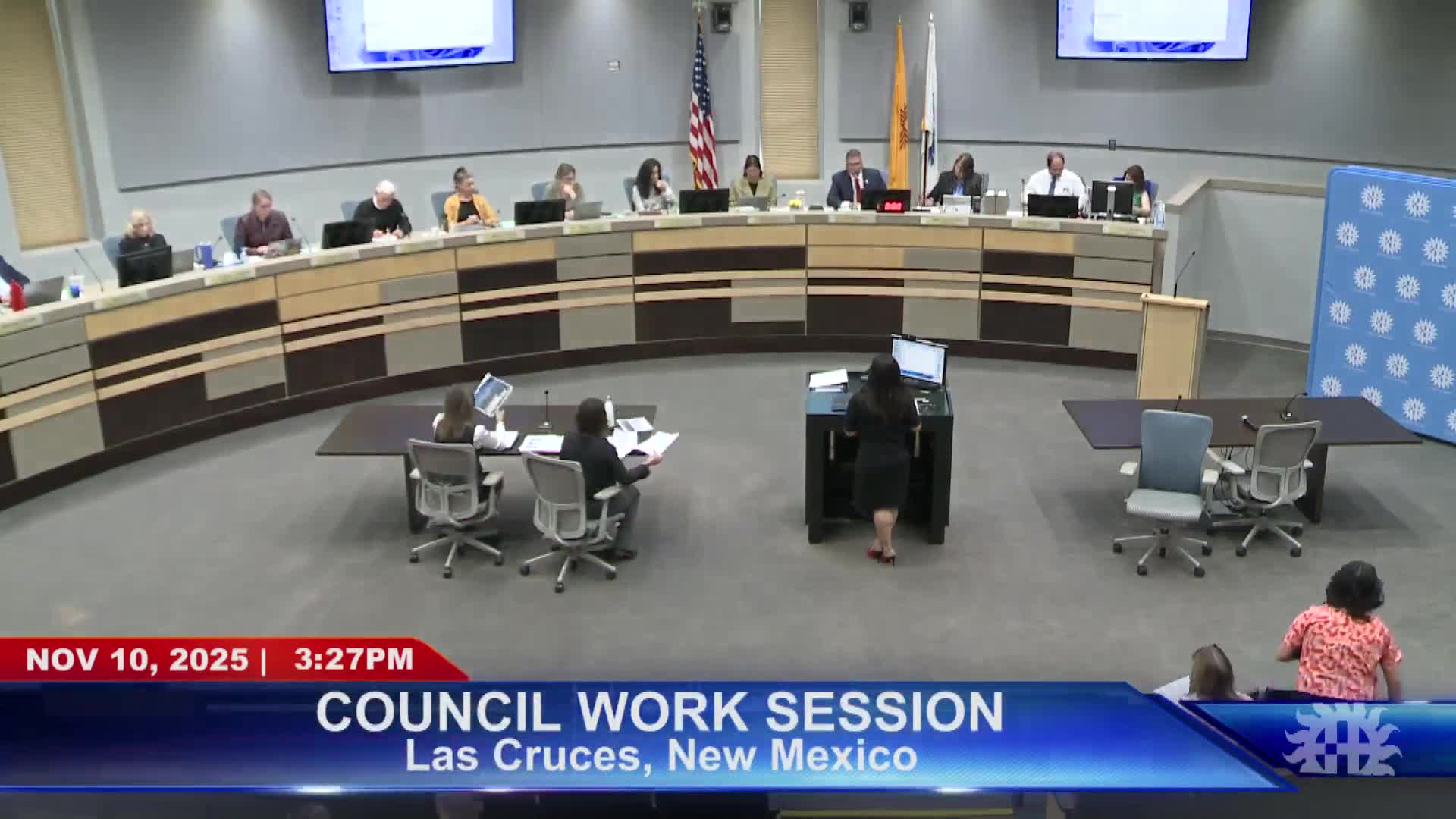
Molly Carrier (Sustainability co‑op) presented year‑4 data through quarter 3 and projected 2025 revenue at about $174,000 (based on current quarterly returns), noting the grocery sector accounted for roughly 72% of fees and retail about 25% in the most recent year. Carrier said the program’s quarterly average since January 2022 is roughly $45,500, which would annualize to about $180,000 per year; she also estimated the program corresponds to roughly 3.6 million paper bags a year at current purchase rates.
Jenny Hernandez (Sustainability Officer) summarized how the city has spent fee proceeds to date: initial and follow‑up educational campaigns, more than 6,000 distributed reusable bags, temporary staff support to help businesses register and file quarterly environmental service fees, and community events such as fix‑it fairs. Hernandez said the office has spent about $337,243 from the bag‑fee fund on those activities and currently has a reserve (unspent balance) of roughly $363,000. She told council staff will propose ordinance language at first read in December to allow fee proceeds to be used for broader programs that help meet the city’s Climate Action Plan goals—examples include climate mitigation/adaptation, energy conservation, public education, community engagement and low‑income home retrofit programs such as Plugged In for Good.
Councilors offered suggestions and asked questions. Councilor Flores proposed partnering with LCPS on school‑based education and distribution of reusable bags; Hernandez said the sustainability office has existing relationships with community schools and has previously distributed reusable bags to schools and can expand that outreach if council recommends it. Councilor Matisse asked about plastic produce bags used within grocery stores; staff said they have begun researching alternatives and have engaged with some grocers. Several councilors suggested revisiting the restaurant exemption for carry‑out and considering local clean‑up support or grants to community organizations to limit litter.
Public comments included both criticism of the ban (concerns about paper litter and compliance) and support for sustainability goals; one resident urged reconsideration of the ordinance’s net effect on visible litter.
Staff emphasized the December first‑read will include red‑line language and said they will return after one year of the amendment for a performance review and will otherwise revisit the ordinance every three years. Any changes would be subject to formal adoption by the council.
Provenance: topic begins at SEG 2891 and continues through SEG 3410 (presentation, data discussion and council Q&A); public comments on this item are in SEG 3460–3478.
Note on transcript numeric inconsistency: the meeting transcript contains one section where a total amount is transcribed as 'about $70,100,000' (a likely transcription error). That figure conflicts with the detailed line items staff presented (spent ~$337,243 and unspent/reserve ~$363,000) and with the other revenue figures given in the presentation; based on the detailed amounts cited by staff, this article reports the fund totals as roughly $700,000 total collected to date (spent ~$337,243; reserves ~$363,000). The city’s red‑line ordinance and staff financial summary to be delivered at first read in December should be consulted for an authoritative ledger and exact totals (see Audit notes).
Don't Miss a Word: See the Full Meeting!
Go beyond summaries. Unlock every video, transcript, and key insight with a Founder Membership.
30-day money-back guarantee
Sponsors
Proudly supported by sponsors who keep New Mexico articles free in 2025

