Podiatric board weighs statutory change to let committee approve residency programs
November 10, 2025 | Podiatric Medical Board of California, Other State Agencies, Executive, California
This article was created by AI summarizing key points discussed. AI makes mistakes, so for full details and context, please refer to the video of the full meeting. Please report any errors so we can fix them. Report an error »
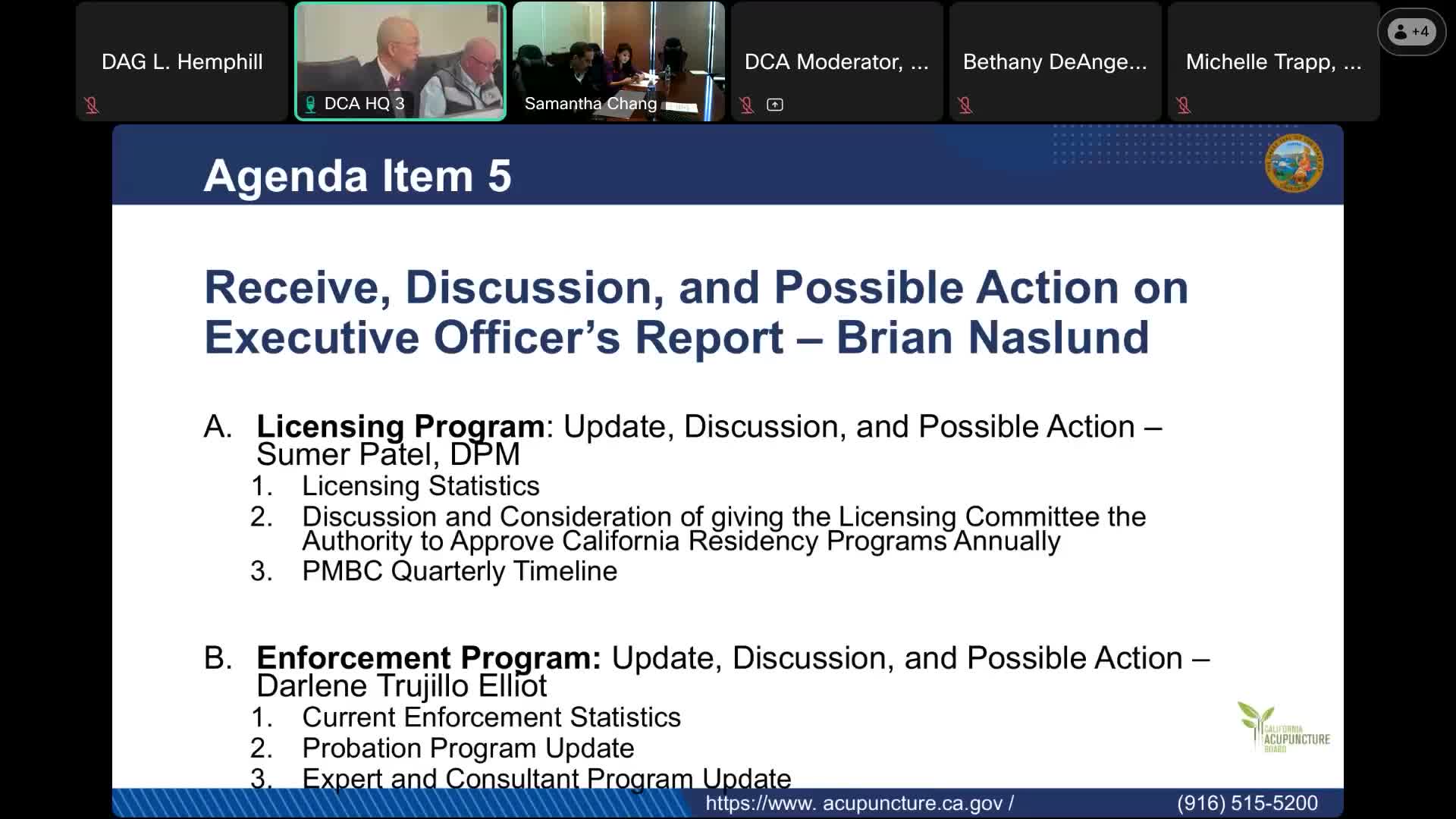
Dr. Sumar Patel called on licensing staff Andrea to present licensing data for April 1–June 30. Andrea reported "33–34 newly licensed DPMs," 17 pending applications, 249 renewals completed out of 266 mailed, and a total of 133 residents on license records for the quarter. Andrea also summarized applicant origins: 31 out-of-state applicants, 35 third-year residents from California programs and 28 third-year residents from out-of-state programs.
Regulatory staff and the executive officer (Brian) told the board their legal review suggests delegating approval of residencies to a committee is not currently authorized by statute. Regulatory staff said doing the delegation by regulation also looks unlikely. "That does leave a couple options," staff said, including continuing current practice or seeking a statutory change to allow committee-level approvals. Staff noted that the Council on Podiatric Medical Education (CPME), the national accreditor, typically finalizes program approvals in an April–May window, which constrains the board's timing for any earlier approvals.
Board members said they would support staff developing options and comparisons with how the Medical Board handles accrediting-agency-based approvals. Several members asked staff to return with a concrete proposal outlining whether committee approval or automatic acceptance of CPME accreditation is feasible and what statutory language would be required. President Daniel Lee and others emphasized the need to align board meeting dates and procedures so approvals can occur before residency start dates on July 1.
Next steps: staff will prepare more detailed options, including proposed legislative language if required, and present comparisons of other boards' practices and CPME timelines at a future meeting so the board can consider a formal motion.
Don't Miss a Word: See the Full Meeting!
Go beyond summaries. Unlock every video, transcript, and key insight with a Founder Membership.
30-day money-back guarantee
Sponsors
Proudly supported by sponsors who keep California articles free in 2025

