Big Rapids commission schedules public hearing after detailed Brownfield financing briefing
November 10, 2025 | Big Rapids, Mecosta County, Michigan
This article was created by AI summarizing key points discussed. AI makes mistakes, so for full details and context, please refer to the video of the full meeting. Please report any errors so we can fix them. Report an error »
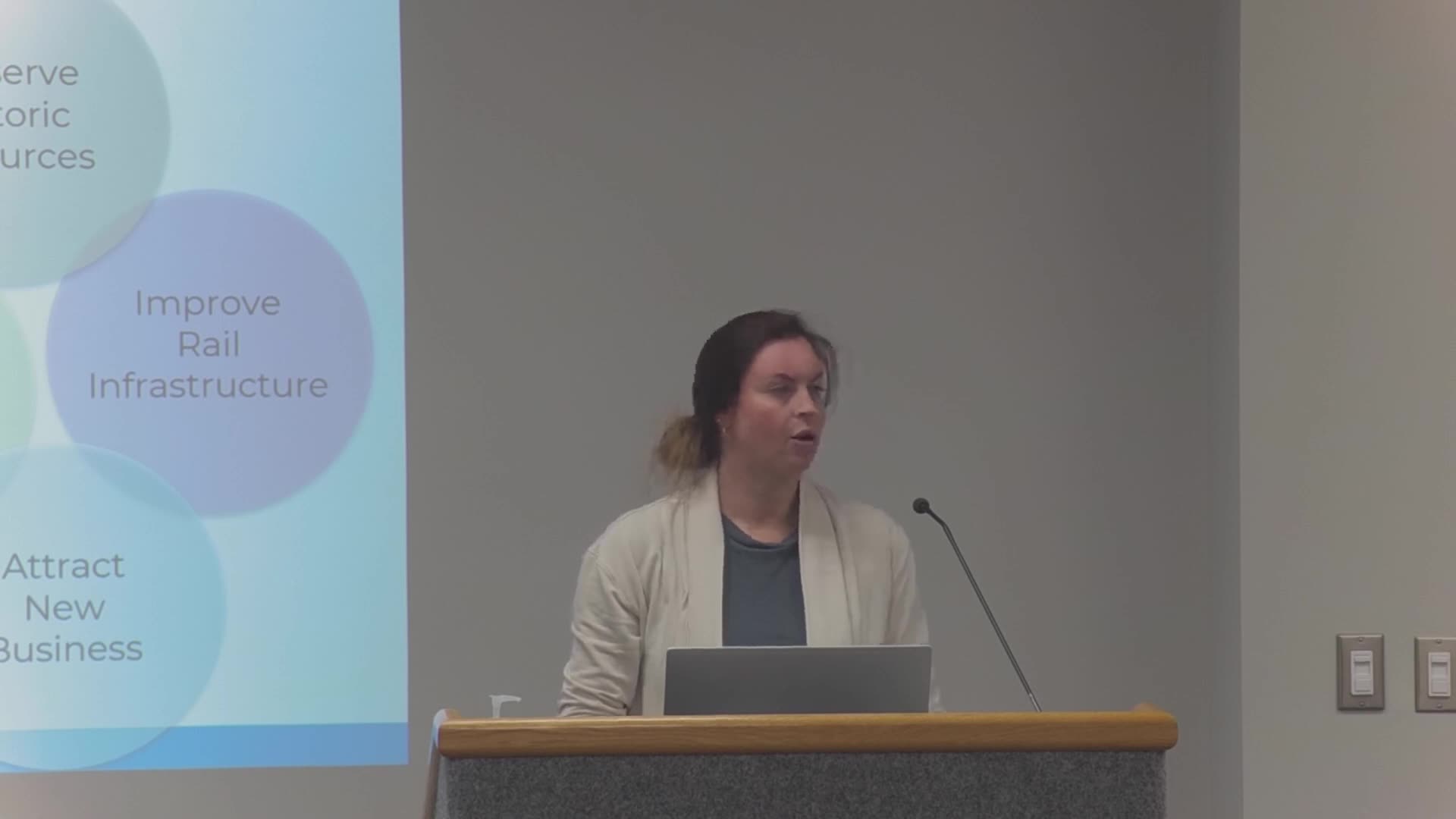
Samantha explained how a Brownfield Redevelopment Authority (BRA) can capture a portion of local tax increments for administrative costs and for a local Brownfield revolving fund to support site assessments and early work. "Typically, we see that between 5–10% of the local tax increment revenue capture," she said, and described a plan that would split 5% to administration and 5% to a local revolving fund to seed local grants and loans sooner.
Using the pending Allen Edlund Homes proposal as an example, Samantha said the development team initially requested $2 million in infrastructure support and that the city's contribution was negotiated down to about $1 million as part of the plan materials commissioners will review. The consultant said the BRA will recommend approval and the commission will consider the Brownfield plan after a required public hearing and the execution of a reimbursement agreement that defines "who gets paid, what, when, and where."
Samantha outlined the state review sequence: after local approval and execution of the reimbursement agreement, the development team prepares an Act 381 work plan that the state agencies review (EGLE for environmental activities, MEDC for demolition/site prep/infrastructure, and MSHDA for housing-related approvals). She noted each agency has a 60‑day statutory review period for those submissions.
Commissioners asked about authority and oversight. One commissioner asked whether the BRA can enter contracts and own property without commission approval; Samantha said those statutory powers exist but the BRA’s actions would normally be tied back to the city through the reimbursement agreement and the local approval steps. "We rarely see jurisdictions where they diverge completely," she said, adding that the commission still approves each Brownfield plan.
Commission discussion also covered housing-unit counts and affordability. Samantha said many recent Michigan Brownfield plans are housing‑focused; she described the projects as "missing middle" housing and said best practices for affordability have ranged around 20% of units as income‑restricted in plans she’s seen, though the statute sets no fixed percentage.
The commission set a public hearing for the Brownfield plan next week and will consider the BRA recommendation and the reimbursement agreement after the hearing. No final Brownfield approvals were taken on Nov. 10.
Don't Miss a Word: See the Full Meeting!
Go beyond summaries. Unlock every video, transcript, and key insight with a Founder Membership.
30-day money-back guarantee
Sponsors
Proudly supported by sponsors who keep Michigan articles free in 2025

