Atlanta committee hears hours of testimony and administration briefing on proposed TAD extensions
November 10, 2025 | Atlanta, Fulton County, Georgia
This article was created by AI summarizing key points discussed. AI makes mistakes, so for full details and context, please refer to the video of the full meeting. Please report any errors so we can fix them. Report an error »
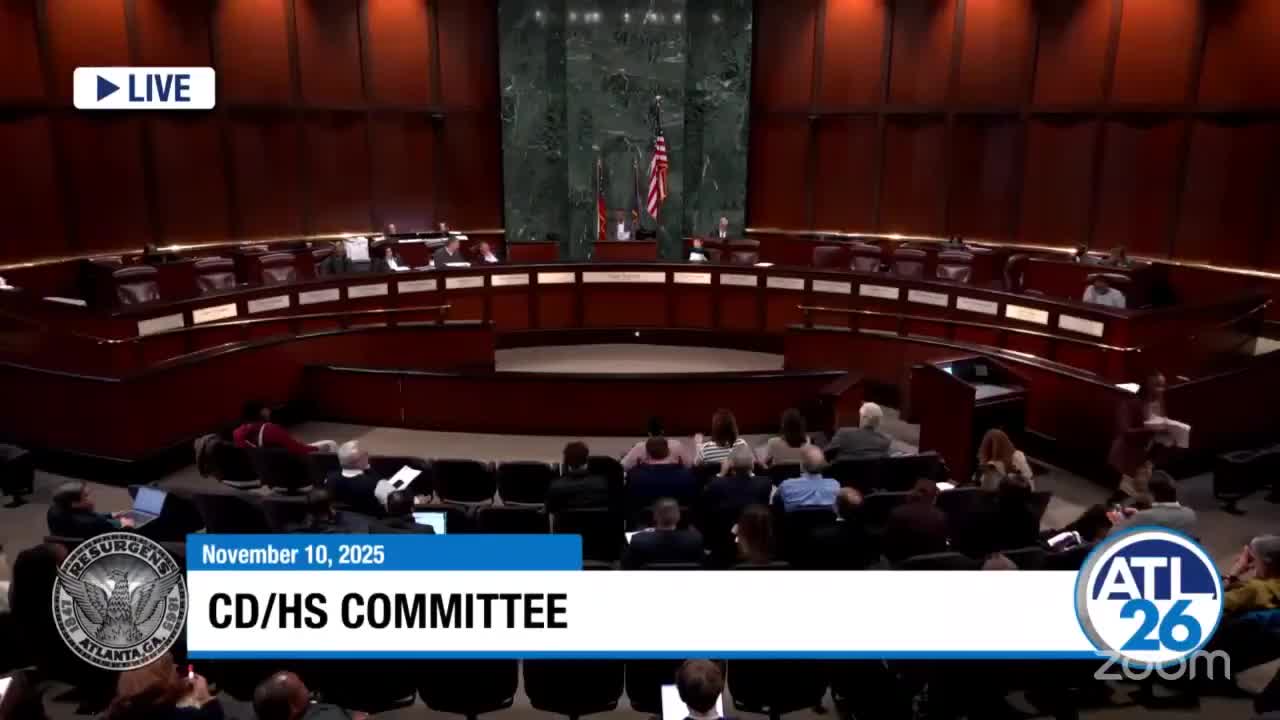
Supporters from downtown business groups, developers and community nonprofits told the committee the TADs are indispensable tools for leveraging private capital and making large infrastructure and affordable-housing projects feasible. AJ Robinson of Central Atlanta Progress said Eastside and Westside TADs supported "more than 7,000 new housing units with 44% affordable" since 2005, and argued the districts help attract private investment that would not otherwise materialize.
Opponents — including neighborhood leaders, the Partnership for Southern Equity and several longtime residents — urged far more caution. Jim Martin, chair of Neighborhood Planning Unit D, called the blanket extension "a betrayal of public trust," said TADs can accelerate gentrification and argued the council should consider alternatives such as general-obligation bonds or targeted investments rather than a sweeping multi-decade extension.
The administration and Invest Atlanta made the financial case for extension. An administration representative told the committee that the Neighborhood Reinvestment Initiative (NRI) requires large, predictable capital streams to fund projects listed in the draft plan, including trails, transit work and thousands of affordable units. Eloisa Clementich, president and CEO of Invest Atlanta, described TAD oversight and compliance, saying the agency posts quarterly financial reports and reviews projects before awarding funds. Invest Atlanta and city staff presented an economic framing that calls the combined annual increment across jurisdictions "about $200 million," and estimated the city's share at roughly $50 million a year if TADs remain in place; their analysis also computed a halo effect of TAD-driven assessed-value growth contributing roughly $35M a year back into the general fund.
Council members pressed the administration on several recurring concerns: state law constraints, the role of Atlanta Public Schools and Fulton County in contributing increment, whether TAD boundaries can be redrawn, how to ensure transparency and accountability, and how to protect legacy residents. Council member Liliana Bakhtiar highlighted the state's 10%"digest" cap (which limits new TAD creation) and noted existing limits on changing TAD boundaries without closure and recreation of a district. Multiple council members requested scenario analyses — for instance, what happens if APS or Fulton County decline to extend their participation, or if the city pilots returning a portion of increment to the general fund.
Public commenters offered a mix of remedies. Whitney Fuller, a community economic-development consultant, urged conditional extensions tied to updated TAD maps, a single performance-based reinvestment account, affordable-housing set-asides (targeting households roughly between 30% and 80% of area median income), legacy-resident retention funds and multiple public work sessions before final action. Opponents pushed for more immediate audit findings and for the city auditor's pending review to inform any vote.
The committee opened and closed the public hearing during the meeting (the vote to open the hearing passed 5–0, and the vote to close passed 5–0). The committee did not record a final recommendation to the full council on ordinance 25 O 1560 at this meeting. Members asked the administration to deliver more detailed scenarios, bonding and pilot-payment analysis, and to brief the auditor's findings as soon as available.
What happens next: committee members pressed for additional work sessions, further public engagement and a written set of options that show outcomes under differing assumptions (for example: full extension as proposed; partial cap on the largest generating TAD; a pilot-payment approach that returns a portion of increment to the general fund). The administration said it is open to those conversations but argued time is urgent, citing anti-displacement concerns and the need to start design and bonding work for major capital projects.
Provenance: The article is based on the committee public hearing and subsequent administration presentation on 25 O 1560 and associated questioning at the Nov. 10, 2025 Community Development & Human Services Committee meeting (transcript segments beginning at SEG 1056 and continuing through SEG 4430).
Don't Miss a Word: See the Full Meeting!
Go beyond summaries. Unlock every video, transcript, and key insight with a Founder Membership.
30-day money-back guarantee
Sponsors
Proudly supported by sponsors who keep Georgia articles free in 2025

