Lauderhill brings median and park work in‑house, launches NEET and Jan. community cleanup
November 11, 2025 | Lauderhill City, Broward County, Florida
This article was created by AI summarizing key points discussed. AI makes mistakes, so for full details and context, please refer to the video of the full meeting. Please report any errors so we can fix them. Report an error »
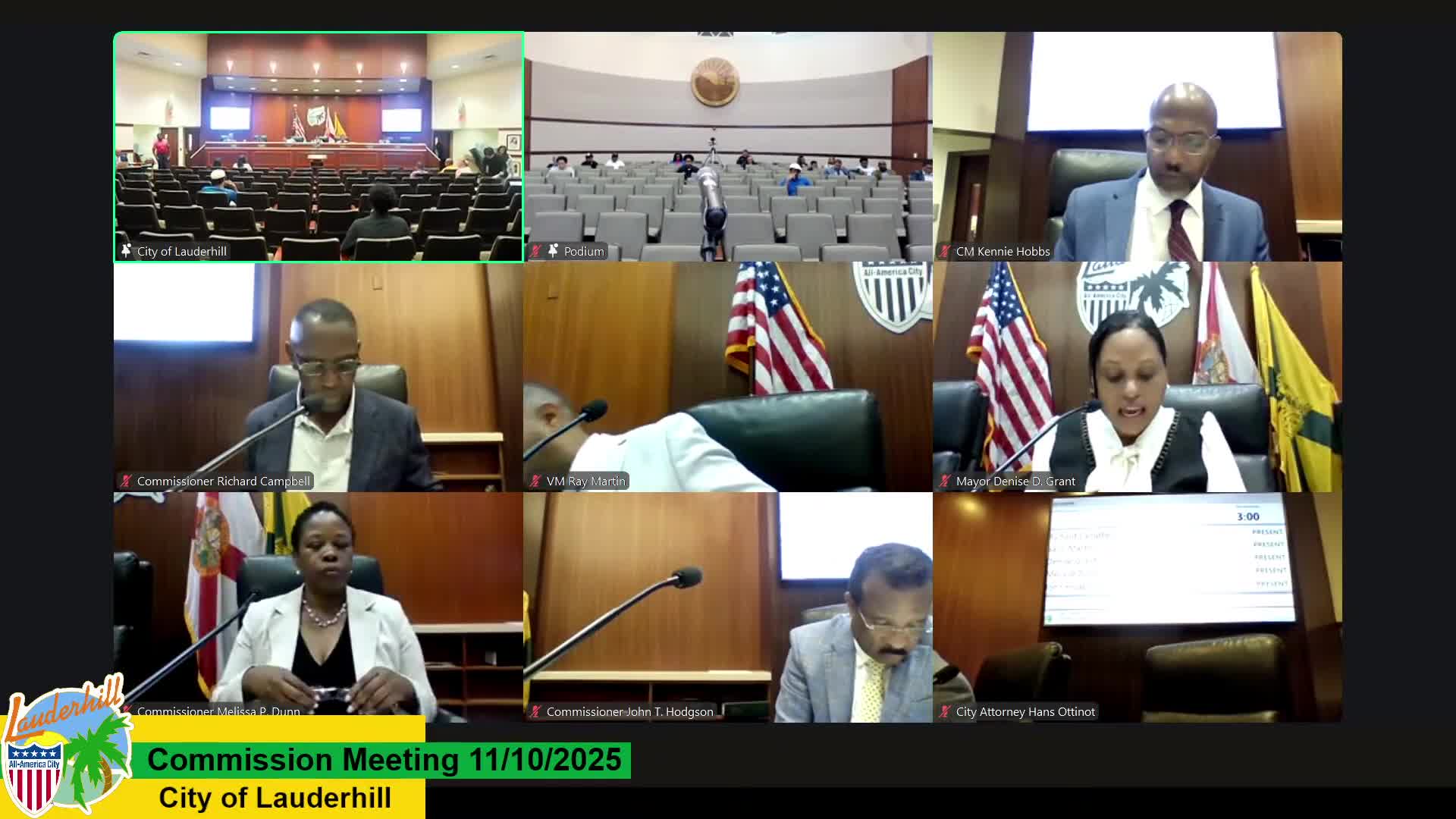
City management said the change reduced contracted expenditures (the city cited about $1.4 million previously spent on median/landscape contracts) and improved responsiveness. New in‑house teams include a pressure‑wash crew for medians and buildings, an irrigation team for medians and parks, a street/trash‑removal crew for thoroughfares and a parks‑stationed crew responsible for daily upkeep. Public works has also started LED conversion and irrigation upgrades along major corridors such as 56th Avenue.
The Neighborhood Enrichment & Appearance Team (NEET) will perform phased inspections: first city facilities (completed by December), then priority commercial plazas and convenience stores, and later residential zones (May–October 2026) after courtesy notices and an education campaign. The commission also discussed a large voluntary community cleanup (tentatively Jan. 10, 2026) that would divide Lauderhill into eight zones for commissioners, constitutional officers and staff to lead local teams.
Staff said several projects already completed at city hall, parks and medians were done in‑house and saved an estimated $200,000 versus contracting. Commissioners asked that staff prepare the operational policy and outreach plan; staff agreed to return with logistics and a final date if commissioners confirm volunteer availability.
View the Full Meeting & All Its Details
This article offers just a summary. Unlock complete video, transcripts, and insights as a Founder Member.
30-day money-back guarantee
Sponsors
Proudly supported by sponsors who keep Florida articles free in 2025

