Hudson district outlines special-education costs and transition plans as buildings consolidate
November 10, 2025 | Hudson School District, School Districts, Wisconsin
This article was created by AI summarizing key points discussed. AI makes mistakes, so for full details and context, please refer to the video of the full meeting. Please report any errors so we can fix them. Report an error »
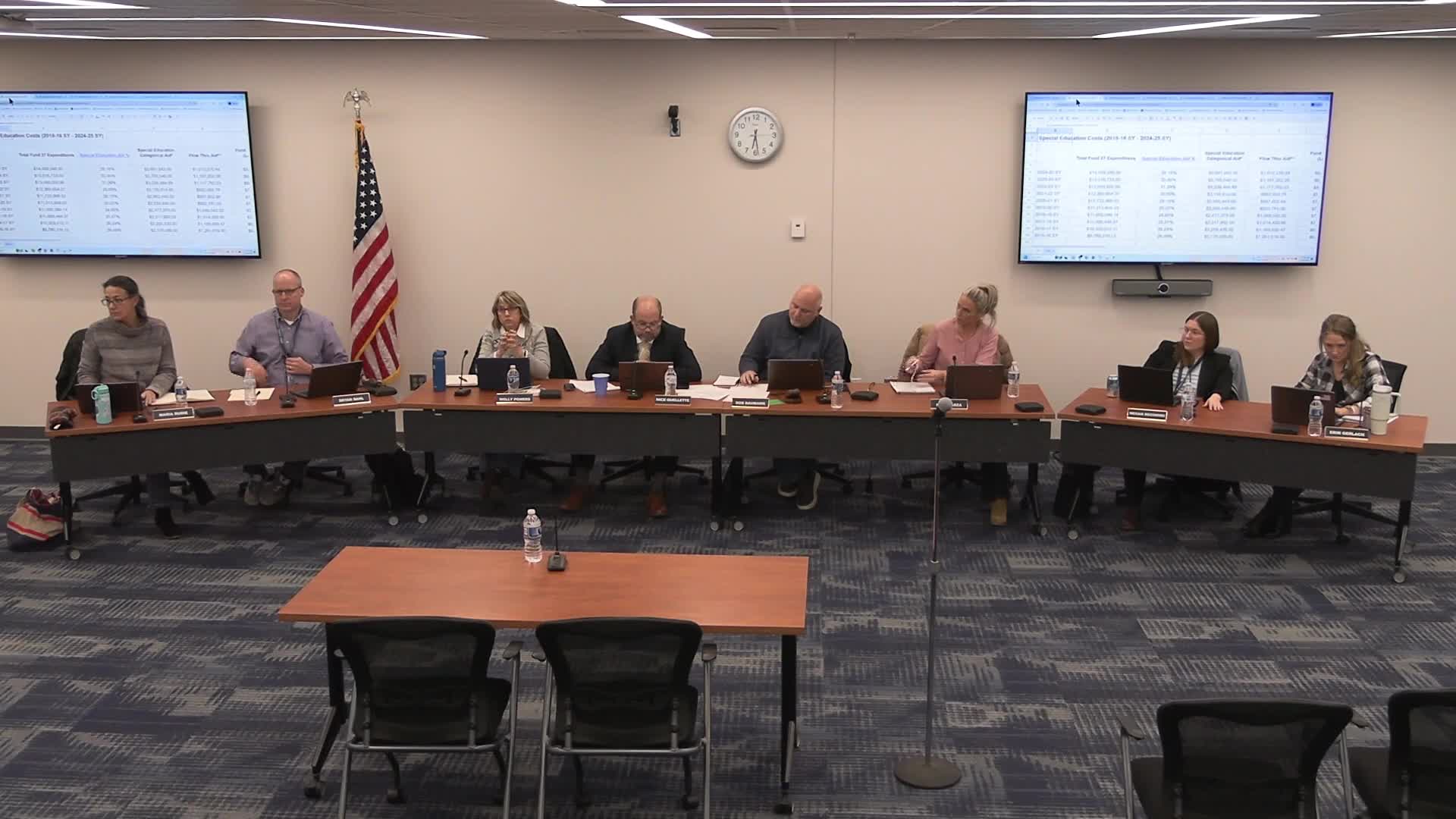
Bonnie and Tara summarized funding: total special-education expenditures were cited at approximately $14,400,000 for the last audited year; state special-education aid was reported at 29.16% (about $3.6 million); a federal flow-through entitlement grant was described near $1,100,000; and administration said approximately $9,400,000 was transferred from the district's general fund (fund 10) into special-education fund 27 to make that fund cost-neutral. Staff said the state aid percent is expected to increase to about 40% next year.
On operational transitions, Tara said the district will use existing transition procedures and that all buildings currently support a full continuum of services for students with IEPs. Because moving every family would require hundreds of individual meetings, staff said the standard approach will be case manager to case manager handoffs, with family meetings scheduled on a case-by-case basis when students have higher needs. "We do always do case manager to the case manager," she said, adding some families will be involved for higher-need students.
Teachers' advisory and staffing committees will contribute to staffing surveys and placements; the district plans a staffing survey in December with final determinations for certified staff before spring break and for support staff in April. Board members asked that layoff criteria prioritize attrition and probationary status before veteran staff.
What happens next: administration will continue staff forums and issue the staffing survey in December; special-education parents are expected to be included in work-group discussions on transitions and supports.
View the Full Meeting & All Its Details
This article offers just a summary. Unlock complete video, transcripts, and insights as a Founder Member.
30-day money-back guarantee
Sponsors
Proudly supported by sponsors who keep Wisconsin articles free in 2025

