York Suburban details curriculum overhaul, pilots FastBridge benchmarking amid assessment alignment concerns
November 10, 2025 | York Suburban SD, School Districts, Pennsylvania
This article was created by AI summarizing key points discussed. AI makes mistakes, so for full details and context, please refer to the video of the full meeting. Please report any errors so we can fix them. Report an error »
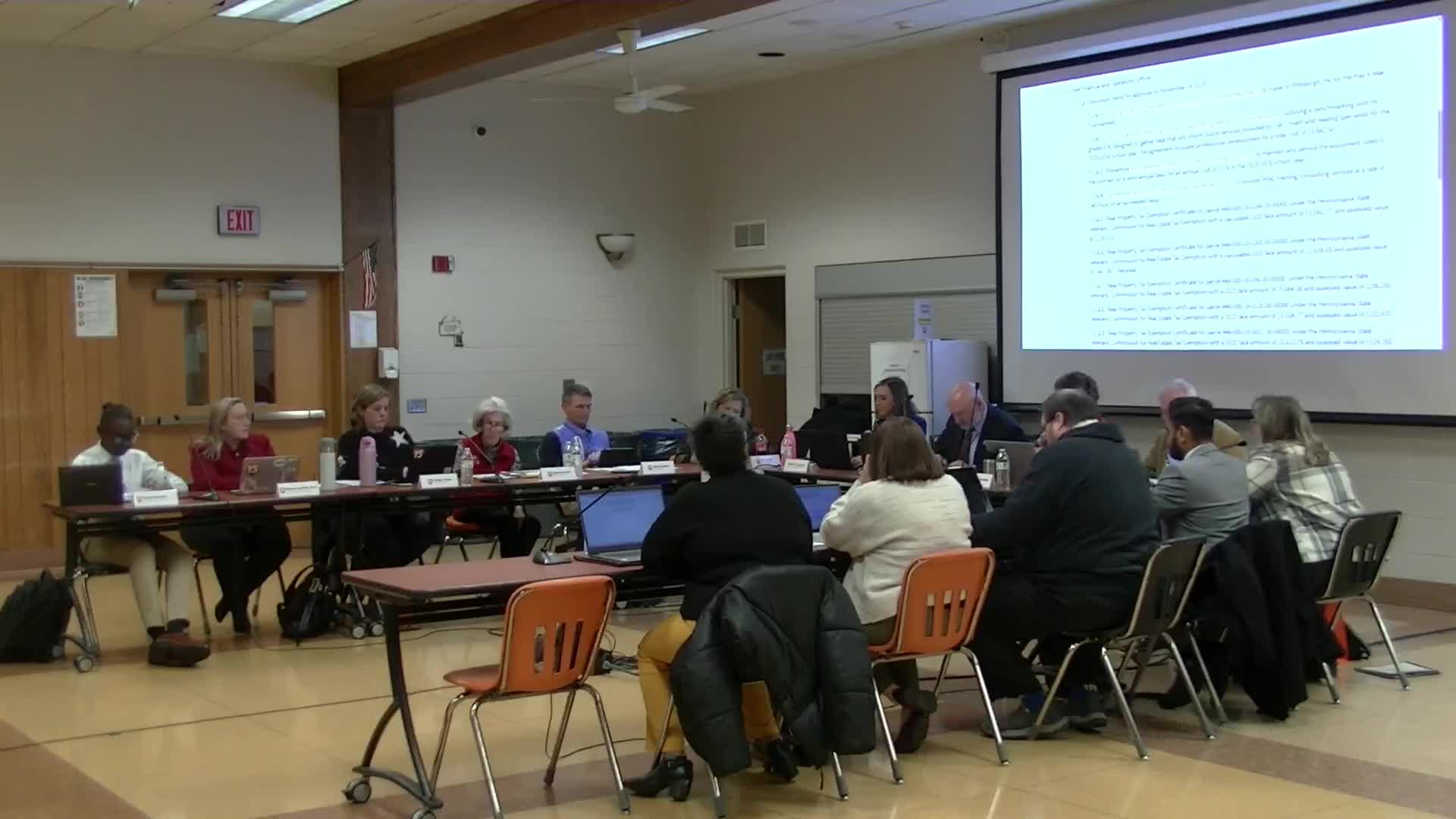
York Suburban School District leaders on Nov. 10 laid out a multi-year plan to strengthen classroom instruction, tighten curriculum alignment and expand tiered student supports, and announced a targeted pilot of the Renaissance FastBridge benchmarking tool.
The district’s Director of Curriculum and Instruction, Dr. Furman, told the board the FastBridge pilot will focus on tier‑2 use by math and reading specialists and interventionists; if the pilot proves successful, the district would consider replacing the currently used Acadience benchmark. “If all goes well, that would be my hope and the team's hope and desire,” Dr. Furman said about a future replacement. He also cited a rough quote for full K–8 implementation of about $29,000 and confirmed the district’s immediate cost for professional development tied to the pilot was listed at $3,492.50 in the materials presented to trustees.
Why it matters: the board and administration framed the work as part of a broader MTSS (multi-tiered system of supports) and curriculum-strengthening effort intended to improve core instruction (tier 1), provide better-targeted interventions (tier 2) and offer intensive supports (tier 3). Administrators repeatedly emphasized that a guaranteed, viable curriculum and embedded performance tasks are central to measuring progress.
Board members pressed administrators on whether FastBridge would yield more actionable instructional data than platforms the state provides for free, such as Firefly, and whether the district’s new measures will align with state assessments. Dr. Furman said district leaders have reviewed other platforms and that colleagues countywide had not found state-provided platforms consistently useful for guiding instruction. He described the pilot as a cautious, tier‑2-focused first step with professional development for staff who will be “on the front lines” using the tool.
The meeting also included a broader debate about state assessment alignment: trustees and administrators noted statewide drops in some scores and said the causes likely include differences between state standards and how assessments are constructed. Administrators pointed to promised state guidance on structured literacy and universal screeners that—according to district staff—had not been posted or updated as expected in June 2025.
What the district will use to measure success: administrators said they will continue to report state measures (PSSA/Keystone) where available, but will pair those with local benchmarks, formative assessments, performance tasks and MTSS data that teachers and data teams review continuously. “It’s the combination we’ll use: state assessments, our benchmarks, formative and summative assessments and collaborative teacher-team evaluation,” an administrator told the board.
The board did not take a binding vote on adoption of FastBridge at the meeting; the item was presented as a discussion/pilot preview for possible future action.
Next steps: the district will pilot FastBridge in the current year for tier‑2 supports, continue negotiation on license/professional-development costs, and bring implementation or contract approvals back to the board for a formal vote if administrators recommend full adoption.
The district’s Director of Curriculum and Instruction, Dr. Furman, told the board the FastBridge pilot will focus on tier‑2 use by math and reading specialists and interventionists; if the pilot proves successful, the district would consider replacing the currently used Acadience benchmark. “If all goes well, that would be my hope and the team's hope and desire,” Dr. Furman said about a future replacement. He also cited a rough quote for full K–8 implementation of about $29,000 and confirmed the district’s immediate cost for professional development tied to the pilot was listed at $3,492.50 in the materials presented to trustees.
Why it matters: the board and administration framed the work as part of a broader MTSS (multi-tiered system of supports) and curriculum-strengthening effort intended to improve core instruction (tier 1), provide better-targeted interventions (tier 2) and offer intensive supports (tier 3). Administrators repeatedly emphasized that a guaranteed, viable curriculum and embedded performance tasks are central to measuring progress.
Board members pressed administrators on whether FastBridge would yield more actionable instructional data than platforms the state provides for free, such as Firefly, and whether the district’s new measures will align with state assessments. Dr. Furman said district leaders have reviewed other platforms and that colleagues countywide had not found state-provided platforms consistently useful for guiding instruction. He described the pilot as a cautious, tier‑2-focused first step with professional development for staff who will be “on the front lines” using the tool.
The meeting also included a broader debate about state assessment alignment: trustees and administrators noted statewide drops in some scores and said the causes likely include differences between state standards and how assessments are constructed. Administrators pointed to promised state guidance on structured literacy and universal screeners that—according to district staff—had not been posted or updated as expected in June 2025.
What the district will use to measure success: administrators said they will continue to report state measures (PSSA/Keystone) where available, but will pair those with local benchmarks, formative assessments, performance tasks and MTSS data that teachers and data teams review continuously. “It’s the combination we’ll use: state assessments, our benchmarks, formative and summative assessments and collaborative teacher-team evaluation,” an administrator told the board.
The board did not take a binding vote on adoption of FastBridge at the meeting; the item was presented as a discussion/pilot preview for possible future action.
Next steps: the district will pilot FastBridge in the current year for tier‑2 supports, continue negotiation on license/professional-development costs, and bring implementation or contract approvals back to the board for a formal vote if administrators recommend full adoption.
Don't Miss a Word: See the Full Meeting!
Go beyond summaries. Unlock every video, transcript, and key insight with a Founder Membership.
✓
Get instant access to full meeting videos
✓
Search and clip any phrase from complete transcripts
✓
Receive AI-powered summaries & custom alerts
✓
Enjoy lifetime, unrestricted access to government data
30-day money-back guarantee
