Centreville council tables draft water‑and‑sewer allocation policy after extended debate
November 07, 2025 | Centreville, Queen Anne's County, Maryland
This article was created by AI summarizing key points discussed. AI makes mistakes, so for full details and context, please refer to the video of the full meeting. Please report any errors so we can fix them. Report an error »
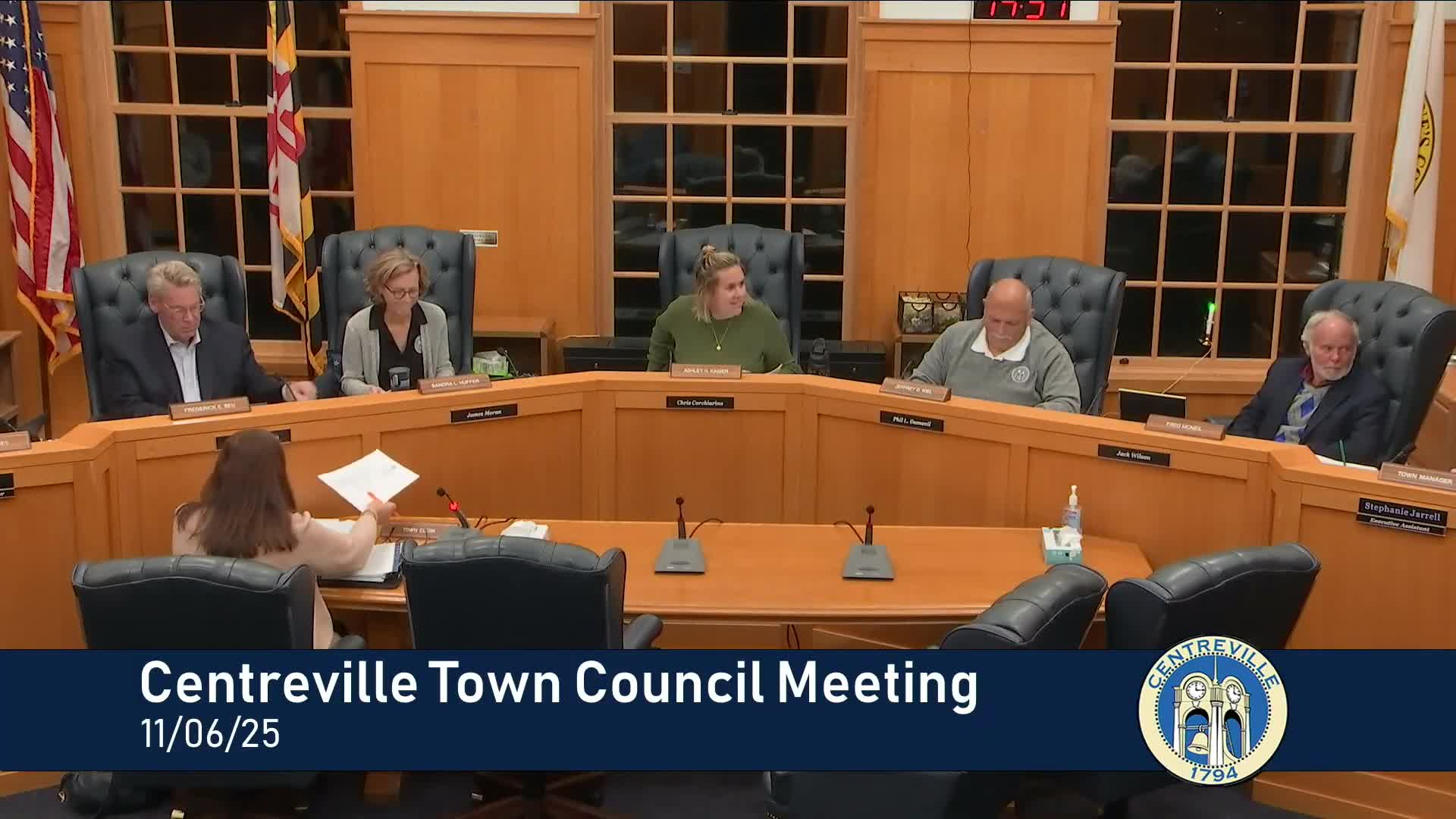
Council members and staff said the policy is meant to give the town more discretion in how limited sewer capacity is used while the town pursues a long‑term wastewater treatment plant replacement. Town Manager Kip and planning staff described a framework that would reserve a portion of annual allocations for small infill projects, earmark capacity for residential projects that meet design or affordability goals, and preserve capacity for commercial development. In several exchanges, Kip described a working 50/50 approach between residential and commercial uses as the starting point for calculations and said the specific percentage split can be adjusted by council vote.
Councilors raised several recurring concerns. Several asked for clearer definitions of terms in the draft—most notably what counts as “infill,” what qualifies as “exemplary design,” and how the code will define “affordable.” Council members urged adding a documented, early‑stage “get‑in‑line” process so projects that invest in planning and community outreach get some assurance of priority without requiring staff to commit allocations prematurely. Several councilors said they wanted to avoid a system that would appear subjective or that would discourage developers from seeking town feedback early in design.
Members also pressed staff for a clearer funding and schedule picture for the town’s long‑term wastewater treatment plant. Councilors asked whether the town’s current plan — which references 2031 as a target year — remained realistic and what sources of funding staff were pursuing. Staff and the manager summarized ongoing efforts to seek Bay Restoration funds, congressionally directed spending and state assistance through the Maryland Department of the Environment; they said a loan would be a last resort but acknowledged that the timetable and mix of funding remain uncertain.
Because the draft ordinance relies on multi‑year numerical allocations, councilors and staff agreed the policy needed concrete language about how allocations issued between the current date and the start of the policy year would be counted. After debate, the council voted to table Resolution 12‑20‑25 and asked staff to return with clarified definitions, a recommended process for tentative commitments ('getting in line'), and wording that reflects the town’s funding and implementation constraints.
The tabling leaves the current first‑come, first‑served allocation system in effect until the council adopts a revised policy. Council President Fred said the extra work should help reduce conflicts between developers, staff and neighbors and make allocation decisions more transparent.
View the Full Meeting & All Its Details
This article offers just a summary. Unlock complete video, transcripts, and insights as a Founder Member.
30-day money-back guarantee
Sponsors
Proudly supported by sponsors who keep Maryland articles free in 2025

