Acton‑Boxborough cites grade‑3 literacy dip, pledges tighter Tier‑1 instruction and targeted supports
November 07, 2025 | Town of Acton, Middlesex County, Massachusetts
This article was created by AI summarizing key points discussed. AI makes mistakes, so for full details and context, please refer to the video of the full meeting. Please report any errors so we can fix them. Report an error »
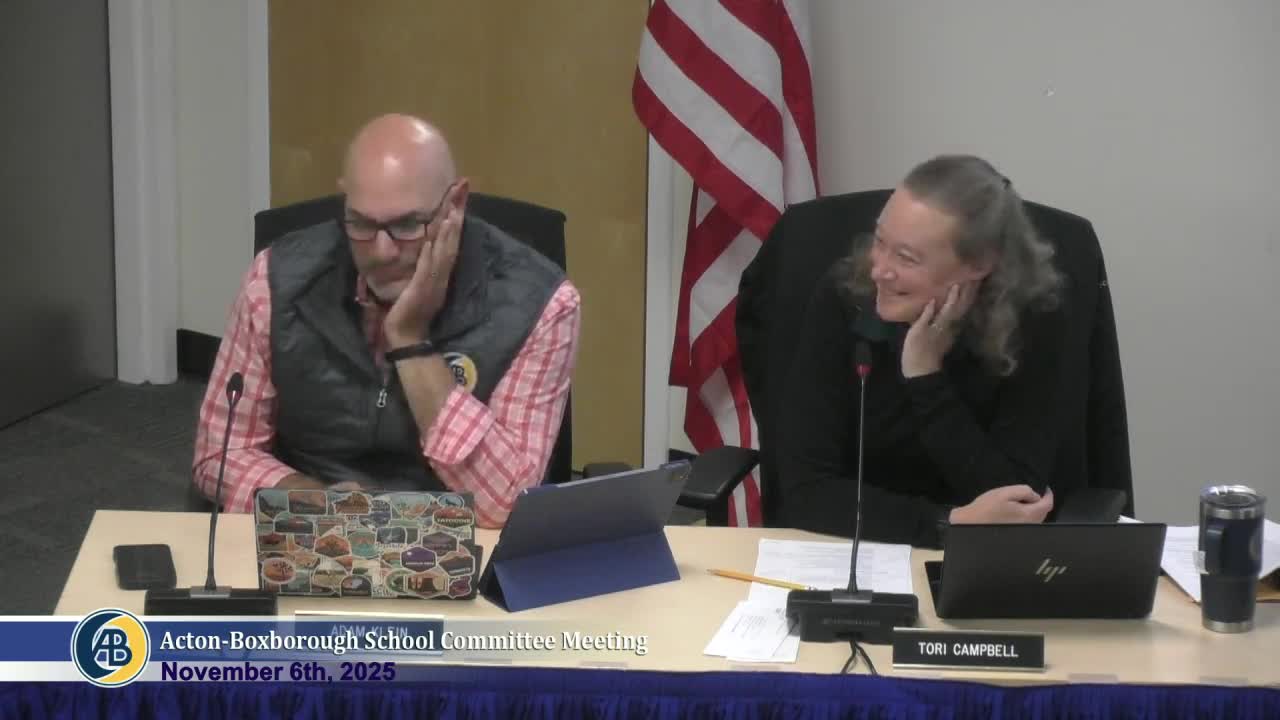
"Assessment is today's means of modifying tomorrow's instruction," Abrams said during the presentation, framing the district's move to use frequent screeners, coaching cycles and progress monitoring to accelerate growth. She told the committee the district is identifying writing instruction and written expression as an area of particular need in grades 3, 6, 7 and 8 and is adapting professional learning and pacing to respond.
Why it matters: Third‑grade reading proficiency is a widely used benchmark because earlier reading struggles can compound over time. The district reported that roughly 58% of third‑grade students met or exceeded expectations on Spring 2025 ELA (district aggregate), and officials said subgroup gaps remain, particularly for students with disabilities and students from low‑income households.
What officials plan to do: School leaders described a layered approach. At the classroom level they will emphasize consistent use of adopted core materials and formative assessment. Building leaders reported they are increasing coaching cycles focused on Tier‑1 instruction and creating vertical teams so teachers can align scope and sequence across grades. The district also said it will monitor pacing, look closely at implementation fidelity for recently adopted EL (literacy) and math materials, and consider targeted outside interventions. "We are on the second year of a new comprehensive core curriculum resource adoption," Abrams said, and she described an "implementation dip" that the district expects to address through focused coaching and adjusted pacing.
Possible short‑term supports include increased reading intervention at affected schools and exploring a DESE high‑dosage tutoring grant the district expects to apply for; that program would provide targeted tutoring hours to accelerate early literacy gains if awarded. Principals described school‑level changes: at McCarthy Town Principal Kristine Nealon said her staff is using vertical team structures and school‑level learning labs to align assessments and instructional practices, and that coaching cycles were shifted this year to focus more on Tier‑1 instruction rather than only small‑group work.
What the district will track: Administrators said they will continue to monitor summative outcomes (MCAS) alongside the pyramid of assessments — daily classroom observations, periodic screeners (Heggerty, DIBELS, number sense screeners) and diagnostic tools — and will use those data to adjust instruction in real time.
Questions and community concerns: Committee members and public commenters pressed for specifics about which interventions will be deployed and how the district will fund them. Several members urged rapid action for grade‑3 literacy and asked for a clear set of metrics and an estimated timeline to show improvement. Abrams said she will return with follow‑up details and that fall screening data already informed some immediate intervention choices.
Bottom line: District leaders framed the scores as partly the product of an adoption cycle and post‑pandemic shifts, but said they will pursue a combining of stronger Tier‑1 instruction, targeted Tier‑2/Tier‑3 supports, and grant‑funded tutoring where possible to bring third‑grade literacy back toward pre‑pandemic levels.
View the Full Meeting & All Its Details
This article offers just a summary. Unlock complete video, transcripts, and insights as a Founder Member.
30-day money-back guarantee
Sponsors
Proudly supported by sponsors who keep Massachusetts articles free in 2025

