AB Forward: consultant says reconfiguration increases flexibility but will not erase long‑term budget pressures
November 07, 2025 | Town of Acton, Middlesex County, Massachusetts
This article was created by AI summarizing key points discussed. AI makes mistakes, so for full details and context, please refer to the video of the full meeting. Please report any errors so we can fix them. Report an error »
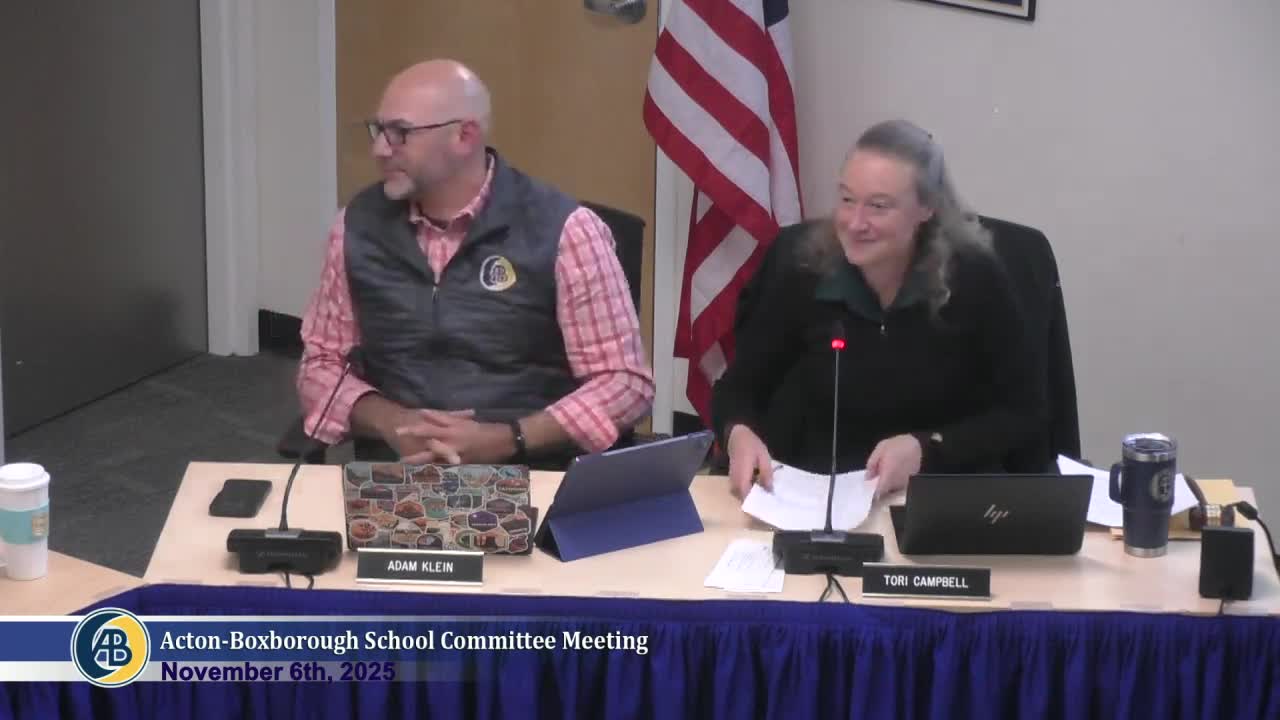
Castello said the basic rationale for many options is resource flexibility: "The fundamental premise with the work that we're doing is that the smaller the school unit is, the less flexibility the district has in terms of using its resources," he said. Larger grade‑banded schools or configurations with more sections of each grade give administrators more ability to allocate specialists, interventionists and shared staff efficiently across a larger student pool.
At the same time, Castello and district staff emphasized that reorganization is not a silver‑bullet budget fix. Committee members and community participants repeatedly noted that structural cost drivers — salary escalation, benefits, special‑education and transportation costs — will still need to be addressed via budgeting choices, contract negotiations and program prioritization. The district said it will use the next steering‑committee meeting (packet due Nov. 18) to provide more detailed cost and staffing models for the options that survive an initial winnowing process.
Community reaction and equity concerns: More than 500 people attended forums and focus groups and more than 1,000 respondents have completed an online survey so far, the presentation said. Consultation revealed intense, divergent preferences: residents want to preserve small‑school identities and traditions while others urged consolidation for sustainability. Committee members raised equity concerns for smaller schools such as Blanchard, where lower enrollment can make staffing ratios feel less favorable even under needs‑based allocation models; district staff said a needs‑based staffing model and program clustering can mitigate, but not entirely erase, those effects.
Implementation planning: District leaders said they are preparing an implementation team and prework that can be narrowed once the committee selects a preferred option. They also framed the approach as a community‑wellness process, with attention to communication, staff supports, and metrics for monitoring school climate and student outcomes through any transition.
Next steps: The steering committee will review additional cost/staffing analysis, and the school committee will later weigh a shorter list of vetted options. District staff said early planning and community engagement will remain central; staff warned that even with a chosen option the implementation work will need layered supports for students, families and staff to limit disruption.
Don't Miss a Word: See the Full Meeting!
Go beyond summaries. Unlock every video, transcript, and key insight with a Founder Membership.
30-day money-back guarantee
Sponsors
Proudly supported by sponsors who keep Massachusetts articles free in 2025

