Board accepts third-grade literacy monitoring report as district posts modest STAR gains to 49% meets
November 07, 2025 | AUSTIN ISD, School Districts, Texas
This article was created by AI summarizing key points discussed. AI makes mistakes, so for full details and context, please refer to the video of the full meeting. Please report any errors so we can fix them. Report an error »
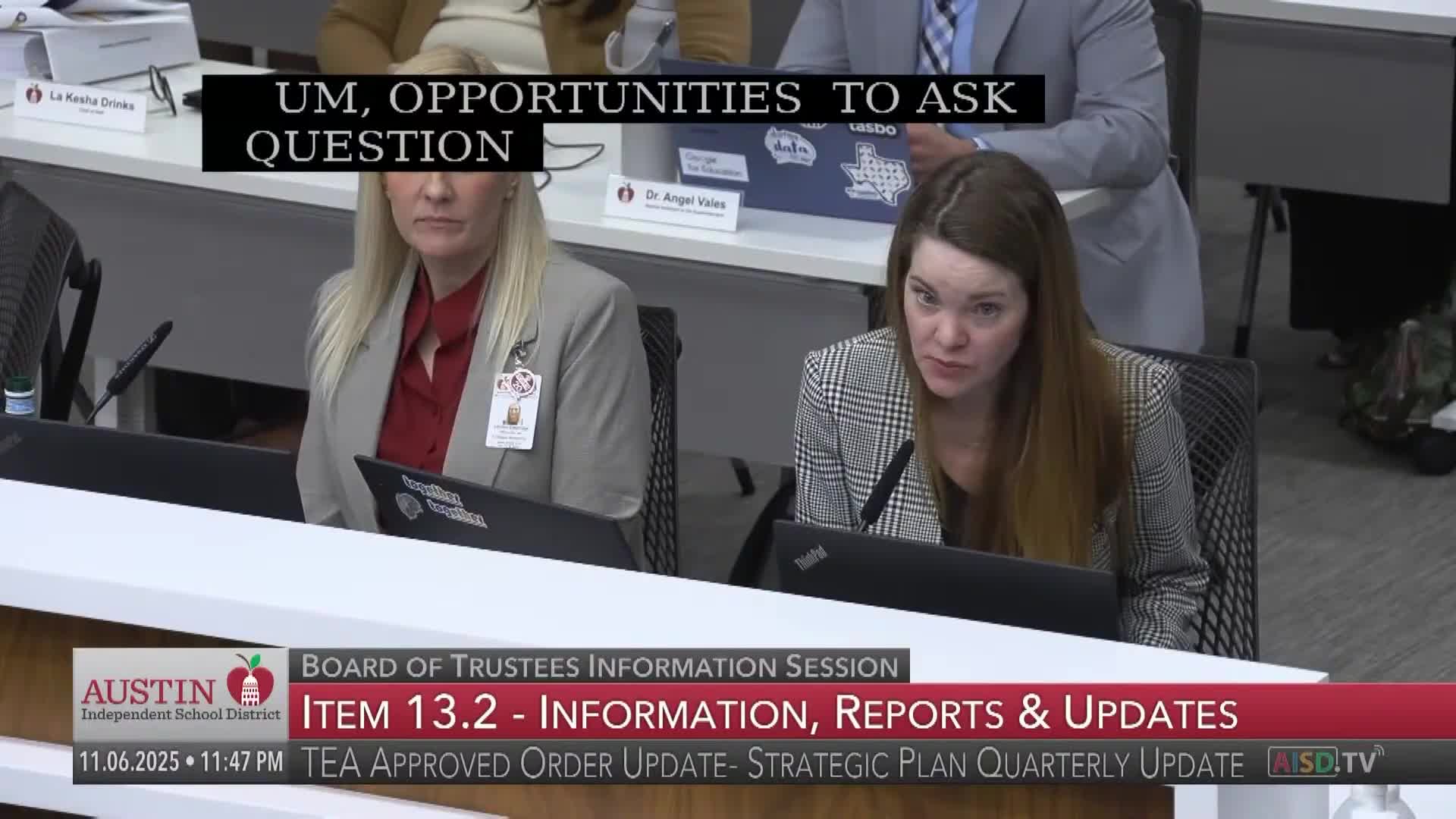
District view and evidence: Assistant Superintendent Mary Anne Maxwell told trustees the 49% result met the district's annual target and is aligned with statewide STAR results for the same year. The district presented a correlated progress measure: the percent of second-grade students in the NWEA MAP reading proficiency range that predicts intervention—staff said reductions in that MAP-identified intervention population align with gains in STAR outcomes.
Next steps: District staff said they will continue to invest in high-quality instructional materials used with fidelity, scale coaching and PLCs through lighthouse/learning-lab campuses, expand family-facing communications and workshops, and track progress with formative and curriculum-based checks in addition to the STAR summative.
Board action: Vice President Willie Chu moved to accept the monitoring report; Trustee Singh seconded. The board voted to accept the report during the Nov. 6 session.
Why it matters: Third-grade reading proficiency is a leading indicator for long-term academic outcomes and is central to the district's goal of ensuring students read on grade level by the end of grade three. Staff emphasized that early-childhood instruction, intervention, and targeted coaching contributed to the district's modest improvement.
Evidence: District presenters included data tables and school-level outlier examples (Campbell, Blackshear, Galindo, Wynn Montessori) that illustrated improvement at a handful of sites.
Don't Miss a Word: See the Full Meeting!
Go beyond summaries. Unlock every video, transcript, and key insight with a Founder Membership.
30-day money-back guarantee
Sponsors
Proudly supported by sponsors who keep Texas articles free in 2025

