Boulder staff: municipal supply likely reliable through 2050 under most scenarios; severe climate stress could create gaps
November 07, 2025 | Boulder, Boulder County, Colorado
This article was created by AI summarizing key points discussed. AI makes mistakes, so for full details and context, please refer to the video of the full meeting. Please report any errors so we can fix them. Report an error »
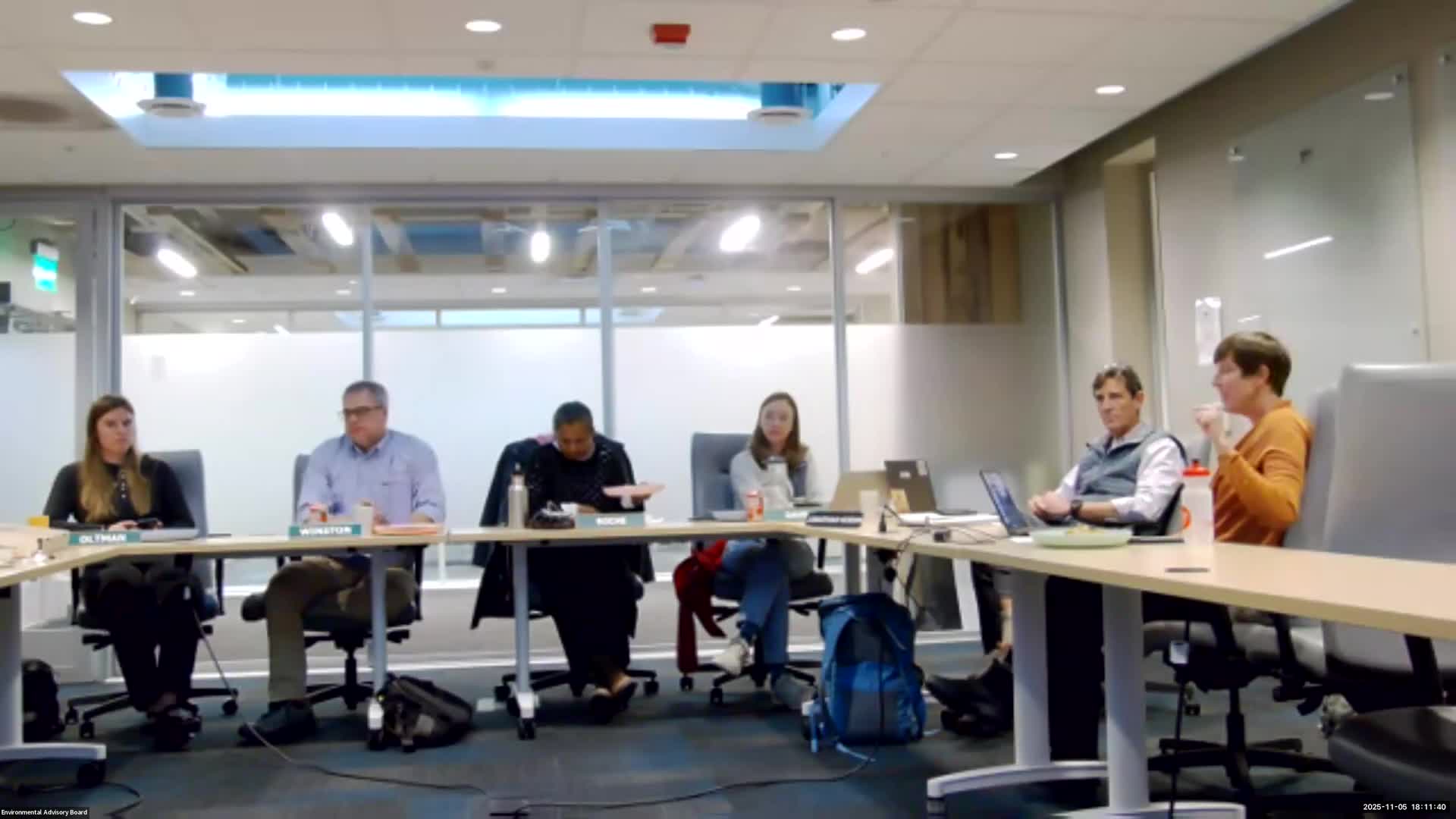
The presentation, delivered by the city's water resources manager, said most modeled futures — including optimistic, continued-trends and moderately stressed scenarios — provide a reliable supply for Boulder through 2050 under the city's existing reliability criteria. The city's system is supplied chiefly from two Boulder Creek watersheds (about two-thirds of treated supply) and from transmountain Colorado River projects managed through the Northern Colorado Water Conservancy District (about one-third), and is treated at two local plants before distribution, staff said.
"We want our water system to be reliable enough not to require any sort of water use restrictions" in most years, the presenter said, describing a reliability goal set in 1988 that aims to avoid restrictions roughly 95% of the time and allows outdoor restrictions in some years. Model runs included a 10% factor of safety in demand to account for outages and other unmodeled risks.
Why this matters
The Colorado Water Plan and basin-scale forecasts show growing uncertainty: the plan estimates a 500,000 to 800,000 acre-feet-per-year gap across the South Platte Basin by 2050. Boulder, by contrast, uses about 17,000 acre-feet per year. Local planning therefore focuses on how climate-driven streamflow changes, demand shifts linked to development patterns, and Colorado River policy changes could affect Boulder's share of transmountain supplies.
What the models showed
- Scenarios: staff ran four futures through a system model to 2050 — Optimistic (milder warming), Continued Trends (minor reductions), Stressed (regional water stress and some Colorado River impacts), and Severe (a much larger regional supply decline beyond state-modeled ranges). Climate-driven streamflow changes in the scenarios ranged roughly from +10% (optimistic) to -30% (severe).
- Outcomes: With Boulder's current population (no additional growth), the optimistic, continued-trends and stressed scenarios met the reliability criteria after accounting for projected conservation. The severe scenario produced a significant modeled supply gap that would require more substantial responses.
- Non-municipal uses: In surplus years the city supports in-stream flow protections, leases surplus for agricultural irrigation (generally at cost recovery), runs incidental hydropower and occasionally operates hydropower for generation; staff said eight hydropower facilities produce roughly $1.5 million to $1.7 million in annual revenue from power sales.
Planning trade-offs and next steps
Staff framed forthcoming work as an integrated water supply plan that will weigh demand-management measures (additional conservation, landscaping changes) against supply-side options (acquiring rights, storage, partnerships). New supplies are increasingly expensive and slow to develop; staff said some actions will be opportunistic and must be evaluated for cost, equity and impacts on agricultural users. The city expects to update its formal water plan (last completed 2009) after the Boulder Valley Comprehensive Plan process is further along.
Questions from board members and the public covered reuse and recycling of treated wastewater ("purple pipe" systems), limits imposed by water rights on reuse, the potential impact of data centers (not included in the current modeling), nature-based approaches that increase canopy and soil moisture, and PFAS sampling. Staff said municipal supply testing has not detected PFAS in municipal supply locations, though the state has reported detections outside city limits in some areas. Staff also corrected a previously reported assertion: graywater is not categorically prohibited by state law; recent legislation allows graywater in new construction beginning 2026 while giving local jurisdictions authority to adopt ordinances that allow or limit systems.
What the board was told to expect
Staff recommended a deeper integrated water supply plan with a longer planning horizon, further analysis of growth impacts (especially redevelopment versus new single-family development), and an evaluation of conservation measures versus supply acquisitions (often captured as marginal cost / volume comparisons). Staff also said they would return with more detailed materials and that many possible mitigation steps (including updated landscaping codes and conservation programs) are being actively considered.
Limitations
The modeling presented covered four scenarios and the city's current population baseline; staff emphasized results are sensitive to assumptions about future conservation uptake, climate-driven streamflow changes and external Colorado River policy decisions. The presenter said the severe scenario reflects conditions that would "fundamentally alter Western United States' relationship with water," and that Boulder is comparatively better positioned than many communities but is not immune to extreme regional stress.
Ending
Staff closed by noting the city will pursue an updated integrated water plan, coordinate with the comprehensive plan process, and bring additional briefings back to the board as work progresses.
View the Full Meeting & All Its Details
This article offers just a summary. Unlock complete video, transcripts, and insights as a Founder Member.
30-day money-back guarantee
Sponsors
Proudly supported by sponsors who keep Colorado articles free in 2025

