Sayville Middle School outlines PATH framework, expands advisory and recess
November 07, 2025 | SAYVILLE UNION FREE SCHOOL DISTRICT, School Districts, New York
This article was created by AI summarizing key points discussed. AI makes mistakes, so for full details and context, please refer to the video of the full meeting. Please report any errors so we can fix them. Report an error »
The PATH framework is woven into curriculum, recognition and routines, Dr. Castoro said, and is reflected in classroom practices, Frost Valley activities and new school rituals such as PATH postcards and PATH awards that replace old student-of-the-month recognitions. ‘‘Significant learning does not occur without a significant relationship,’’ Dr. Castoro said, summarizing the facultybelief in the approach.
Why it matters: the PATH effort is presented as a unifying, research-informed approach to social-emotional learning and classroom practice that leadership says improves climate, family communication and instructional outcomes. Changes described by school leaders include a move to block scheduling for sixth- and seventh-grade teams, a restored recess period, a retooled advisory period with shared prompts and a no-Chromebook rule during advisory, and a regular pattern of job-embedded professional development.
Dr. Castoro and Brian Decker, an administrator at the middle school, recounted a multi-year process that began with a district "100-day" study of graduate outcomes. To support the PATH priorities, the school changed its bell schedule so grade-level teams could implement longer blocks for collaborative and project-based work. The schedule change, Dr. Castoro said, also enabled the school to reintroduce recess. "What the research show about when kids go out and play and what that means for their afternoon classes is exactly what we saw in the middle school," he said.
Teachers formed an advisory committee that designed a short, scaffolded advisory routine with a monthly extended activity to provide shared experiences for all students and to create opportunities for students to talk about themselves in a safe setting. The committee piloted a set of daily prompts and a monthly calendar so teachers and students know upcoming topics in advance. Mr. Decker said teachers are permitted to extend advisory by 10 minutes when an extended activity is scheduled.
School staff also redesigned how they meet: academic teams hold a designated 40-minute meeting every other day, rotate minute-taking, and maintain a shared document that includes interdisciplinary project ideas, interventions and family communication notes. Leadership said this has increased family contact and produced substantial "good news" outreach; one teacher, Mrs. Pacey, was reported to have sent about 30to 40 postcards home this year recognizing PATH traits.
Professional development: the middle school used a workshop model for its superintendent's conference day in which staff both led and attended short sessions. Presentations included de-escalation and CPI strategies, English-language-learner support, staff wellness, team efficiency, classroom differentiation using AI tools, and music-history cross-curricular work. Mr. Decker said the PD format allowed teachers to both present and participate as learners, which increased engagement and peer-to-peer sharing.
Instructional practice and early results: school leaders reported that roughly 65% of classroom time now involves students seated together in small groups working collaboratively, a change they attribute to PD and the PATH emphasis on teamwork. Student and staff examples shown to the board included advisory-created artwork, extended advisory activities, Frost Valley curriculum aligned to PATH traits, and use of generative-art tools in extended advisory projects.
Future priorities: leadership briefed the board on planning goals that include surveying students for advisory feedback, exploring a full-day seventh-grade world-language program (the goal is to phase toward a full-day program two years out but timing depends on budget and staffing), expanding skilled-trades experiences in technology classes, and updating science and instructional spaces. On world language, district leaders described a multi-year approach so cohorts and staffing align with high-school needs.
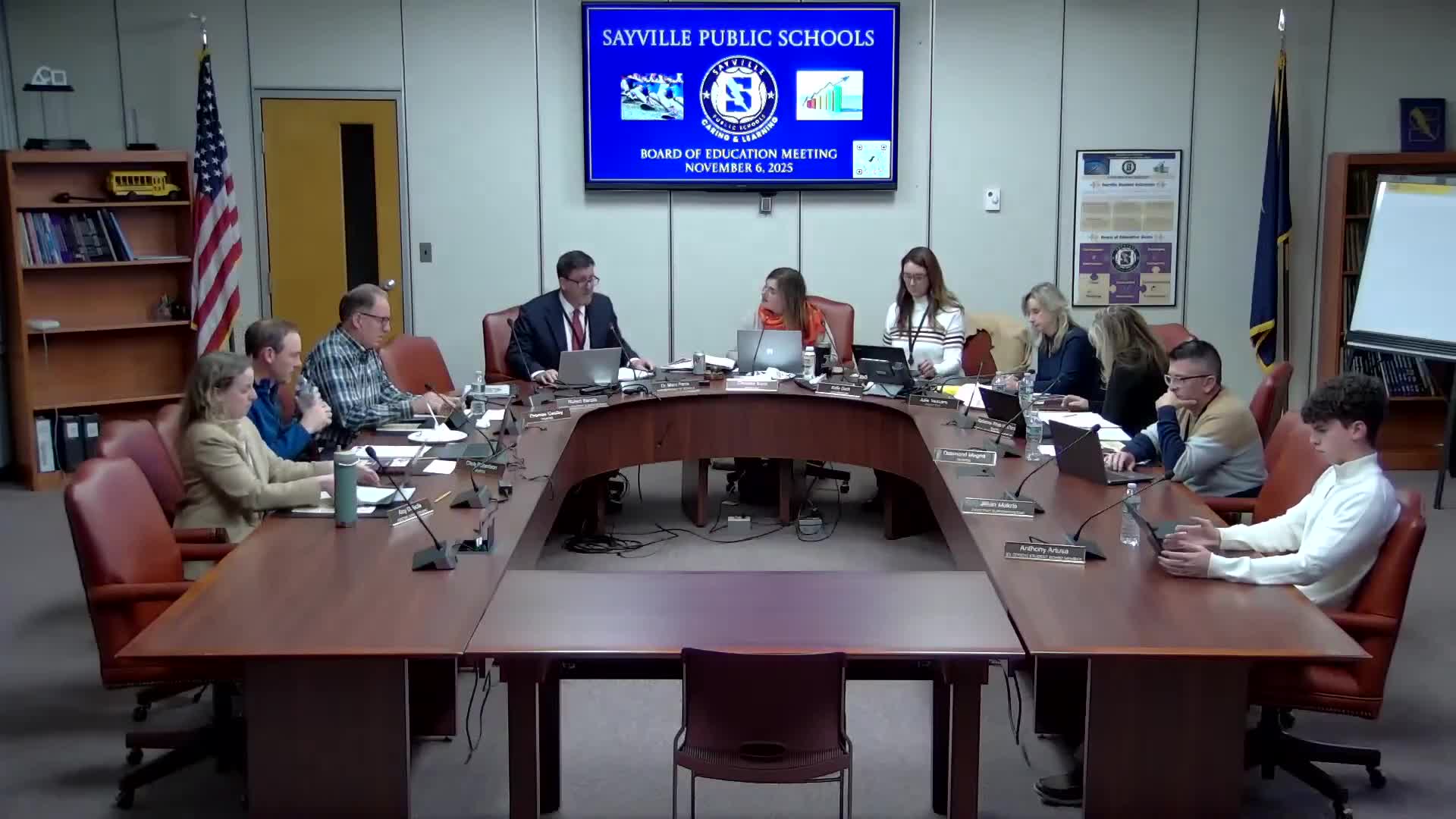
Board and community response: board members and an attending student, Anthony, praised the emphasis on relationships, recess and advisory. Several board members said they saw clear evidence of teacher buy-in and student engagement when visiting classrooms. "The afternoons are so different now," Mr. Decker said when describing the impact of recess and movement on classroom behavior.
Provenance: the presentation begins at the board workshop's introduction of middle-school leadership (00:00:39) and continues through board questions and praise after the presentation (00:33:55).
View the Full Meeting & All Its Details
This article offers just a summary. Unlock complete video, transcripts, and insights as a Founder Member.
30-day money-back guarantee
Sponsors
Proudly supported by sponsors who keep New York articles free in 2025

