Whitestown BZA denies Citizens Energy chain-link fence variance after widespread neighborhood opposition
November 07, 2025 | Town of Whitestown, Boone County, Indiana
This article was created by AI summarizing key points discussed. AI makes mistakes, so for full details and context, please refer to the video of the full meeting. Please report any errors so we can fix them. Report an error »
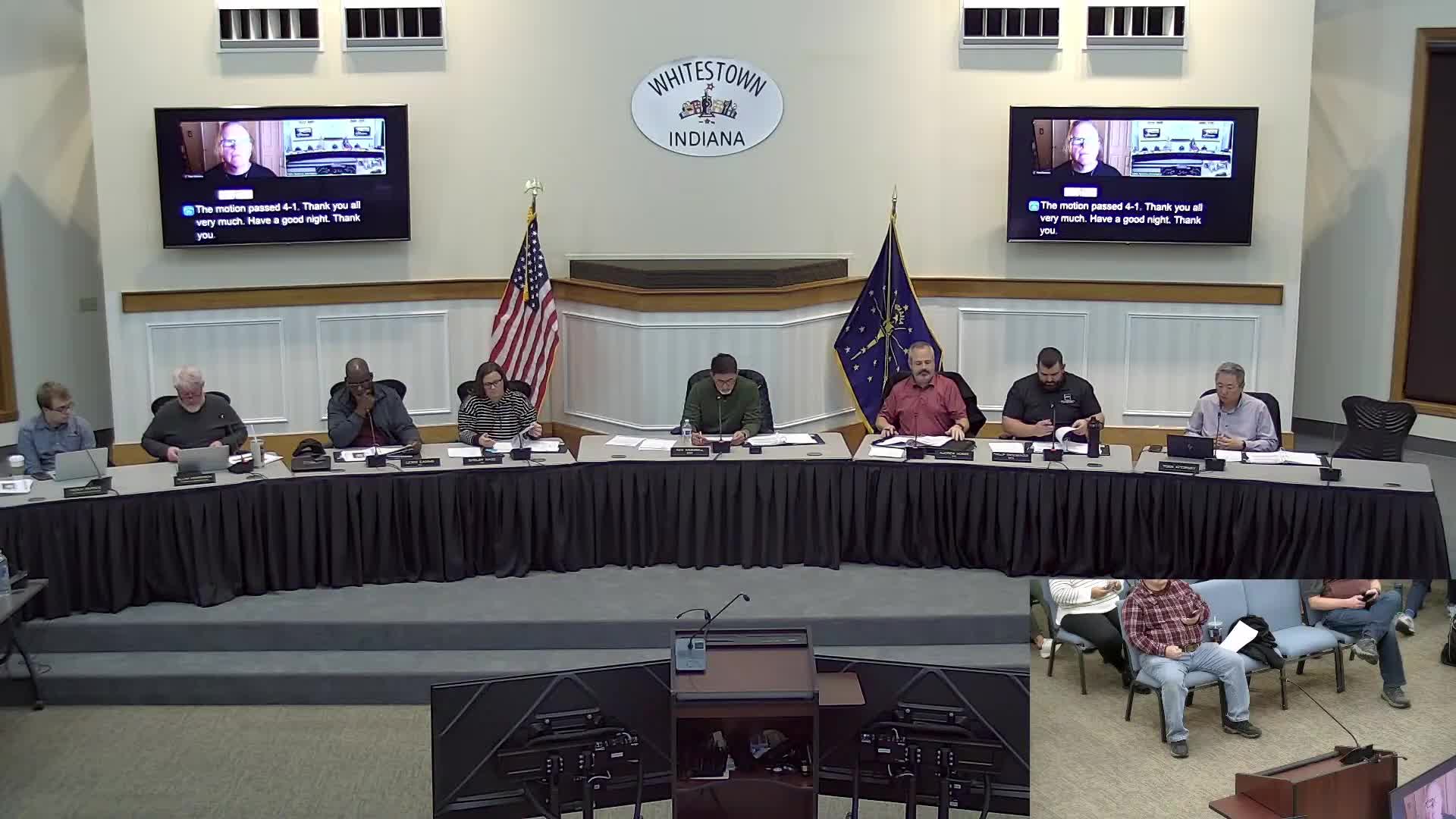
Staff introduced the item noting the property is zoned R-3 (medium-density residential) and that the UDO prohibits chain-link fences in residential districts. Staff also said it had received three emailed objections from nearby residents prior to the hearing. Bruce Cooley, program manager at Citizens Energy Group, told the board the company uses a 7-foot black vinyl chain-link fence as a system-wide security standard and proposed additional mitigation — landscaping on the west side and a 6-foot treed berm on the south side — to reduce visual impacts.
The nut graf: Neighbors objected strongly and the board found the petitioner had not shown the ordinance’s strict-application/practical-difficulty standard or overcome concerns about adverse effects on adjacent property values and public welfare. The board also noted notice and scope problems in the published materials: the advertisement described chain-link fencing on the north and west sides but omitted the south side, and barbed wire (also not allowed by the UDO) would require a separate variance and notice.
During the public hearing multiple residents from Eagles Nest and adjacent developments described limited prior outreach by Citizens, expressed concern about two large storage tanks they described as ‘‘1.5 million gallon’’ tanks each (a capacity asserted by residents in testimony), and raised flood-risk and property-value concerns. Resident Rebecca Mankin said the tanks and associated storage ‘‘will be major, visible, lasting, and decrease our property values’’ and asked whether the town would undertake flood mapping or whether homeowners would require flood insurance.
In response to board questions, the petitioner said the storage tanks at the site are ground-storage tanks about 32 feet above grade and defended the chain-link fence on security grounds, arguing visibility through chain link helps personnel detect and assess on-site situations. Board members and staff observed that visible detection could be achieved through alternative security measures and raised child-safety concerns about barbed wire. Staff and board members identified two procedural notice problems: omission of the south-side fence from the public notice and lack of a separate advertised variance request for barbed wire.
Andrew McGee moved to deny the variance; Philip Snowberger seconded. On roll call the board voted to deny the request 5–0. The chair stated the sole issue before the board that night was the chain-link fence variance; other project elements (including the tanks) were not before the BZA at this hearing.
View the Full Meeting & All Its Details
This article offers just a summary. Unlock complete video, transcripts, and insights as a Founder Member.
30-day money-back guarantee
Sponsors
Proudly supported by sponsors who keep Indiana articles free in 2025

