Beavercreek planning commission backs denser housing for portion of Mission Point PUD
November 06, 2025 | Beavercreek, Greene County, Ohio
This article was created by AI summarizing key points discussed. AI makes mistakes, so for full details and context, please refer to the video of the full meeting. Please report any errors so we can fix them. Report an error »
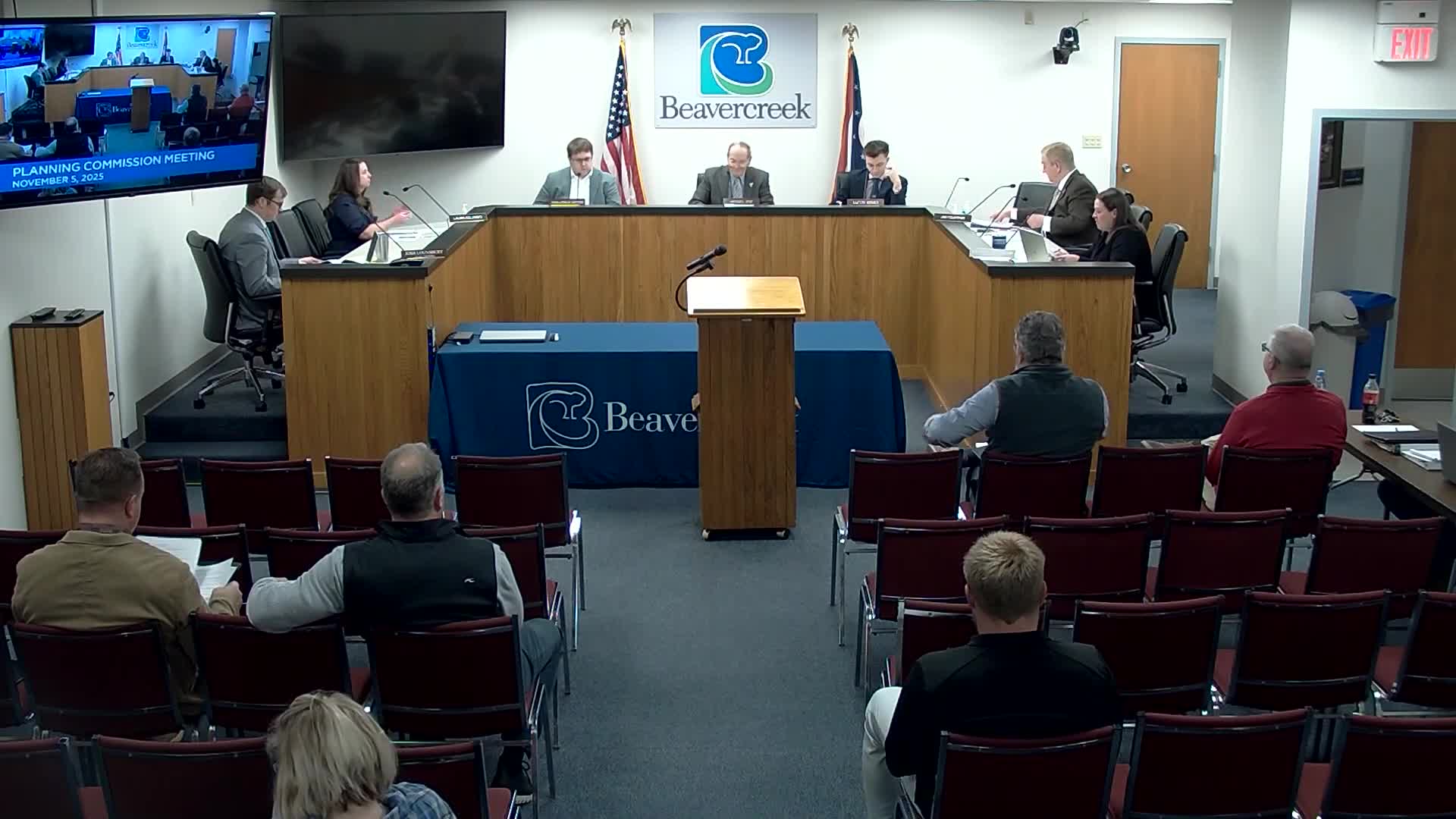
Todd Foley of POD Design, representing the applicant, told the commission the change applies to roughly 31 acres of the overall PUD and is limited to the residential portion shown on the proposed concept plan. "We're not here requesting anything that affects the entire PUD that's previously approved," Foley said, adding the developer intends single‑story attached units with garages and that setbacks, buffers and existing landscape protections would remain in place.
City planner Colin Carville summarized the PUD's history and staff analysis. He said the original PUD was approved on Aug. 23, 2007, and the overall PD totals about 134 acres with roughly 93,000 square feet of office currently built and 137,000 square feet approved but not yet constructed. Carville told the commission staff supports the amendment because office demand has declined since 2007 while demand for smaller, lower‑maintenance housing has increased in Beavercreek.
Under the previously approved PUD language, approximately 30 acres of the site were designated for residential development at up to 3 units per acre (about 90 units). The amendment would allow a higher transitional density band of 6 units per acre in the middle portion of the residential area while retaining 3‑unit‑per‑acre density in the southernmost section. Foley said the product will be market‑rate, single‑story units with attached garages; he estimated typical rents in the units at about $2,000 per month.
Residents from the neighboring City of Riverside raised several substantive concerns during public comment and commissioner Q&A: locating the proposed houses relative to existing yards, preservation of mature trees, the meaning and enforcement of the "50‑foot buffer," stormwater/runoff controls, and emergency access on narrow local streets (Hendon). Carville and staff clarified that the 50‑foot buffer in the PUD is a no‑build zone; tree preservation and detailed landscape plans are reviewed at the subsequent site‑plan stage; stormwater controls must prevent adverse impacts to adjacent properties; and fire/emergency access and circulation will be reviewed by the fire department and engineering at the site‑plan stage, not during this PUD amendment.
The applicant agreed to extend a portion of Mission Point Boulevard as part of the development and said the landowner supports the amendment. Staff noted some inconsistencies in past ordinance text and the recorded concept plan that this amendment would also correct (for example, earlier documents referenced 15 acres in a concept graphic while the ordinance text called out 30 acres).
Action and next steps: Planning commission’s approval is a recommendation; the amendment will be scheduled for a city council public hearing and vote. If council approves, the applicant must return to planning commission with a specific site plan that will document building locations, detailed landscaping, stormwater controls and fire access. The commission attached seven standard conditions to its recommendation when it voted.
Commissioners and staff acknowledged the public comments and said many concerns raised — tree preservation, exact access points, and final buffering details — are addressed at the site‑plan and engineering stages rather than in the PUD text change. The commission’s approval does not authorize construction; it approves the density amendment and concept plan change pending council action and later site‑plan approvals.
Planning commission vote: motion to recommend approval of PUD 06‑6 Amendment 10‑25 with seven attached conditions; roll call recorded five votes in favor and no opposition. The item will go to Beavercreek City Council for final action.
Local context: The PUD sits west of I‑675, south of Colonel Glenn Highway and abuts the City of Riverside. Staff said the amendment seeks to respond to market shifts since the PUD’s 2007 approval by enabling lower‑impact, single‑story rental housing in a transitional band between office uses and lower‑density residential areas.
Funding/clarifications: The applicant did not request public funding. The amendment corrects textual inconsistencies in the 2007 ordinance and establishes the updated concept plan footprint; numerous project details (final lotting, tree preservation, exact road alignments, stormwater controls) will be resolved during site‑plan review.
View the Full Meeting & All Its Details
This article offers just a summary. Unlock complete video, transcripts, and insights as a Founder Member.
30-day money-back guarantee
Sponsors
Proudly supported by sponsors who keep Ohio articles free in 2025

