Voter-approved sales-tax exemptions could cut Juneau revenue by about $11 million annually, staff says
November 06, 2025 | Juneau City and Borough, Alaska
This article was created by AI summarizing key points discussed. AI makes mistakes, so for full details and context, please refer to the video of the full meeting. Please report any errors so we can fix them. Report an error »
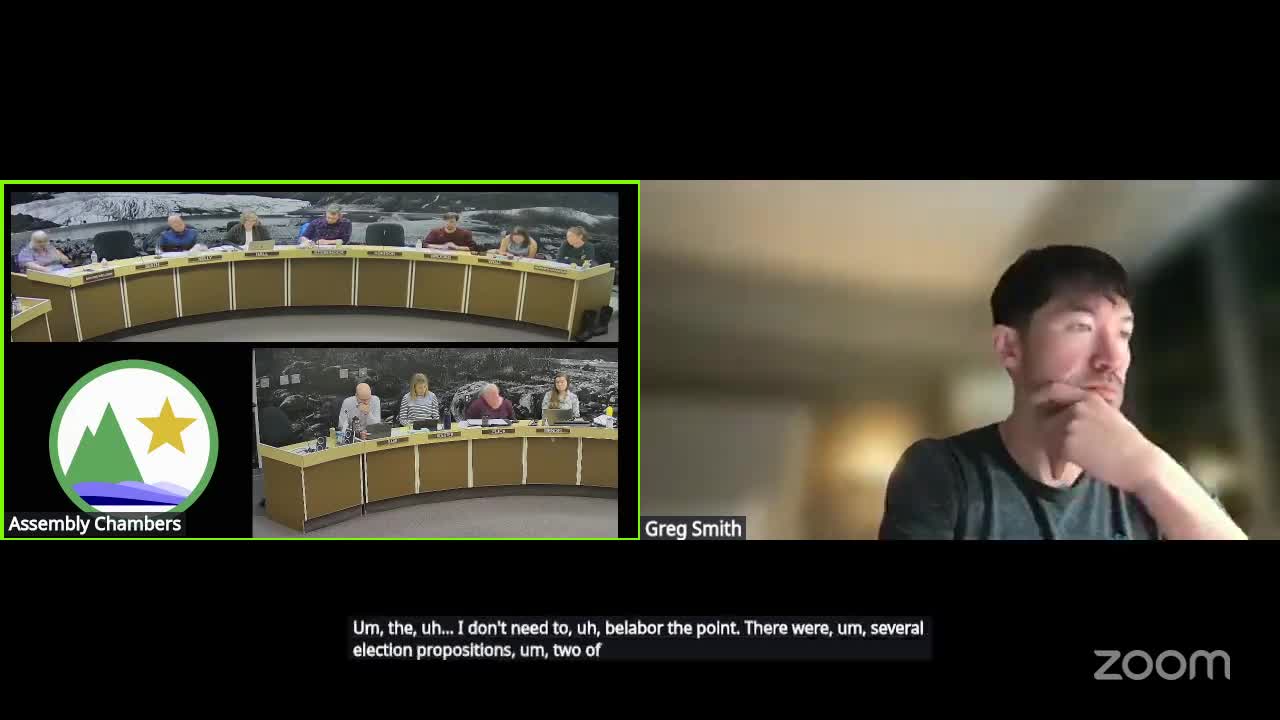
Miss Flick summarized the measures: "Ballot proposition 1 had to do with capping the mill rate at 9 mills, and this excludes debt service... The FY26 impact of this ballot proposition passing is nothing." She said the FY26 mill rate had been set before the election and property tax bills issued, so FY26 is unaffected; however, staff estimate the FY27 property‑tax revenue loss at roughly $1 million if assessed values are flat.
On Proposition 2 — a sales‑tax exemption package that removes sales tax on some SNAP‑eligible food and exempts certain utilities at a primary residence — Miss Flick said staff estimate an annualized revenue loss of about $11 million. Because FY26 is already underway, she estimated a partial‑year FY26 impact of approximately $6.4 million.
Finance staff broke the local 5% sales tax into three components for planning: an 11% permanent share that funds ongoing operations; a 1% temporary share dedicated to specific projects; and a 3% temporary share that the ballot splits into three pieces (some of which fund roads, drainage, sidewalks or operating services). Miss Flick said roughly $4.4 million of the estimated annual reduction would be a one‑time hit to planned projects and about $6.6 million would be recurring operating revenue loss (together annualizing to roughly $11 million).
The committee discussed how strictly the city must adhere to ballot language. City staff and the city attorney advised that ballot "intent" should be followed to the extent practicable; they emphasized that bond authorizations are generally more legally binding than sales‑tax intent language. Manager Kester noted sales‑tax funds are often used to advance project design and to match federal grants, citing the Lemon Creek multimodal path as an example where limited local capital funds were used to obtain federal grants.
Several assembly members asked whether changes to the sales‑tax buckets could be made when future measures are considered; staff said those policy choices will be part of future budget and ballot discussions. Miss Flick cautioned that the first full quarter of data under the new exemptions will not be available until mid‑May 2026 and that staff estimates are subject to revision when actual remittances are received.
The assembly directed staff to factor these revenue changes into FY27 planning, to identify projects that could be paused or redesigned, and to bring options for public engagement and priority setting to future meetings.
Don't Miss a Word: See the Full Meeting!
Go beyond summaries. Unlock every video, transcript, and key insight with a Founder Membership.
30-day money-back guarantee
Sponsors
Proudly supported by sponsors who keep Alaska articles free in 2025

